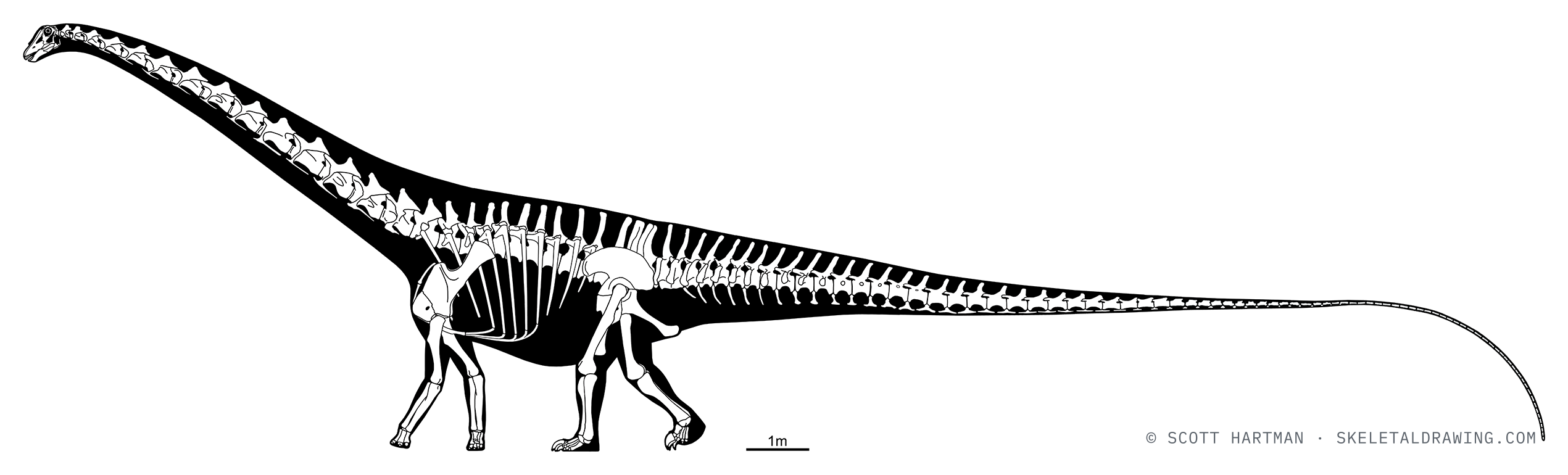
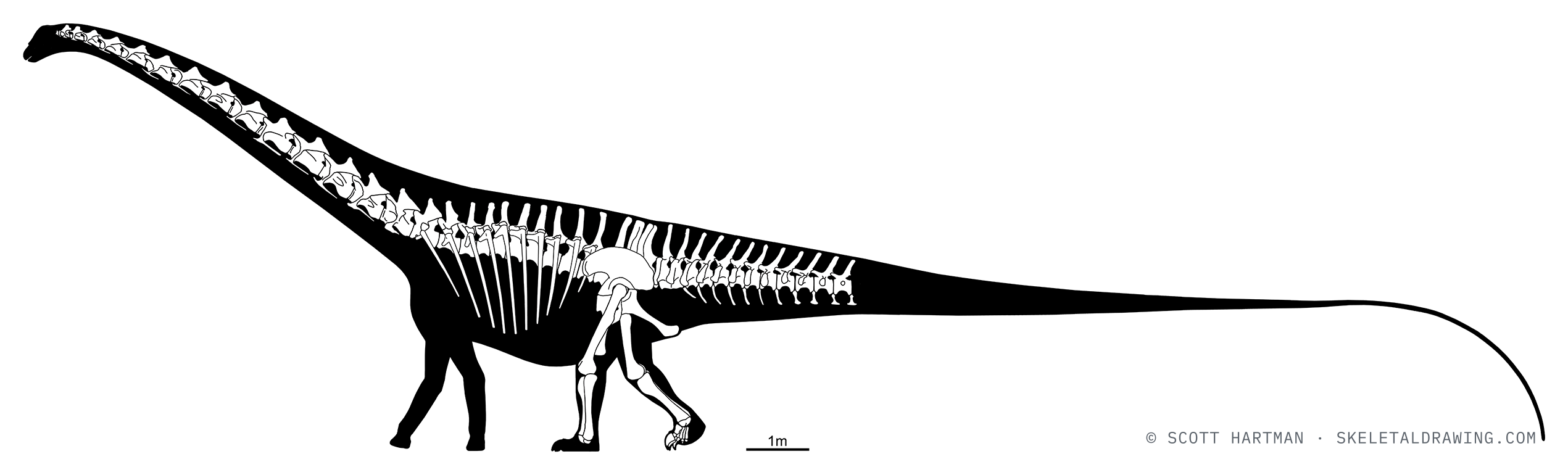
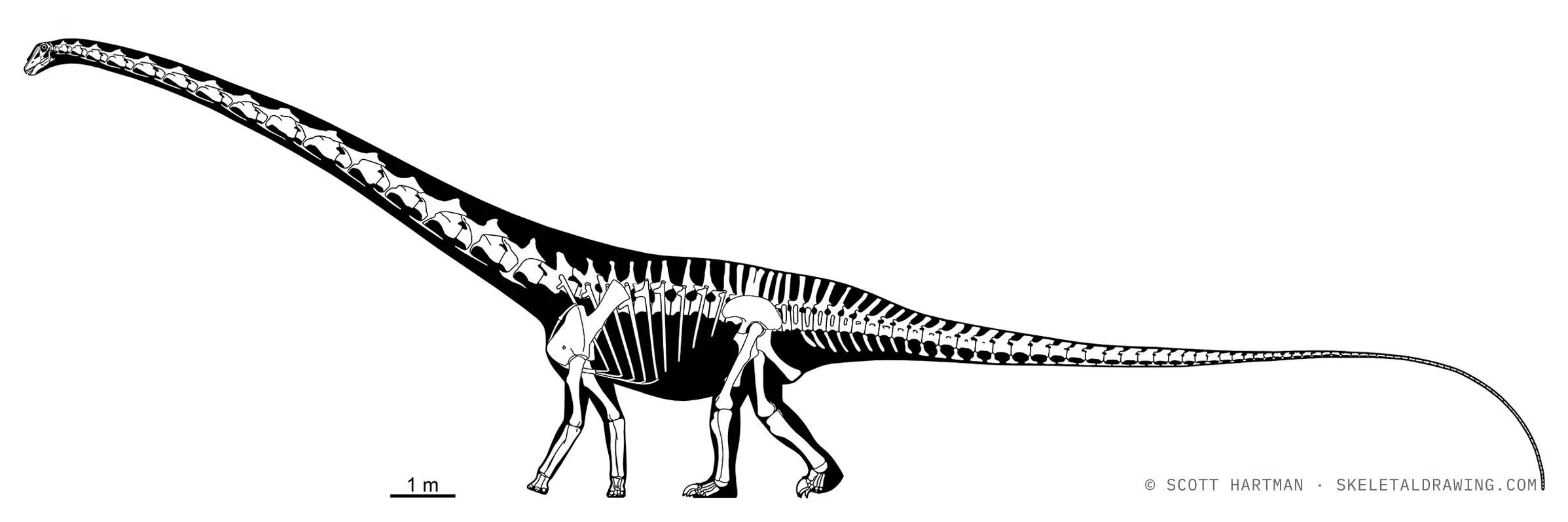
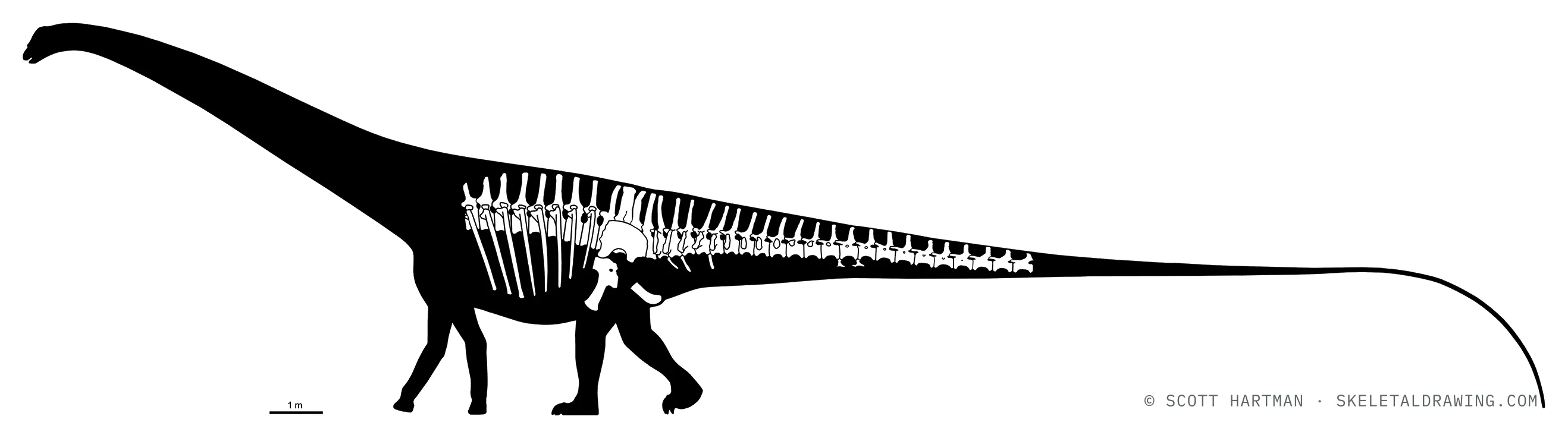
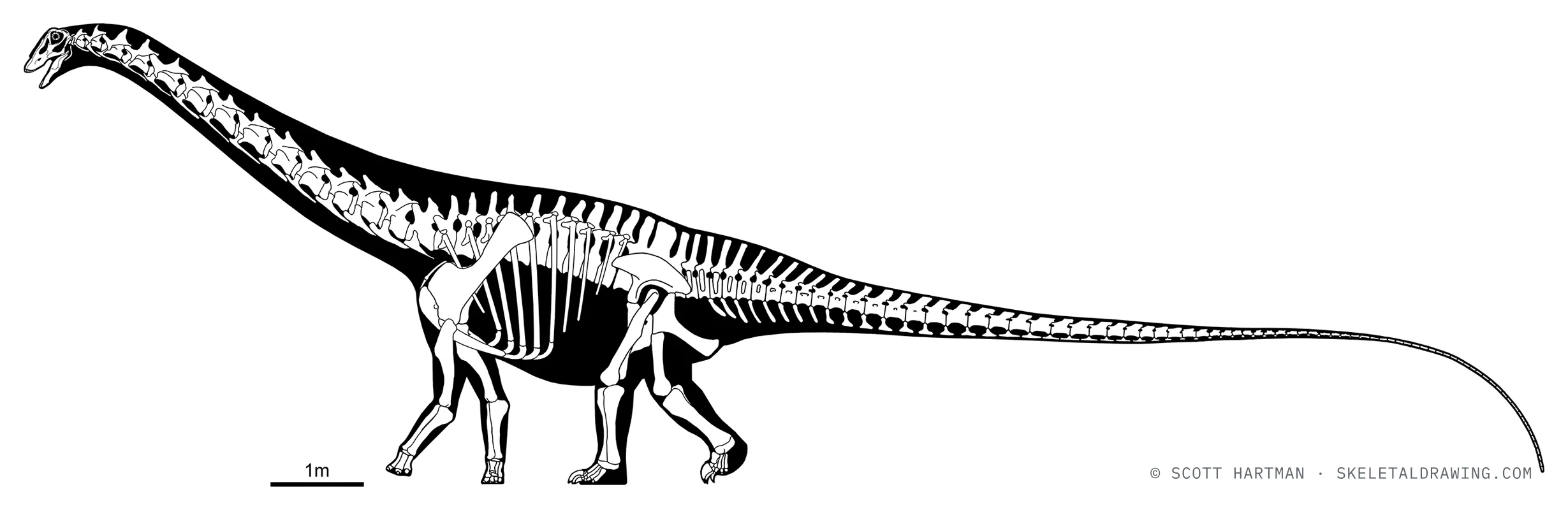
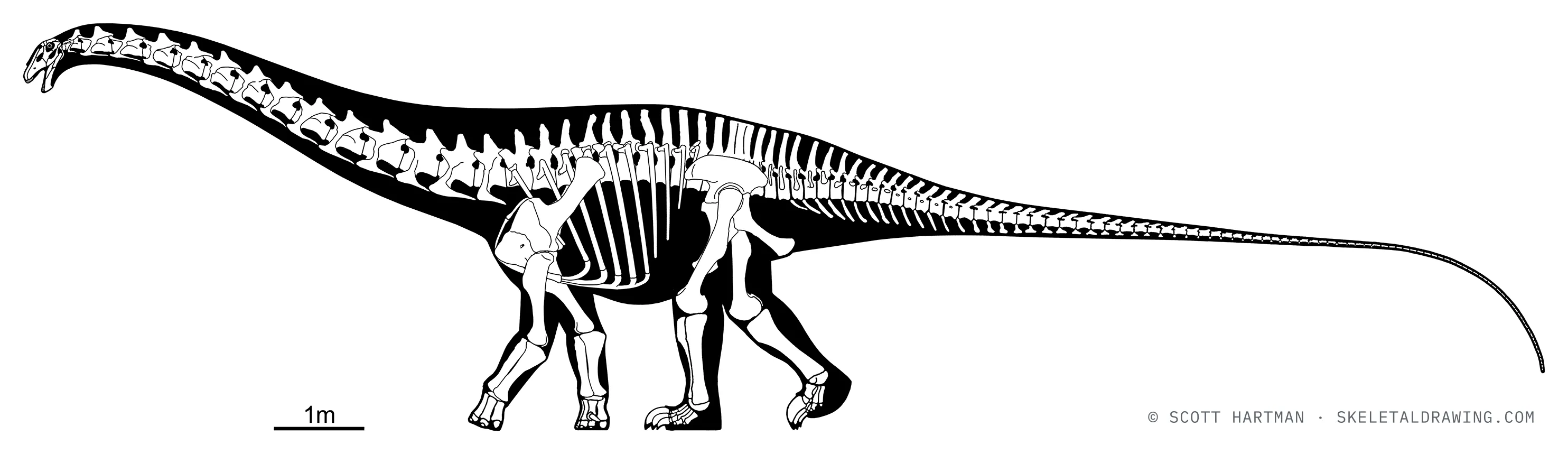
Outside of the United States, Diplodocus is usually seen as the classic Late Jurassic sauropod of the Morrison Formation. This is in part because Andrew Carnegie ordered replications of the exceptionally complete specimen CM 84 (“Dippy”) to be made available to museums around the world in the early 20th century. As a result, Diplodocus was often the first large dinosaur displayed in countries with fewer fossils (or that got a later start on digging their own). Many of these copies continue to be displayed in museums worldwide.
While not as heavily built as the Apatosaurus or Brontosaurus, Diplodocus had quite a long neck, and an especially long tail, so individuals that may have weighed “only” 15 tonnes would have stretched 26 meters (85 feet) in length. While the heavily-muscled tails were surely of help in defense against marauding theropods, the long whip-tail at the end may have had some other function in display or communication.