Diplodocus hallorum (Gillette, 1991)
In general proportions, the anatomy of Diplodocus hallorum is not that different from Diplodocus carnegii. But the history of the name is significantly more complicated. In 1878 when Diplodocus was first named, it was given the species name D. longus, owing to how long the tail was. Some other remains were put into D. longus, but more recently it has been argued that the scrappy original remains of D. longus were indeterminate - that is, you couldn’t tell what species it was.
Meanwhile, in 1979 a large specimen of Diplodocus was discovered in New Mexico. This specimen (NMMNH 3690) was originally given a new name - Seismosaurus hallorum. It took a long time to extract the NMMNH specimen from the hard sandstone that encased it, and in the meantime outlandish estimates were produced, claiming the specimen could be up to 45 meters (150 feet) long and potentially over 100 tonnes in weight. Now that the specimen is described and available to be measured, it appears to be closer to 30 meters, and was lightly built like other species of Diplodocus. So much so that multiple authors sunk Seismosaurus into Diplodocus, creating the new species Diplodocus hallorum.
Confused? It gets better - phylogenetic studies looking at individual Diplodocus specimens have shown that many of the specimens once referred to D. longus group with D. hallorum - so now D. hallorum is represented by the large NMMNH 3690, and several “normal-sized” specimens, including AMNH 223. Both of these specimens are shown here with their known material, rather than full reconstructions.
- Specimens shown
- 2
- Size range
- 27.5–30 m
- Formations
- Morrison Formation
Specimens
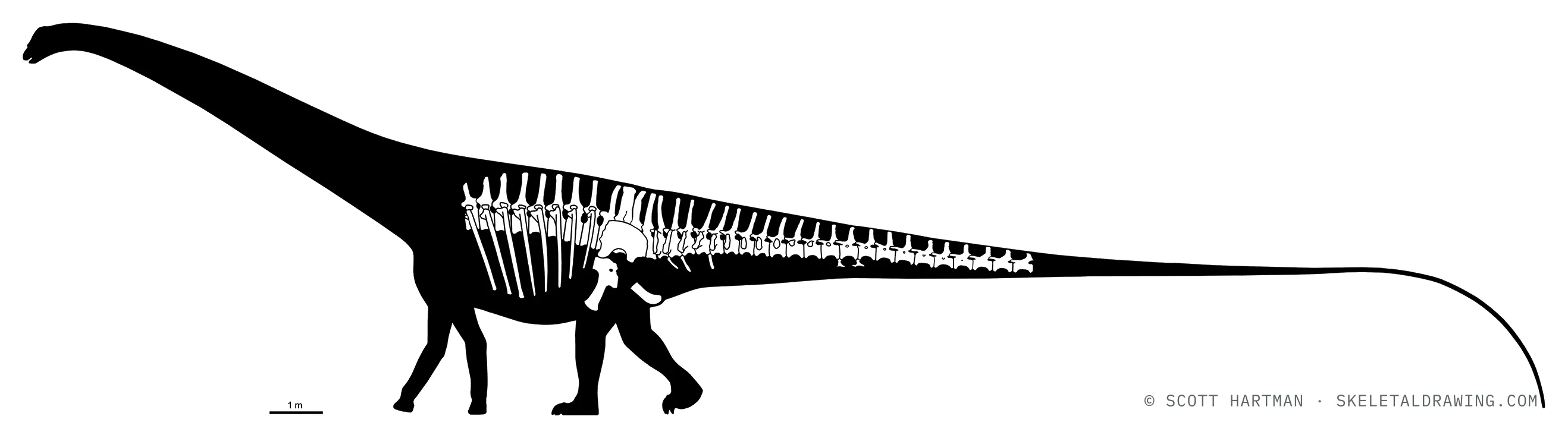
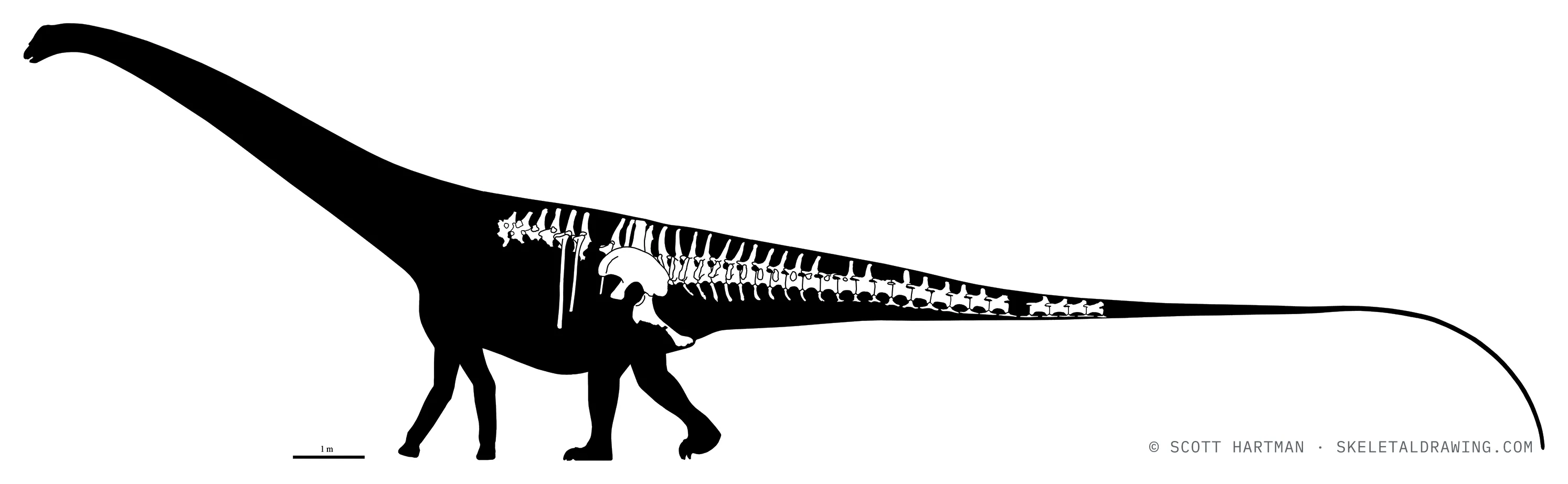
Scale comparison
All documented specimens — tap a column to sort
| Specimen | Length | Femur | Complete | Collected | Repository | |
|---|---|---|---|---|---|---|
| NMMNH 3690 | ~30 m | — | — | — | New Mexico Museum of Natural History & Science | View → |
| AMNH 223 | ~27.5 m | — | — | — | American Museum of Natural History | View → |