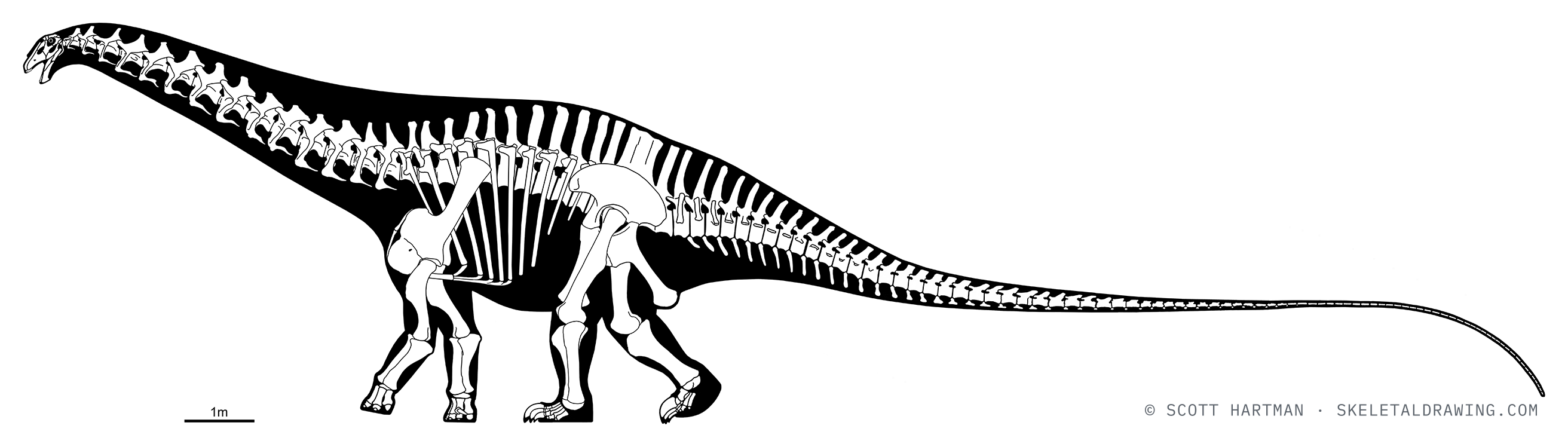
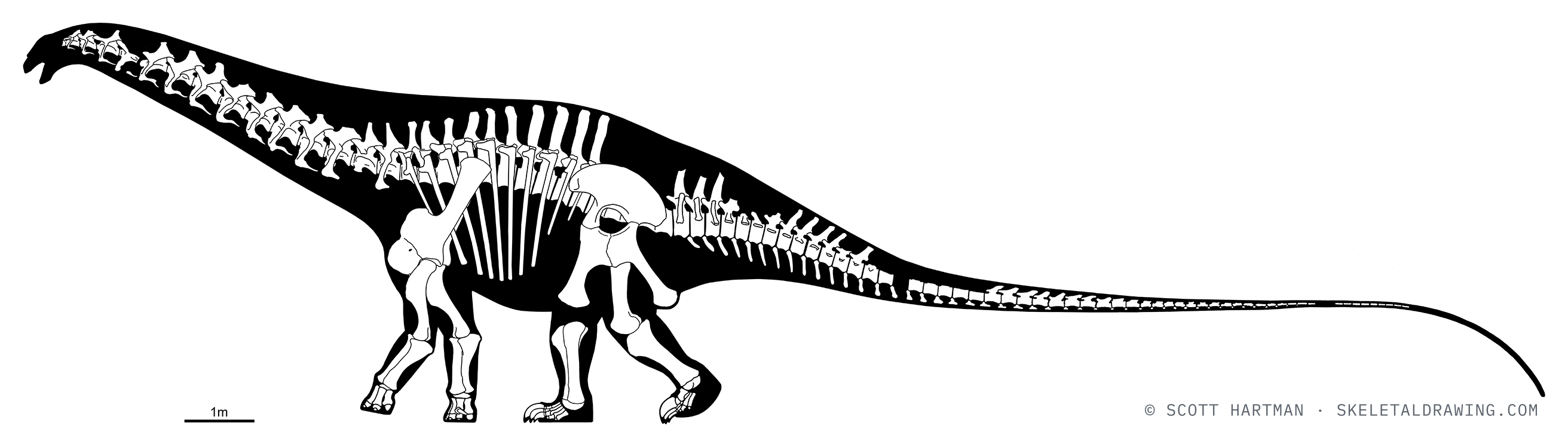
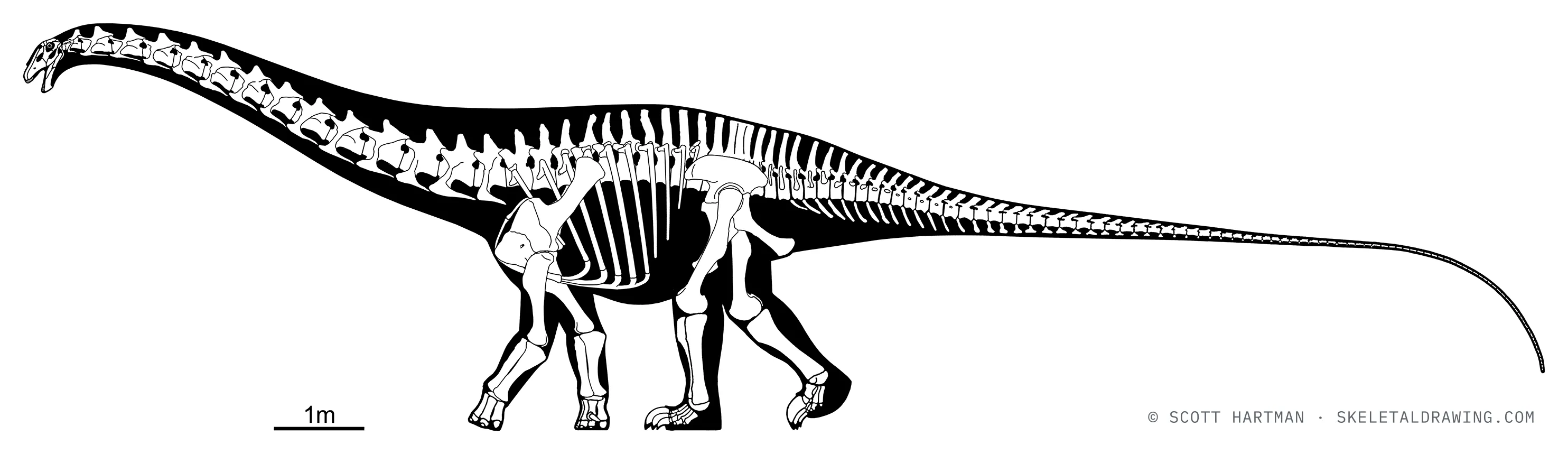
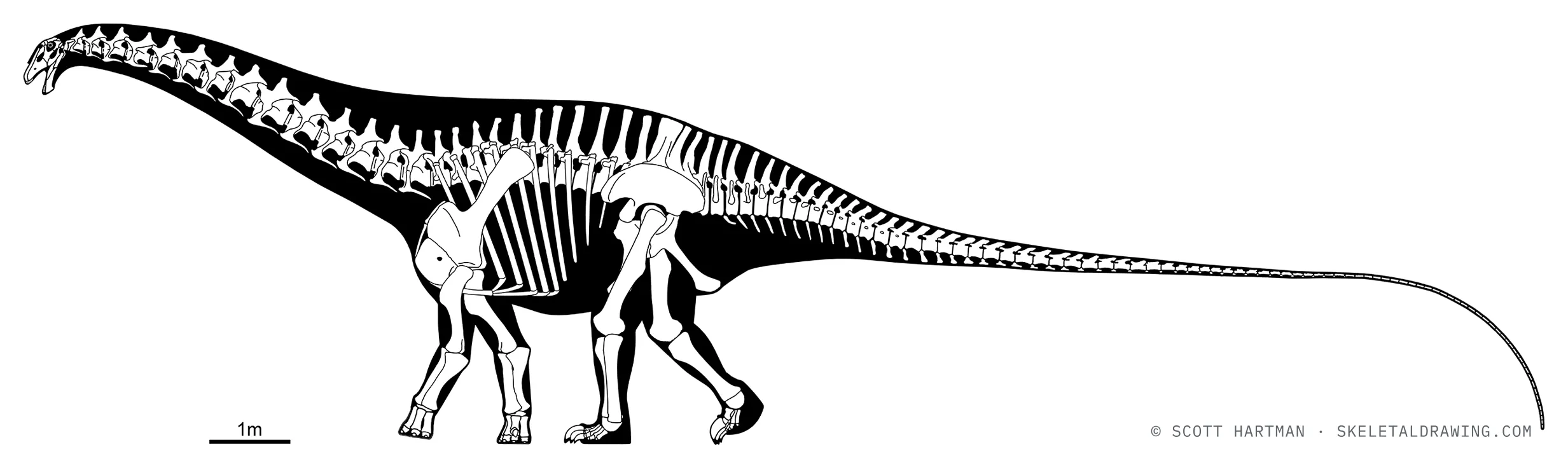
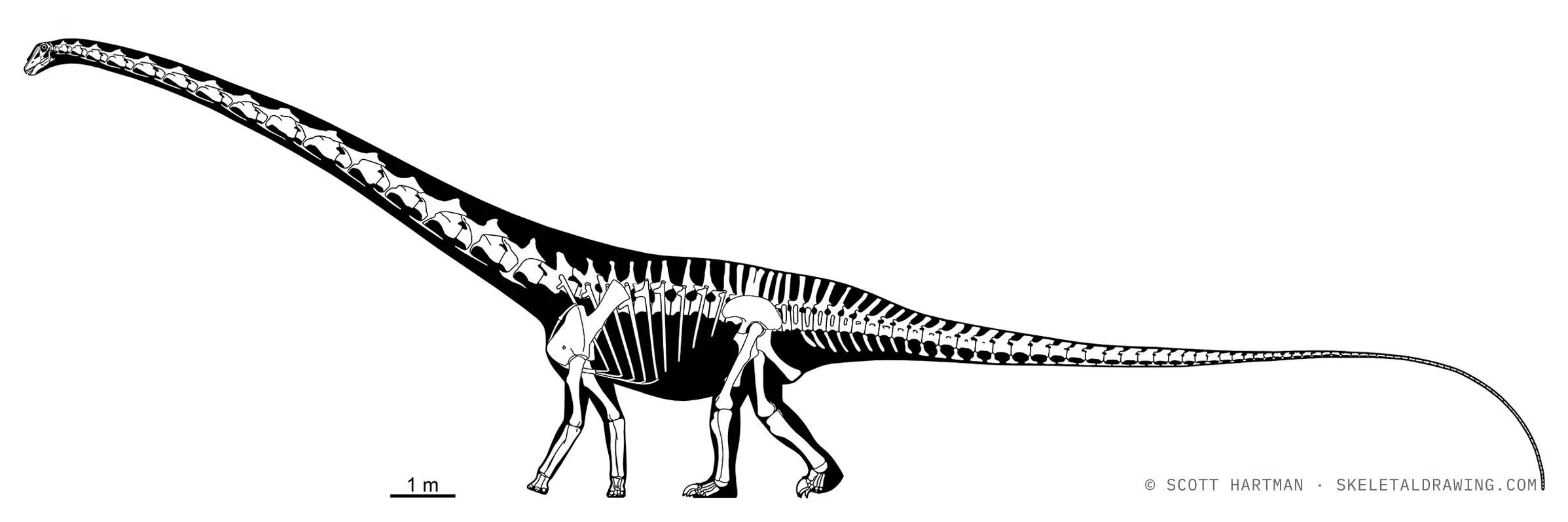
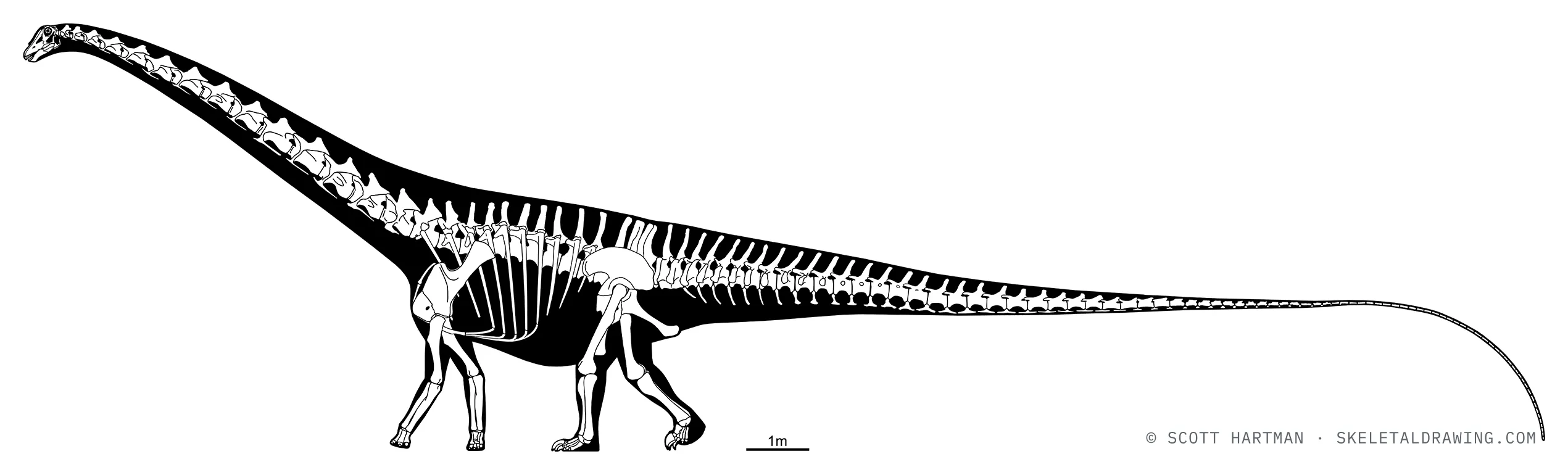
While not as famous in name as its close-cousin Brontosaurus, Apatosaurus louisae is probably the quintessential ‘big sauropod’ from the Late Jurassic Morrison Formation in western North America. With an exceptionally thick and well-muscled neck, A. louisae was among the most robustly built sauropods of all time. It would have looked like a true bruiser next to relatives like Diplodocus and Barosaurus.
While known specimens are large (reaching 23 meters/75 feet and weighing over 20 tonnes), some incomplete specimens of Apatosaurus suggest it may have grown to even larger sizes, if they managed to live long enough. Another feature of Apatosaurus was how far back the center of gravity was - rearing up onto its hind legs should have been much easier than in living elephants (who can be trained to do so in a circus), although how often this was done in day-to-day life is still a subject of scientific debate.