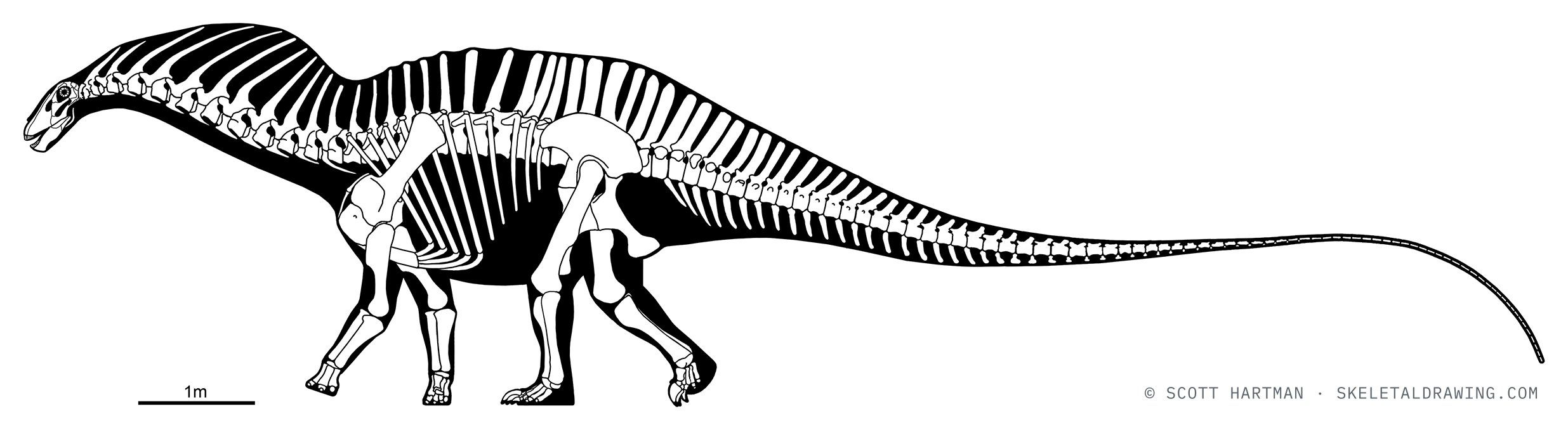
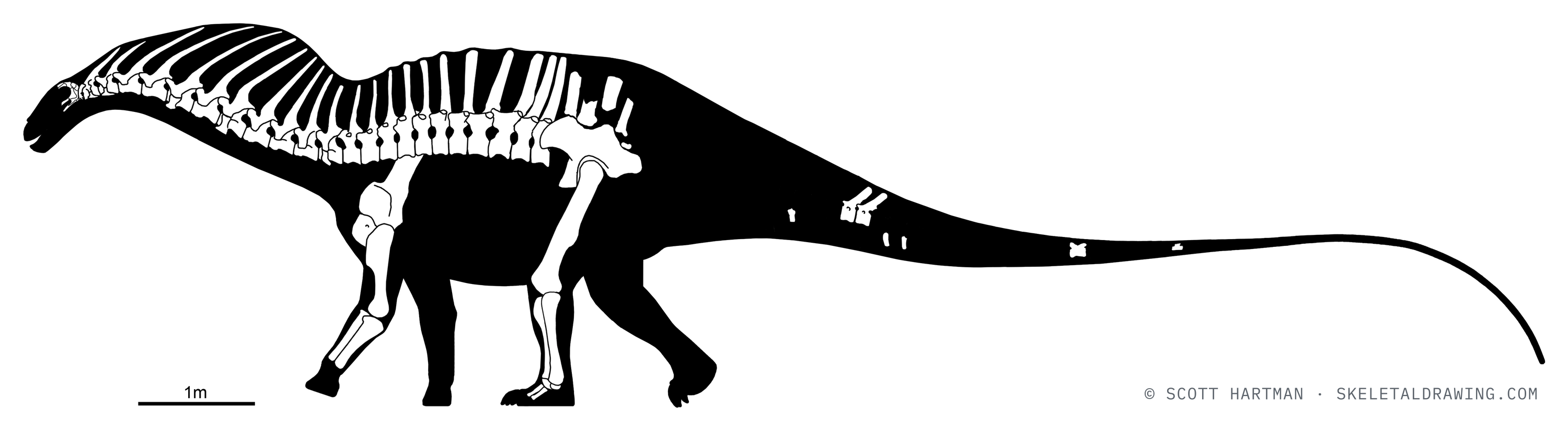
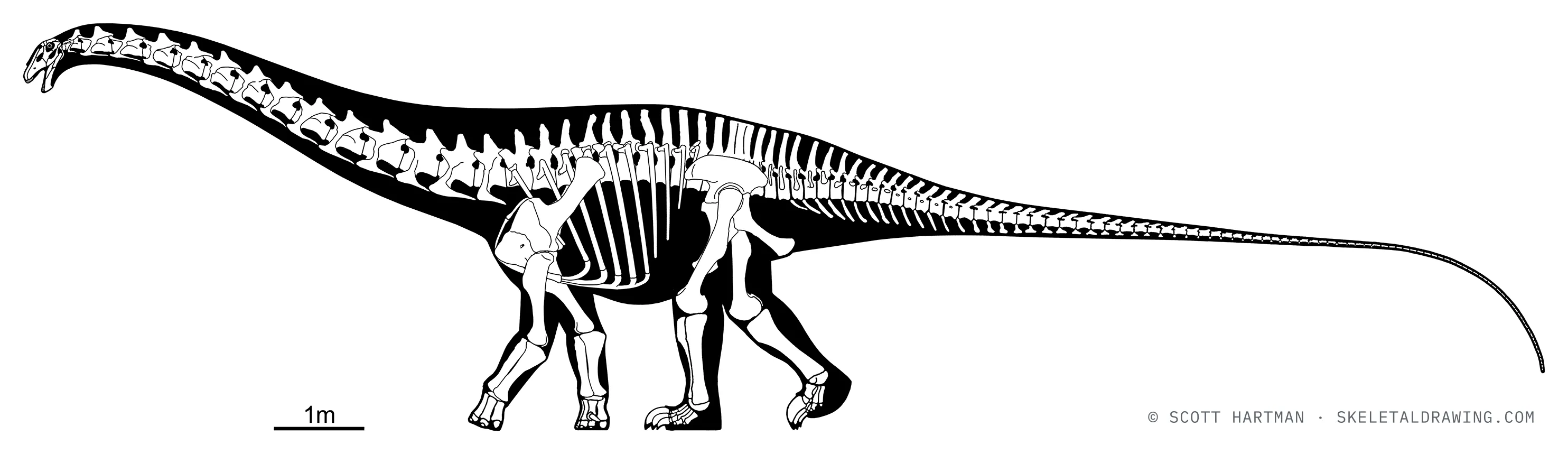
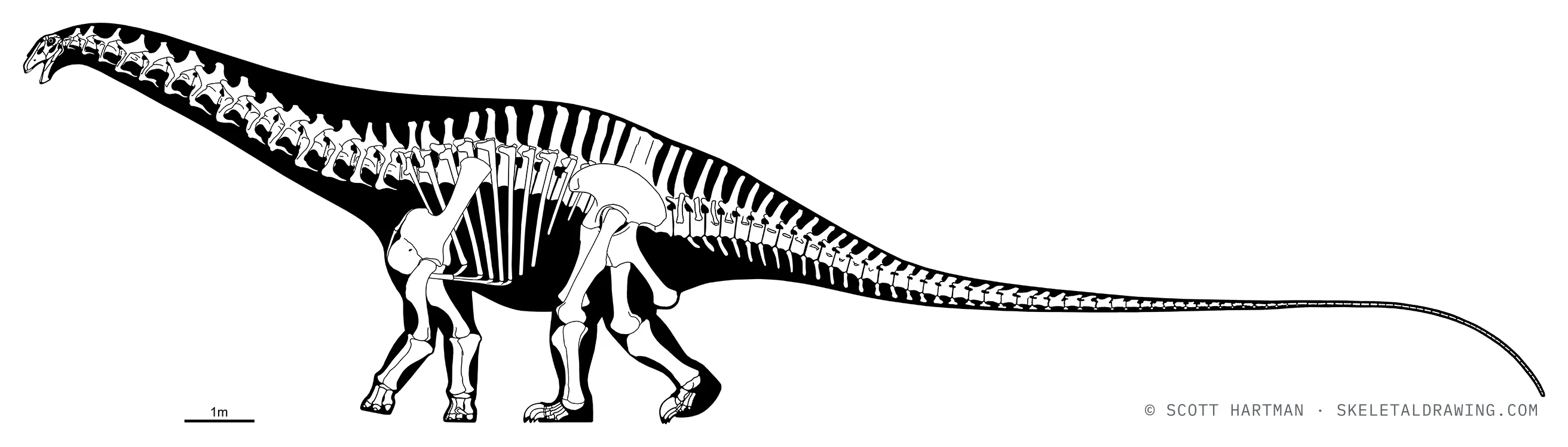
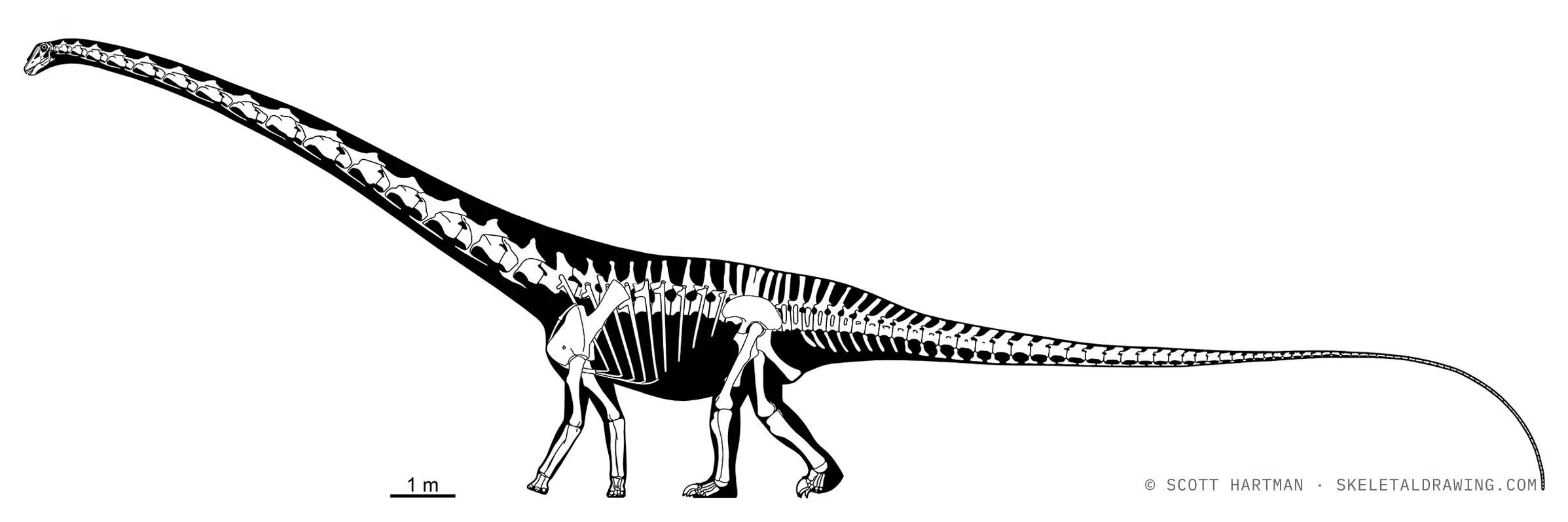
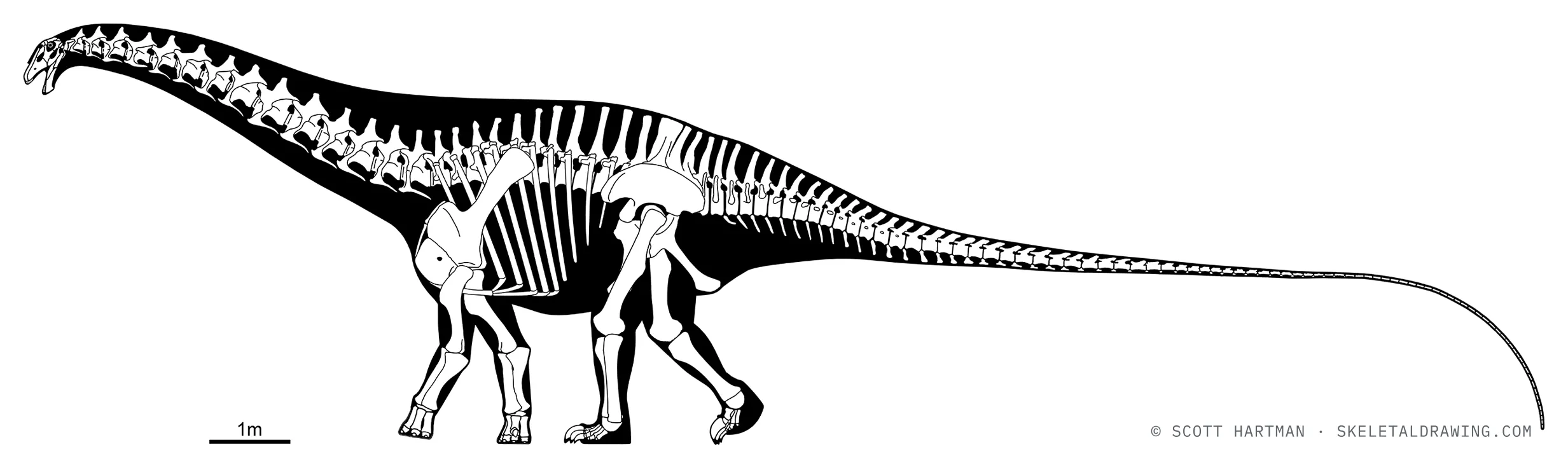
Amargasaurus is a distant relative of Diplodocus and Apatosaurus, in a group of diplodocoid sauropods called dicraeosaurids. At 13.5 meters (42 feet), Amargasaurus wasn’t large by sauropod standards, although you wouldn’t have wanted one to step on your feet! It’s only known from a single specimen, a fully-grown individual that was excavated from Early Cretaceous rocks in Argentina. Its most distinctive trait is the extremely tall, paired neural spines running along its neck and the front of its back.
For several years there were debates about whether these paired, elongate structures were more likely to support a pair of sails or whether they may have stuck out of the neck and been covered by horns, where they could potentially have served as a defensive mechanism and way to attract mates or intimidate rivals.
The most recent paper on the subject makes a convincing argument that the spines were embedded within the tissue of the neck, with a pad of elastic tissue running down the middle of the (very closely spaced) paired spines. In life, this would make the neck of Amargasaurus very tall in side view, but still quite narrow as seen from the front or top. This would have created something of a living billboard, which still may have been used for displaying to other individuals of Amargasaurus.