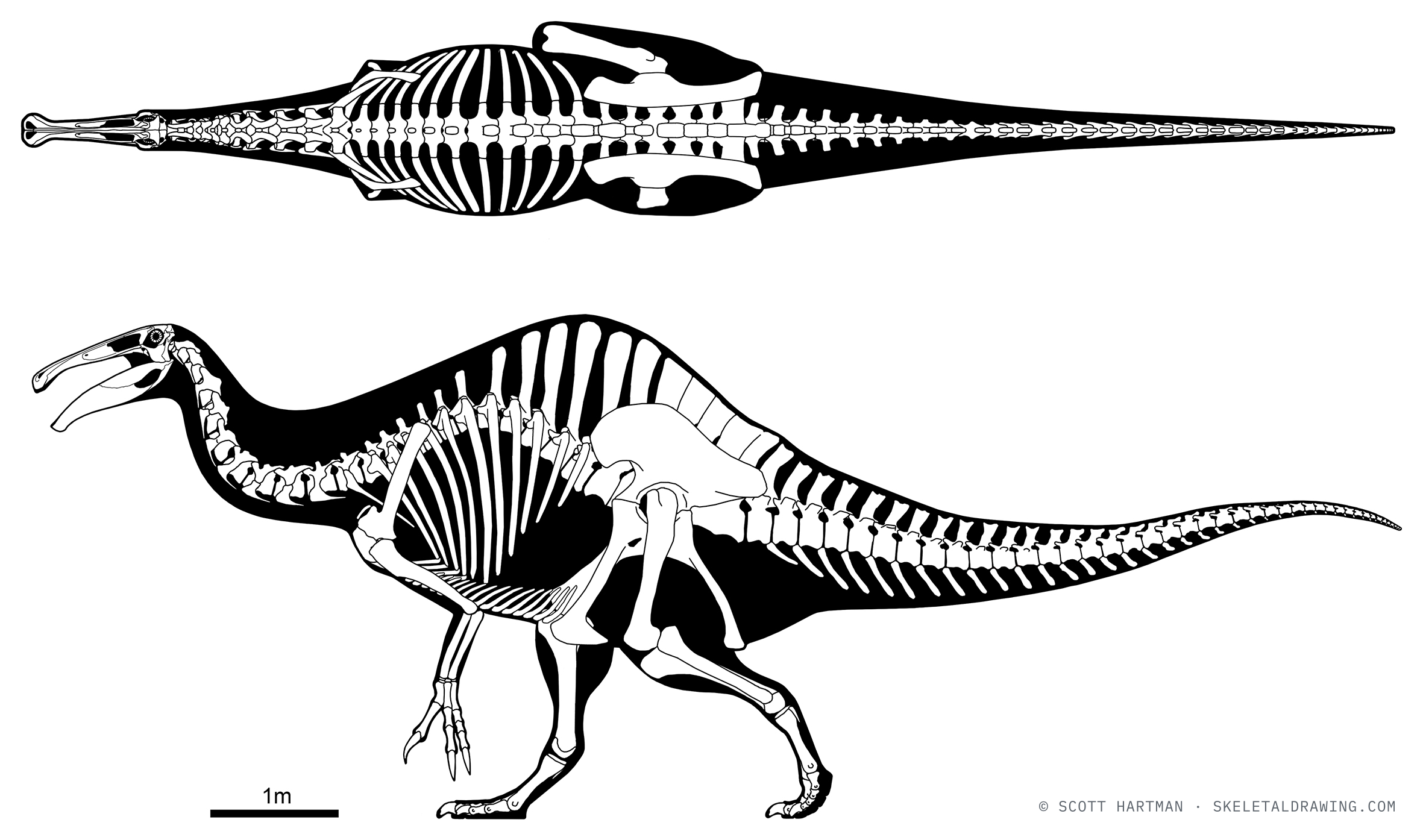
For many decades Deinocheirus was known only from a gigantic set of clawed arms - we knew a giant existed in the Late Cretaceous of Mongolia, but couldn’t know for certain what the rest of the animal looked like. When two new specimens were finally found, they didn’t disappoint. Deinocheirus turns out to have been a truly giant ornithomimosaur theropod, with a bulky, curved back containing a sail or hump of muscle, and a long, narrow snout that is reminiscent of ducks. Growing up to 11 meters (35 feet) and perhaps 7 tonnes in weight (the same size as a large African elephant).
With the new specimens came new data to understand what these giants ate in life. Their skulls seem to have had quite weak bites, so meat-eating of larger animals wasn’t possible, but neither was eating tough or woody plants. There were lots of stomach stones (gastroliths) found in the stomach region, alongside fish scales and vertebrae. The deep lower jaw would have helped suck-in water to catch fish and aquatic invertebrates, so it appears these giant ornithomimosaurs were eating little critters in the water, perhaps supplemented by soft water plants that could be ground up by its gastroliths.
Another question is what its skin was covered in. Preserved ornithomimids show a combination of fuzz and feathers as adults, but Deinocheirus was so large that it’s possible such features were reduced (much as fur is reduced in living elephants and hippos), although we are unlikely to know for certain unless skin impressions are discovered.