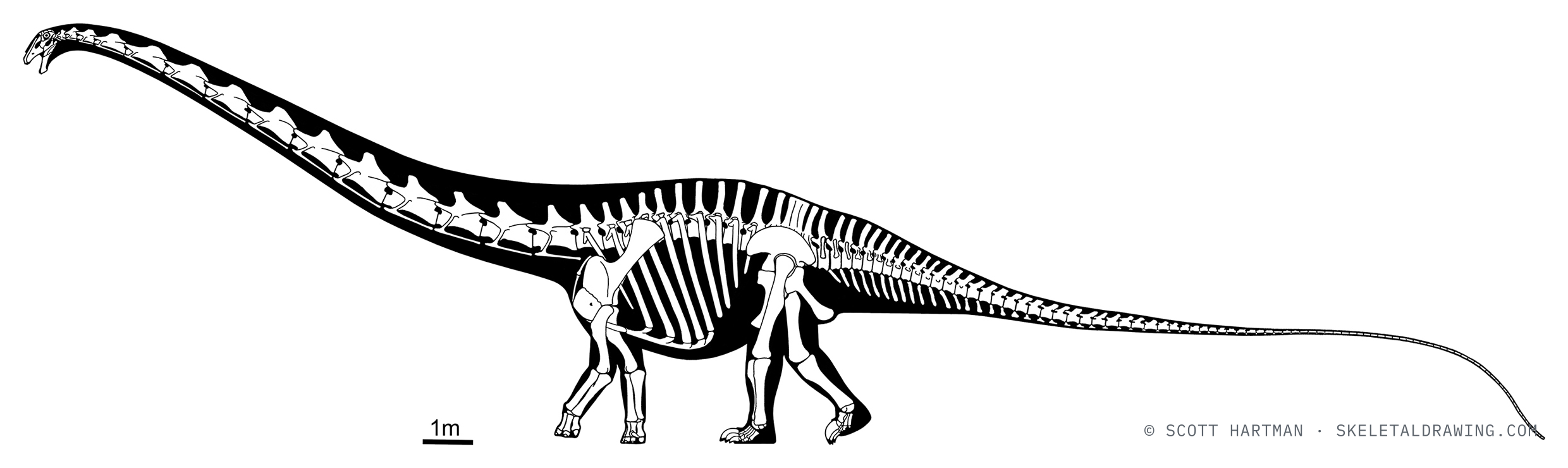
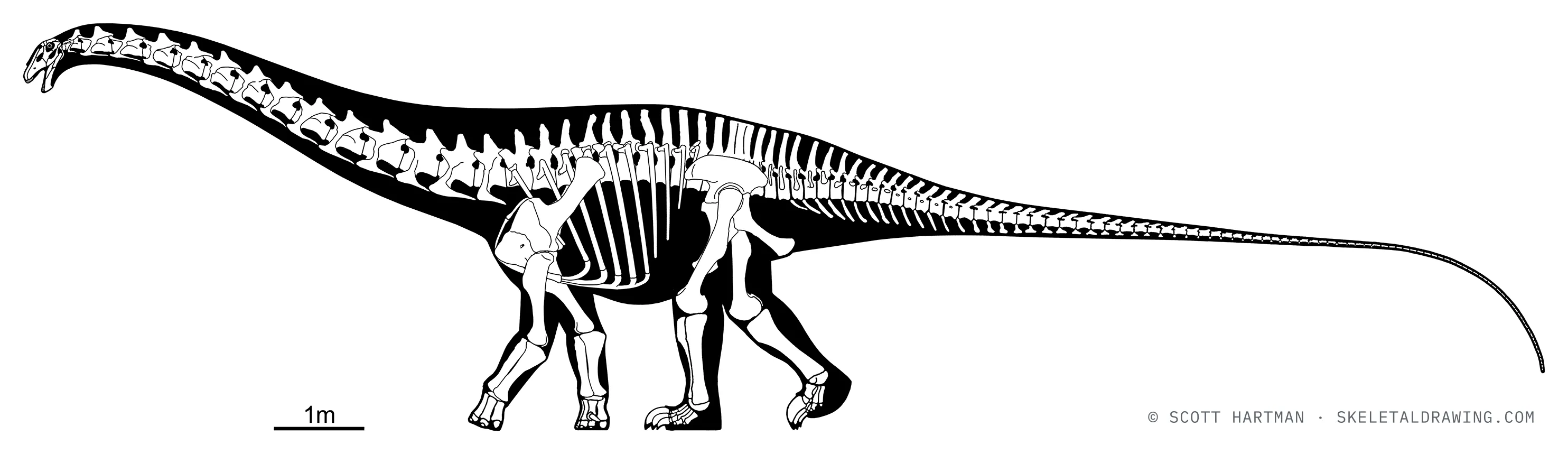
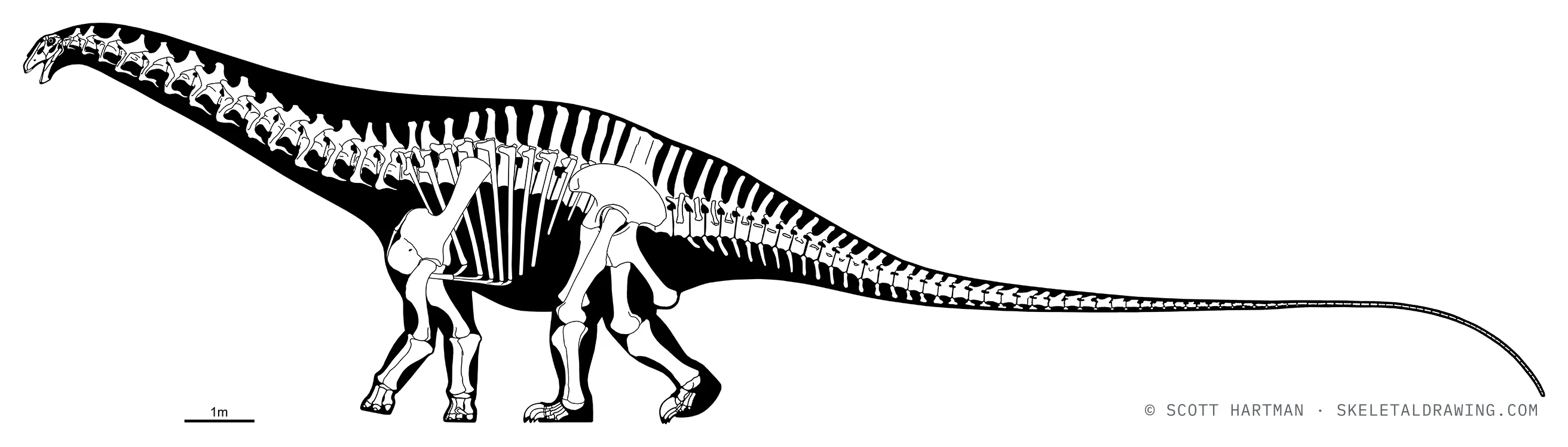
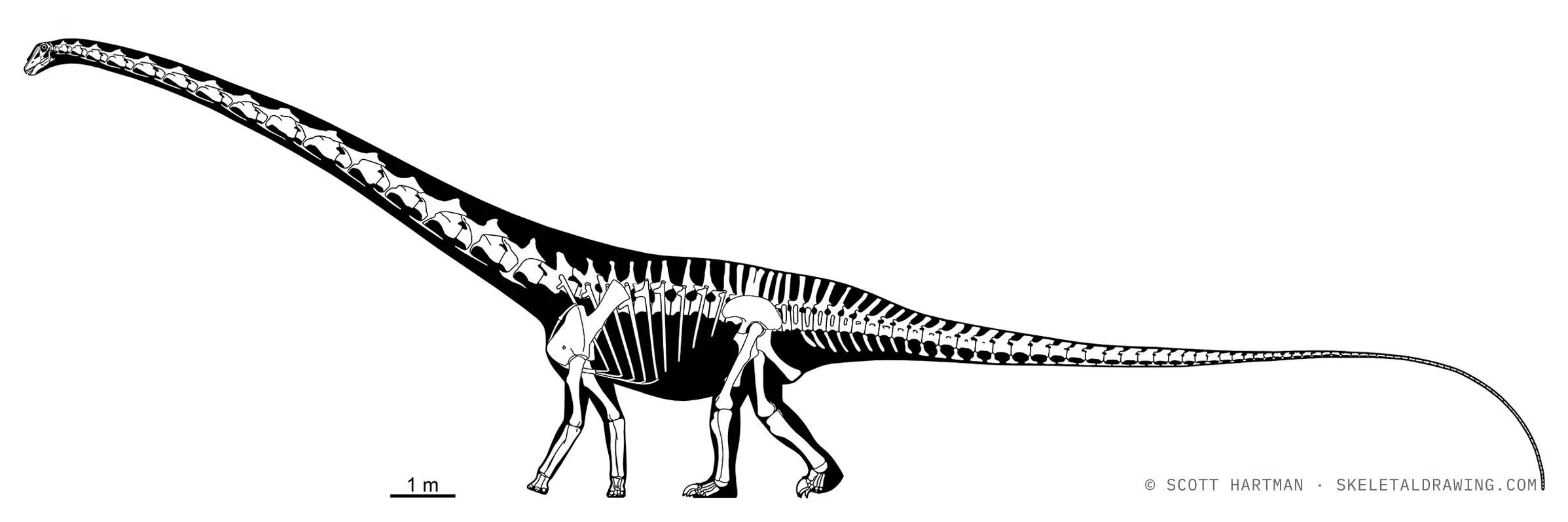
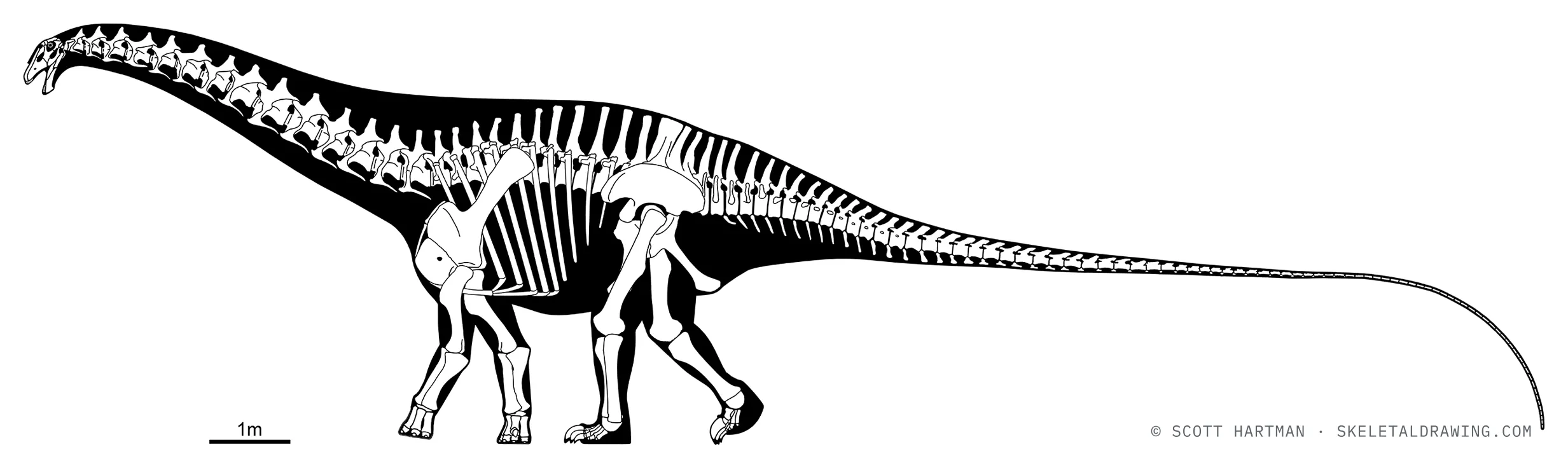
Supersaurus is a gigantic diplodocid from the Late Jurassic Morrison Formation, and the sauropod most dear to my heart*. Known from two specimens, the larger type specimen, BYU 9025, was excavated from a quarry full of disarticulated sauropod remains, so the description of WDC DMJ-021 helped clarify which bones belonged to Supersaurus from the original site, and being more complete it also helped establish the overall proportions of Supersaurus. By combining the two skeletons, it turns out the largest specimen of Supersaurus grew to more than 40 meters (130 feet) long, making it not just the longest dinosaur with complete enough remains to make a reasonable length estimate, but also longer than the blue whale, making it the longest known animal to ever live. Much of that length was neck and tail, so Supersaurus isn’t a serious contender for the heaviest dinosaur, let alone competing with blue whales for mass. So far I have been talking about the type species, Supersaurus vivianae, but it’s worth noting that another species of Supersaurus, S. lourinhanensis, has been described from the Late Jurassic of Portugal, although some researchers believe it deserves its own genus, Dinheirosaurus lourinhanensis.
*I got to work on the original dig site of WDC DMJ-021, the “Jimbo” specimen, and the description of it was a key early-career paper.