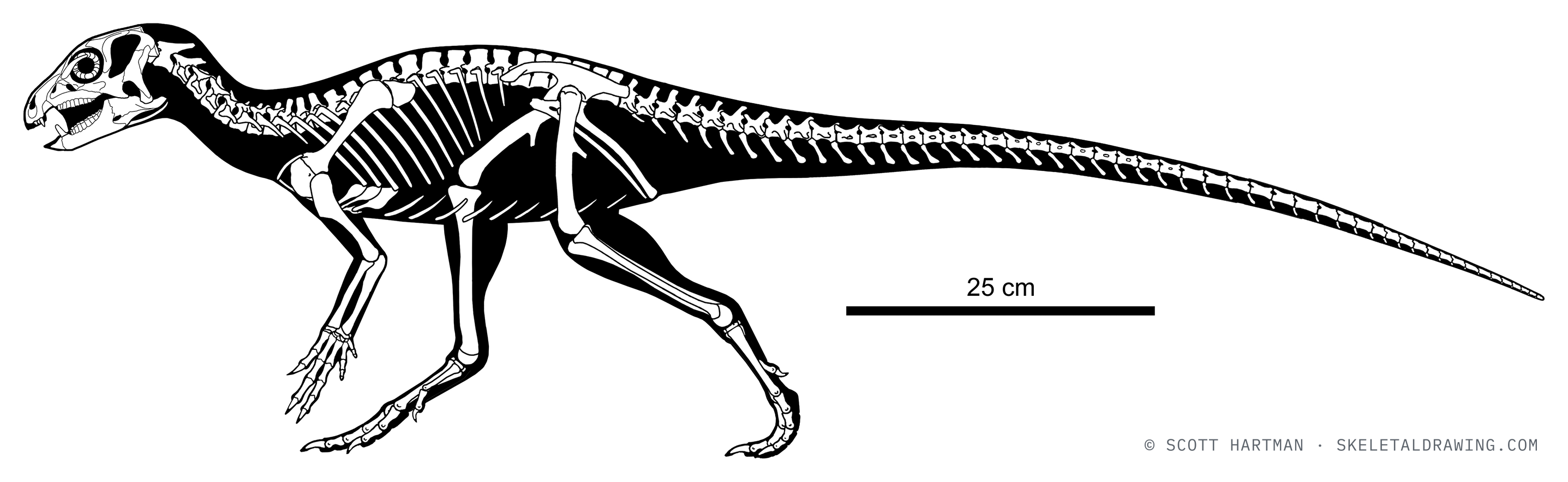
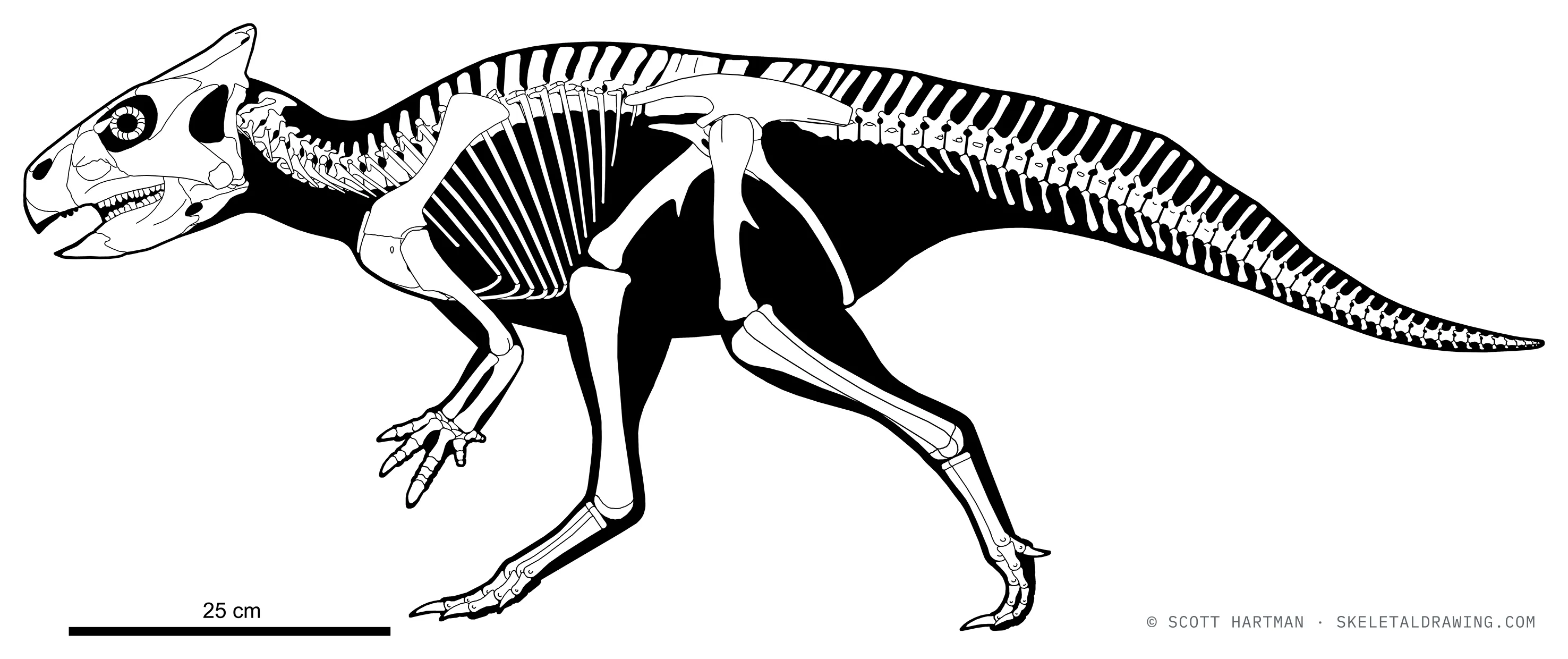
Heterodontosaurus was a small, early ornithischian from the Early Jurassic of South Africa, only about 1.25 m (4 feet) long. Unusual outside of mammals and our relatives, it famously had multiple types of specialized teeth, including prominent canine-like tusks. The scientific name for having differentiated teeth like this is “heterodont”, which inspired its name. Heterodontosaurus still possessed bony gastralia (belly ribs), a feature lost by most later ornithischians, but it did seem to have started to adopt the ornithischian breathing apparatus, which included a diaphragm-like muscle to help ventilate the lungs.
The canine-like teeth are unusual for plant-eating dinosaurs, although whether they point to a more omnivorous diet, or were used for display and settling intraspecies disputes (something seen today in Chinese water deer) is not yet known. Other heterodontosaurs have been preserved with dense, bristly skin coverings, and Heterodontosaurus may have appeared similarly fluffy or prickly in life.