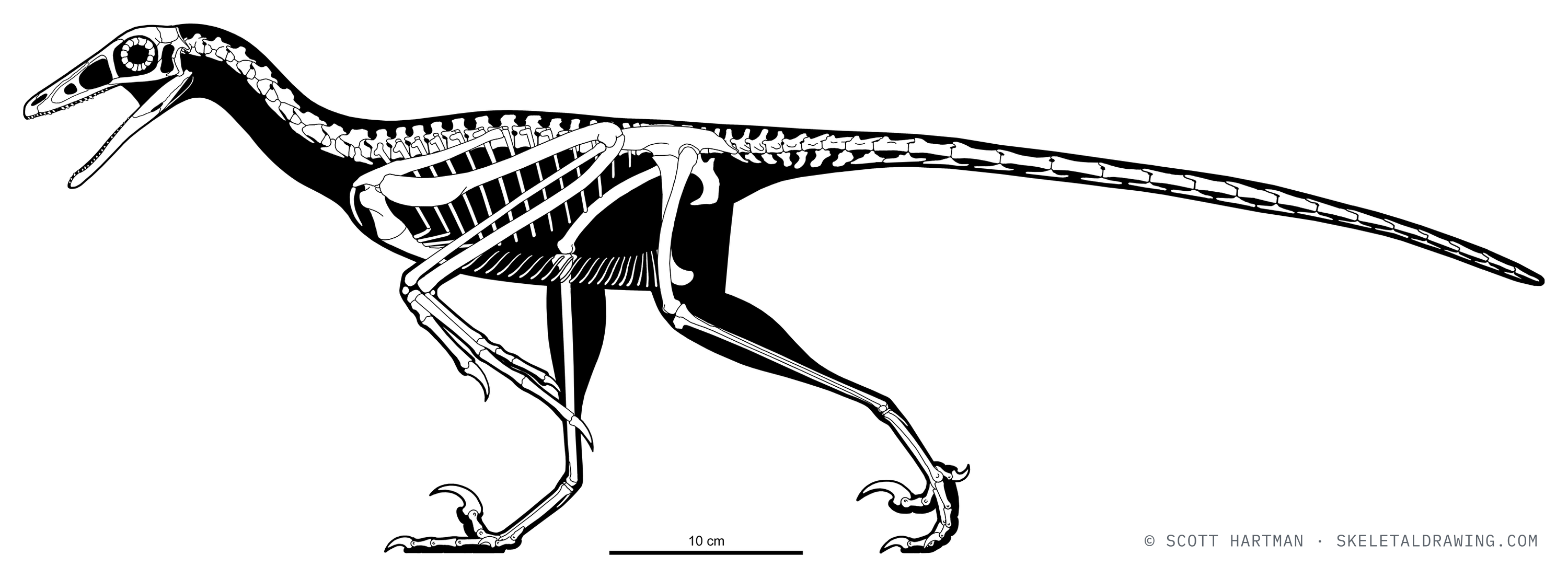
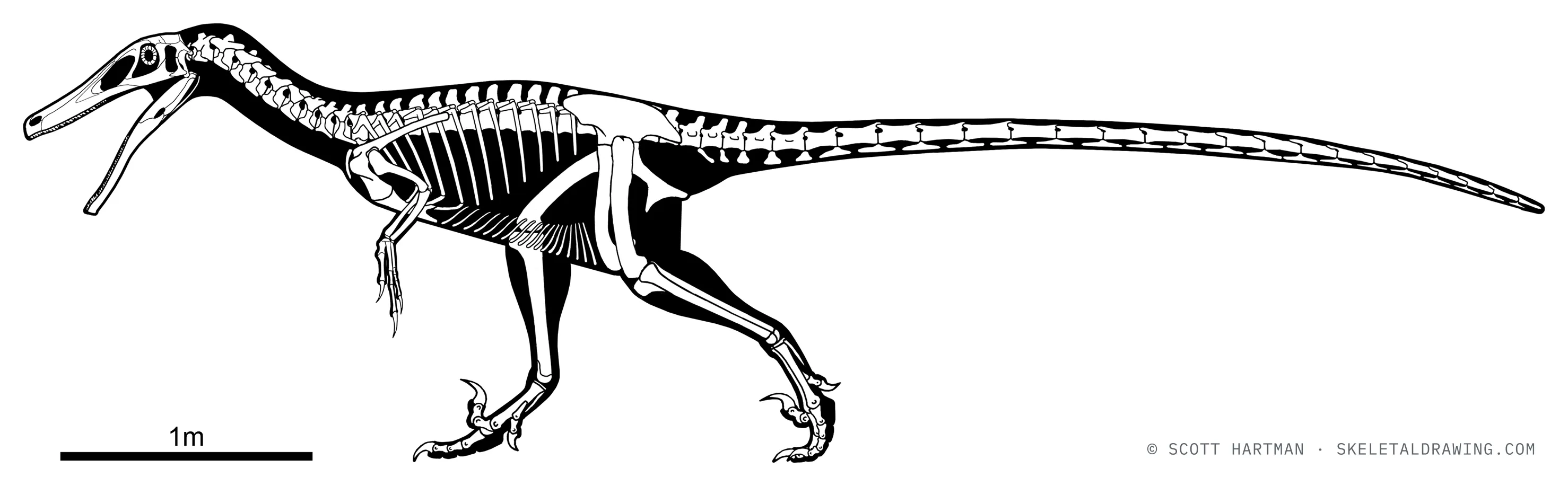
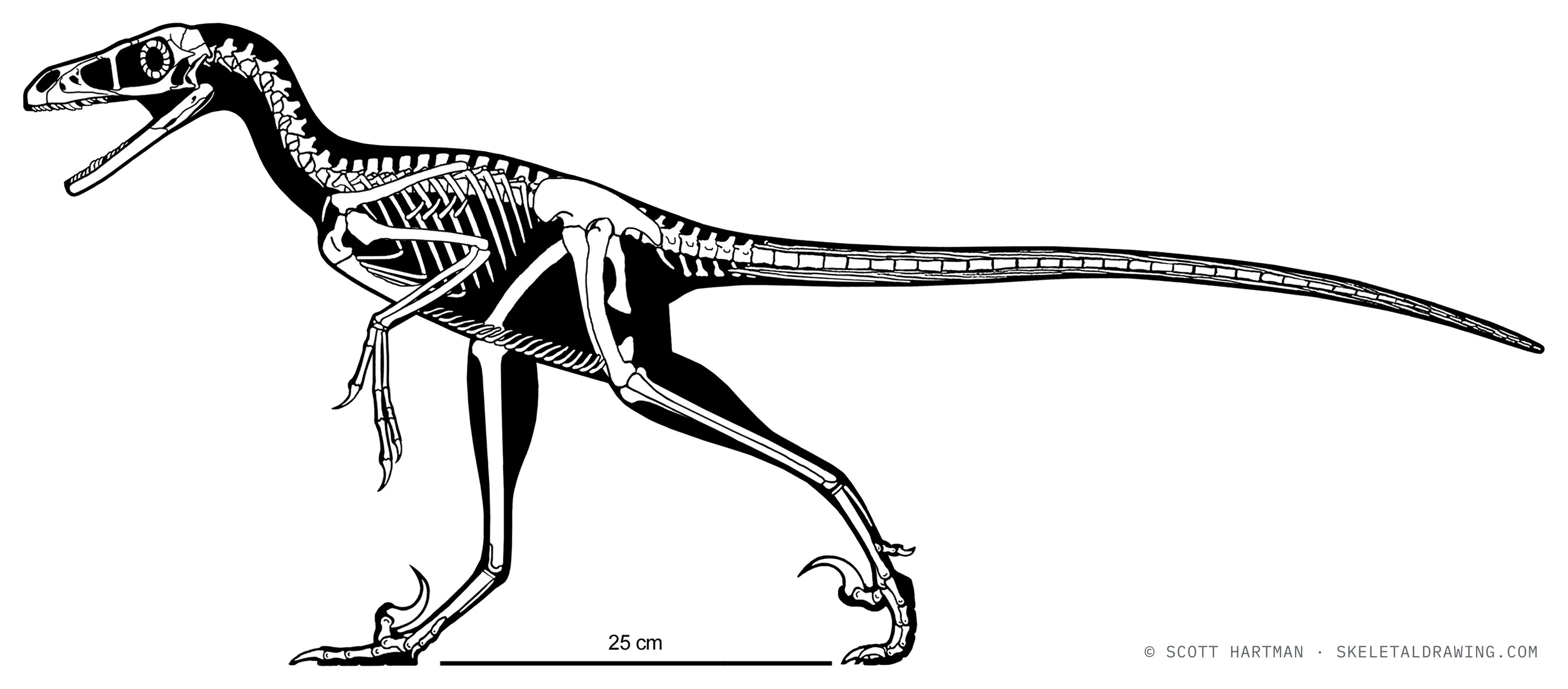
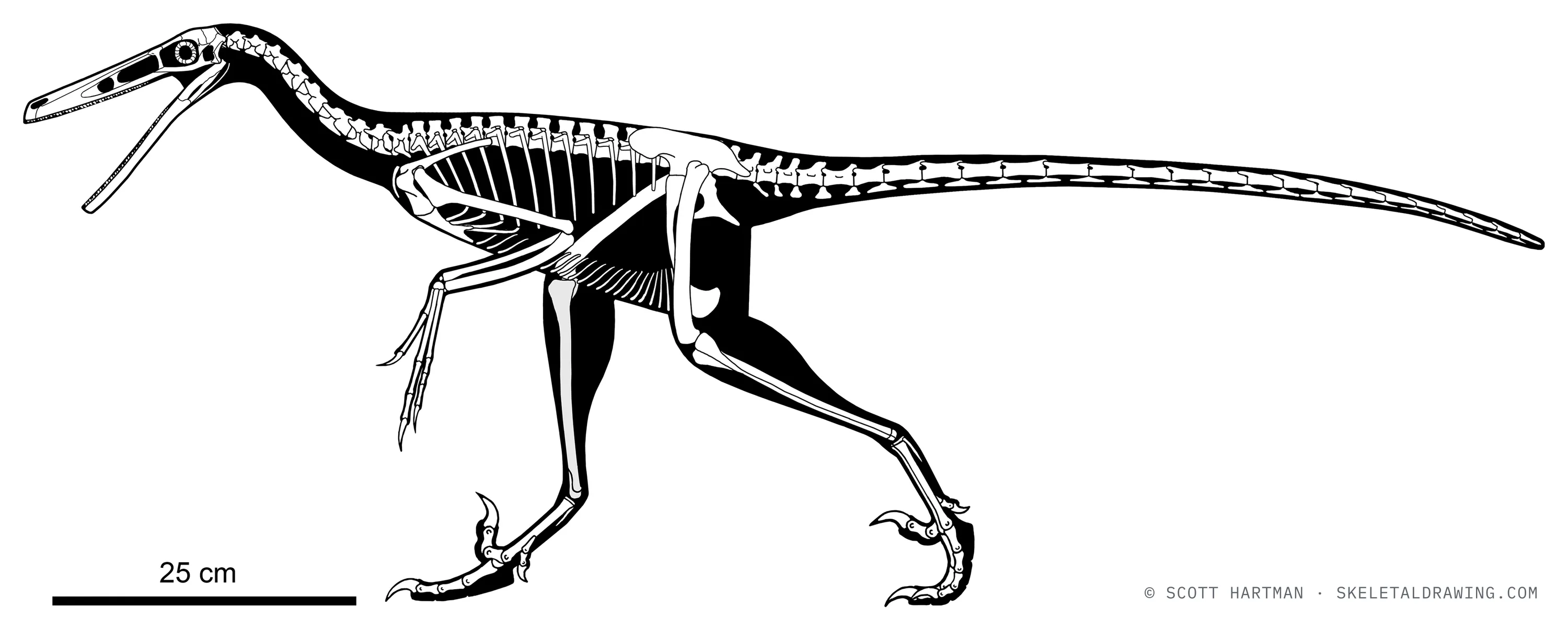
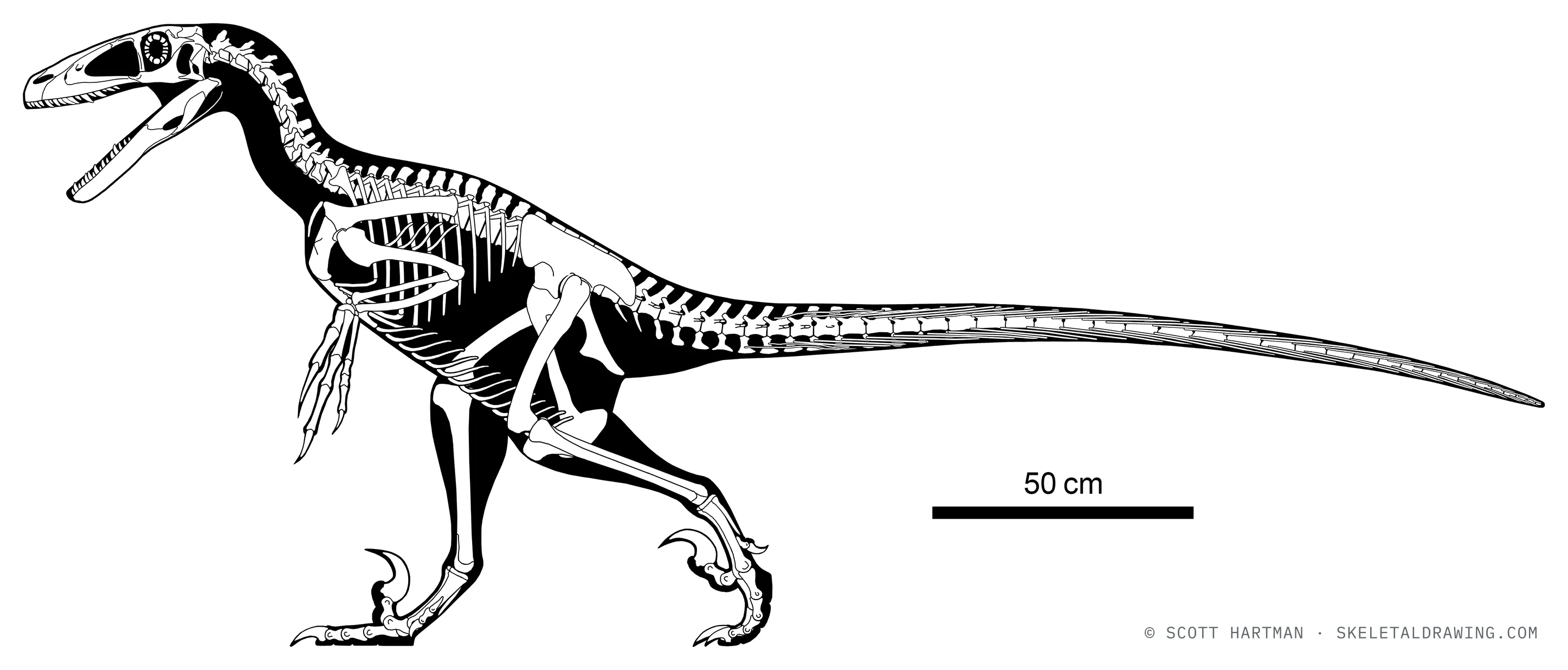
Rahonavis was a small dromaeosaurid from the Late Cretaceous of Madagascar. Rahonavis had a raised sickle claw on each foot like other dromaeosaurids, and some aspects of its pelvis and vertebral anatomy suggest it may have belonged to a peculiar group of southern hemisphere dromaeosaurs called unenlagiines, although this is not fully settled. A fun bit of trivia is that when originally described, the animal was initially given the genus name Rahona, but this turned out to be pre-occupied by a moth, so it was renamed Rahonavis.
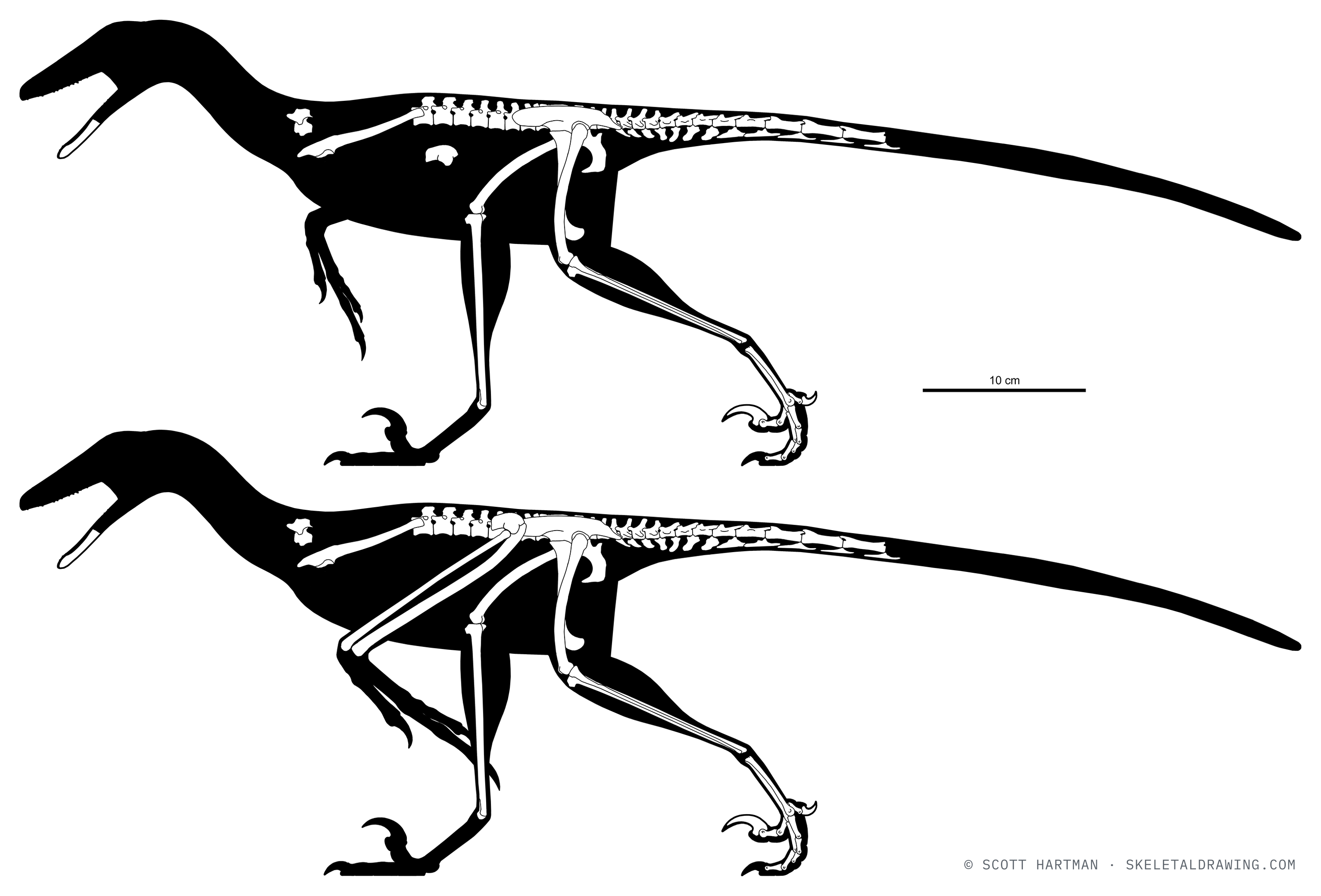
One open question involves the forelimb bones (the ulna and radius). When first described much was made about how large they were, and the well-developed quill knobs (raised bumps where wing feathers attach by tendon to the ulna) - a big deal in 1998, because fewer feathered dinosaurs were known. Yet the two forelimb bones are actually very large compared to the rest of the skeleton, and it’s worth noting that they were found only loosely associated, in a quarry that also produced more advanced, flying avialans. If the forelimbs do go with Rahonavis, this may be another example of incipient flight evolving independently of birds. Below, the type specimen (UA 8656) has been restored both with and without assuming the forelimbs belong with the rest of the skeleton.