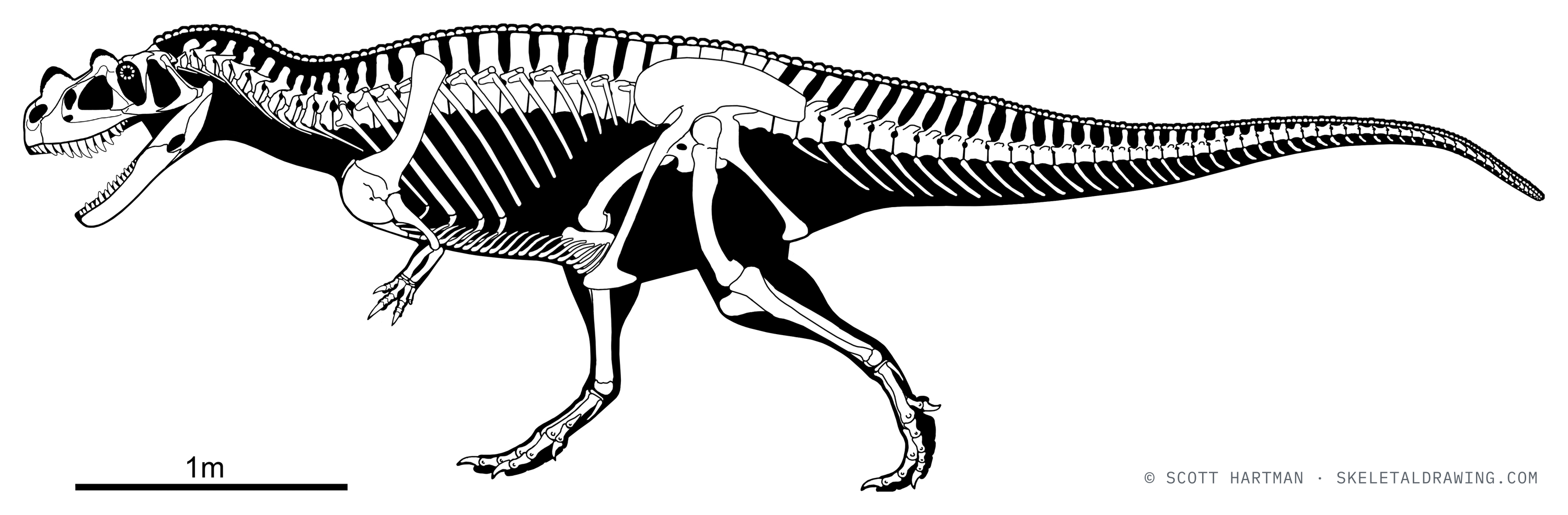
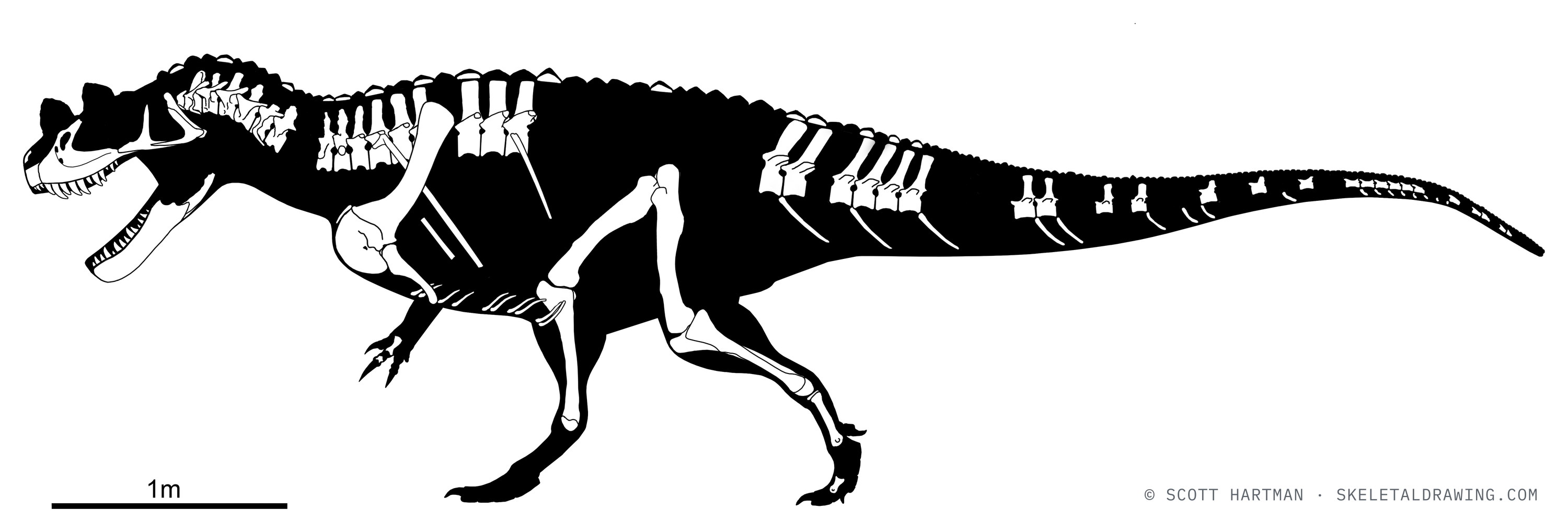
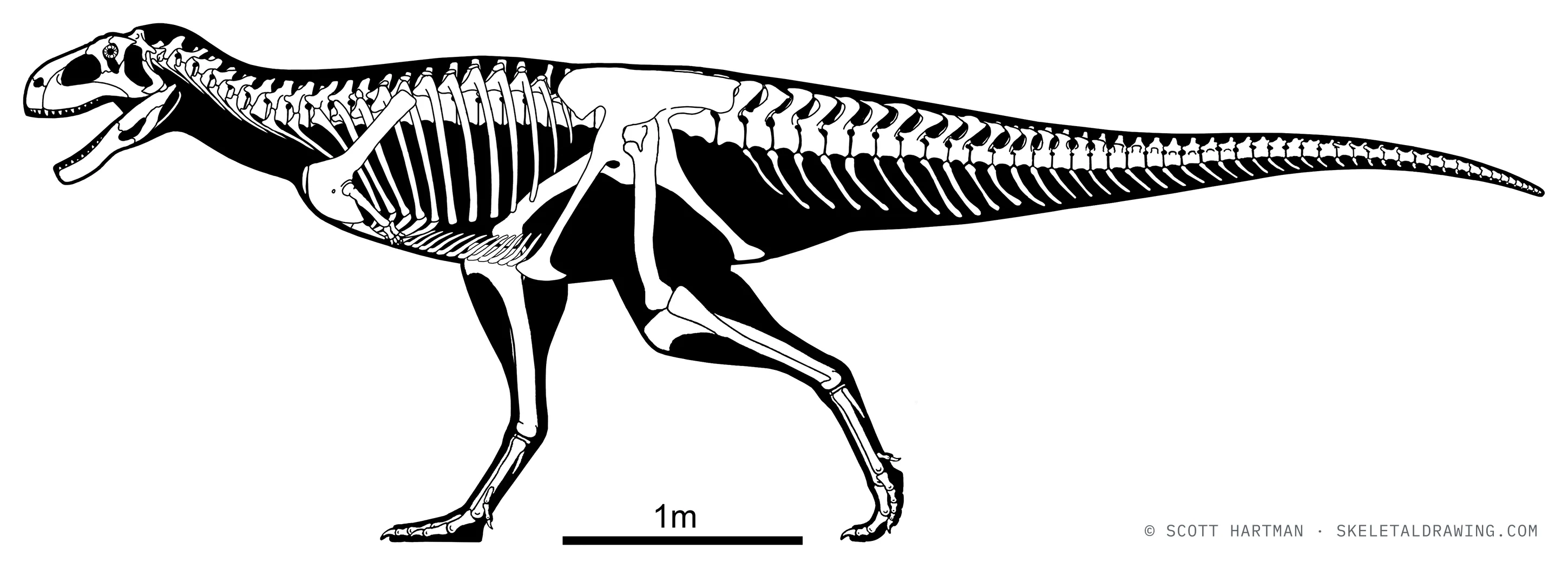
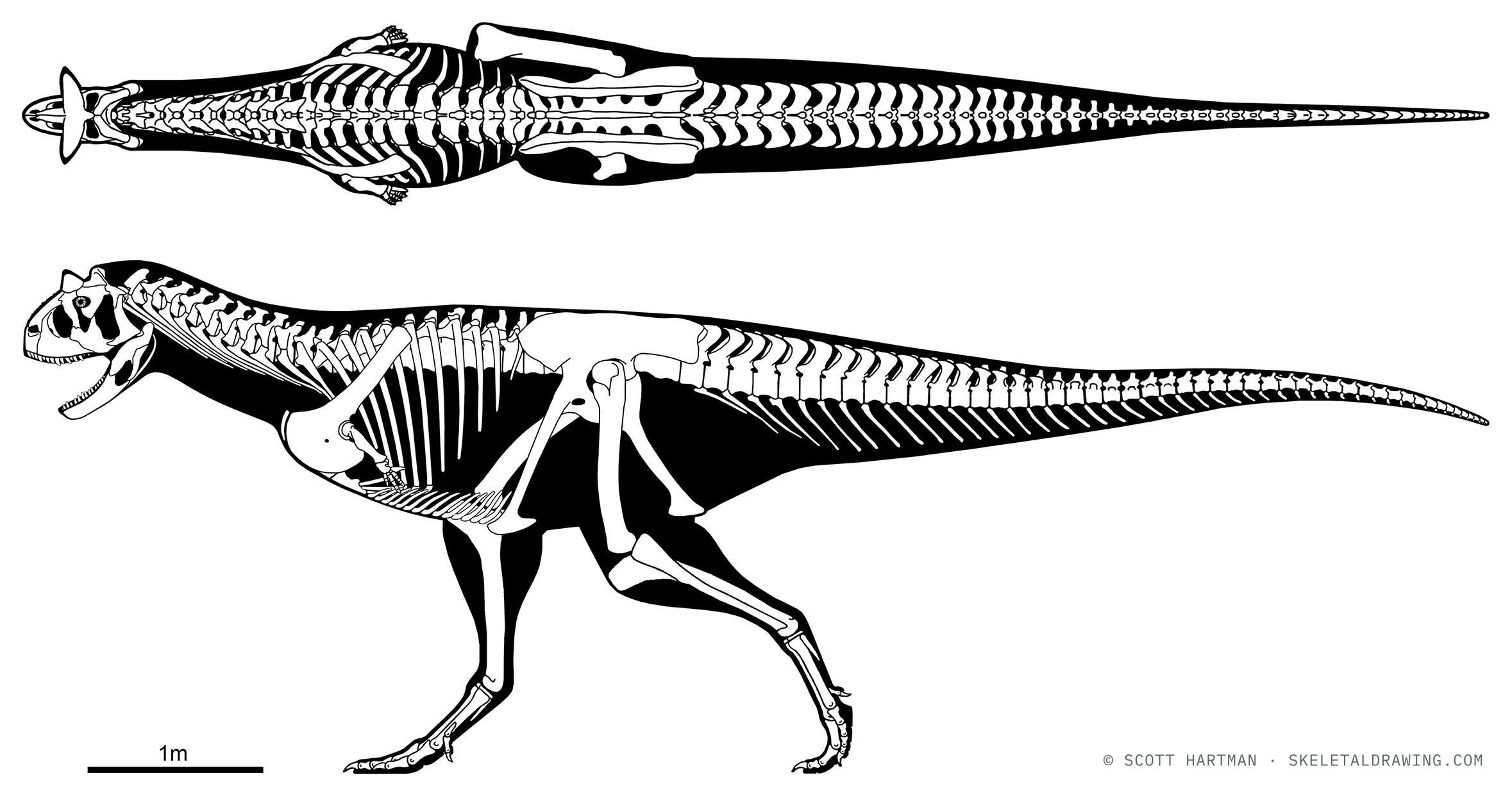
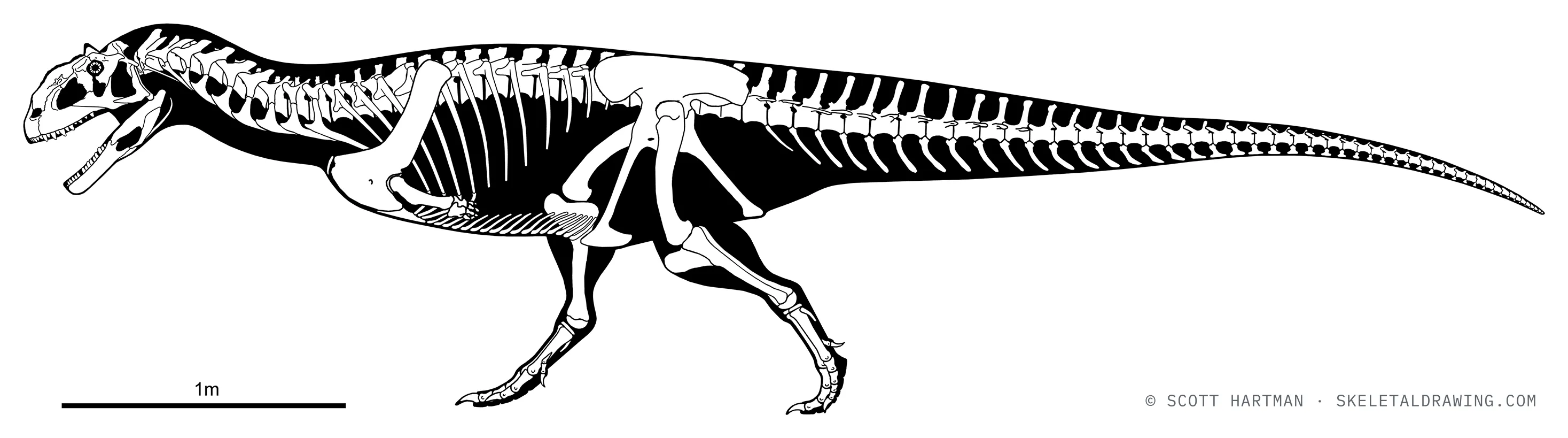
Ceratosaurus was (not surprisingly) a ceratosaurian theropod, which lived during the Late Jurassic of western North America. Living alongside the larger Allosaurus and Torvosaurus, Ceratosaurus could easily be distinguished by a prominent horn on its snout, smaller horns over the eyes, and a row of bony plates along its back.
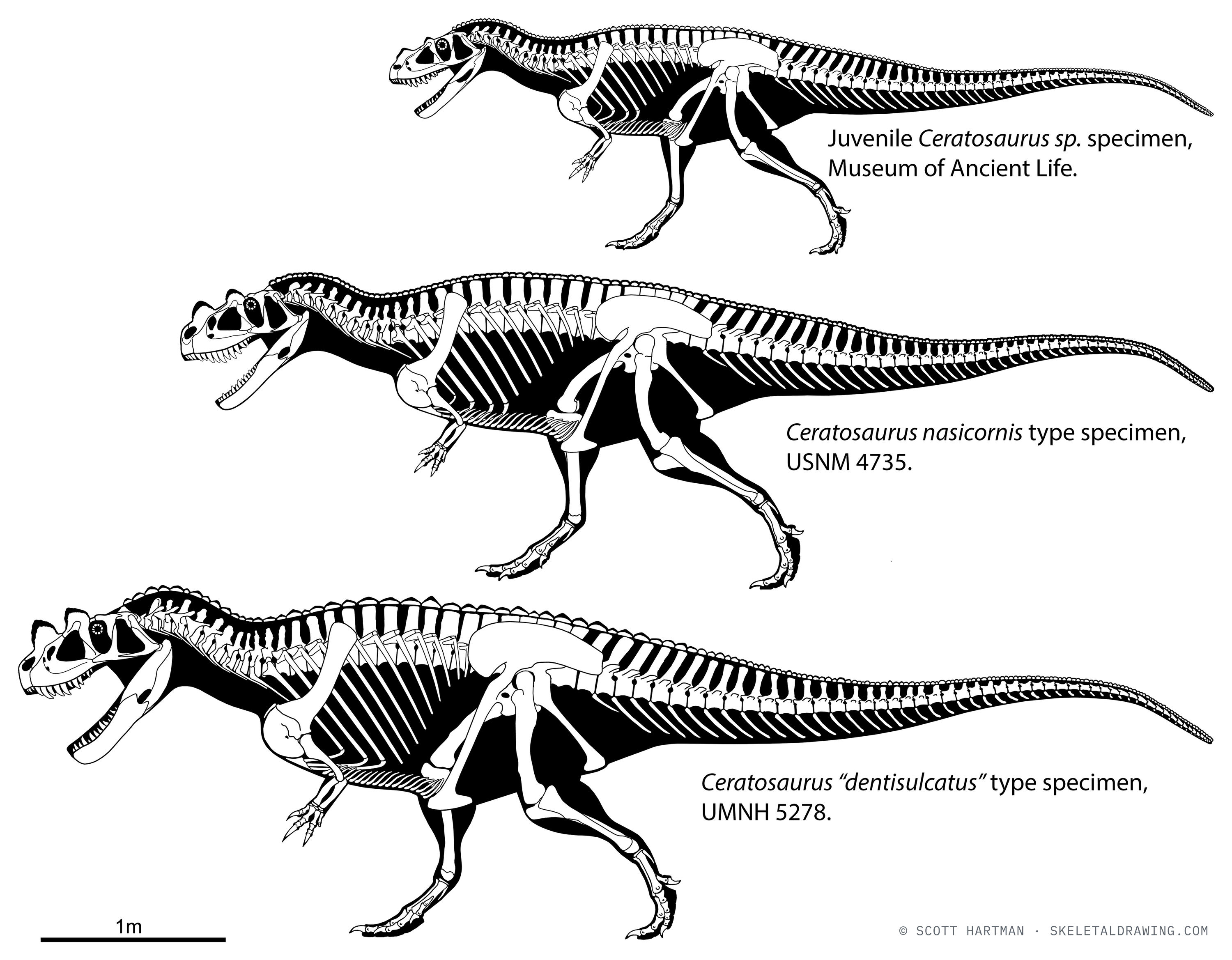
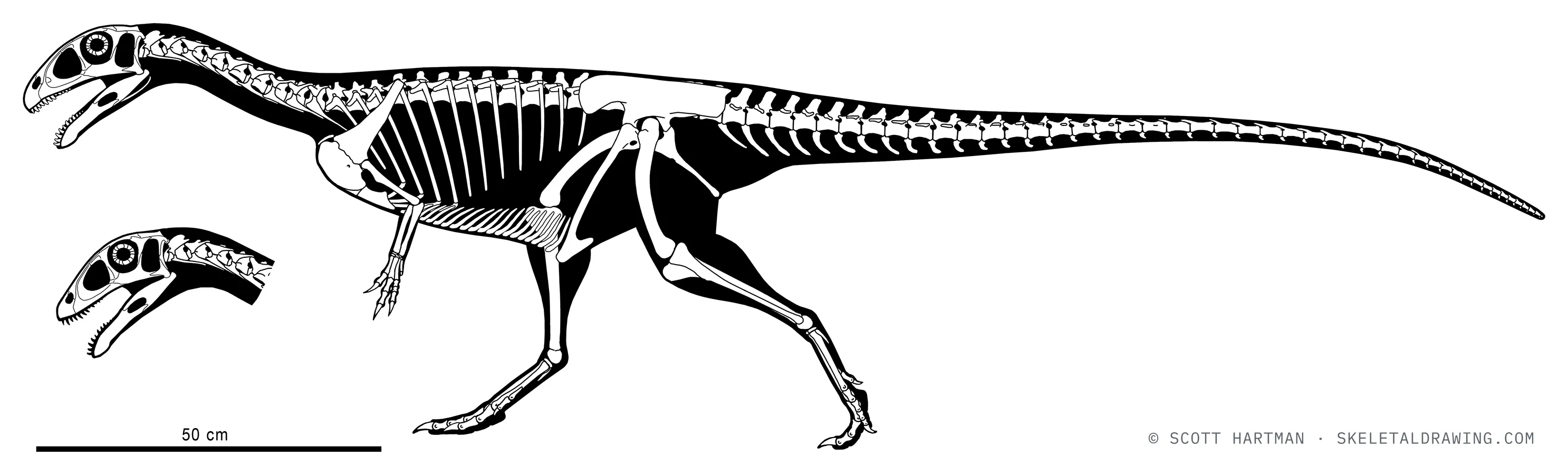
While Ceratosaurus skeletons are less common than Allosaurus, we do have something of a growth series, with juvenile, subadult and larger, more robust adult specimens known. Although the largest specimen was originally described as a different species (Ceratosaurus dentisulcatus), it’s generally recognized today as C. nasicornis, so is presented here as the older, fully grown stage of development.
The teeth of Ceratosaurus were large for its size, which some have taken as an indication that it hunted relatively large prey, although others have interpreted the striated enamel of the teeth as evidence they were hunting lungfish, so it’s safe to say there isn’t a consensus yet beyond “not-plants”. The mounted casts of the juvenile specimen have teeth that look truly enormous, but that seems to be due to them slipping out of their sockets after death - not only is this a common occurrence in vertebrates, but you can see on the specimen that much of what is exposed is root rather than the enamel-covered crown.
How the proportions change
Measured against the femur (thigh bone), the juvenile has both the proportionally largest skull and the longest humerus (upper arm bone), the subadult type has the smallest of each, and the adult falls between them. That isn't the order a tidy growth series would predict. Some of it will be individual variation — unlike a bonebed sample or a matched pair, these are three unrelated animals. But irregular growth of this kind turns up in the earliest dinosaurs, and quite a few lineages appear to have kept it well after that, so a neat progression may not be what we should expect.
| Stage | Length m | Skull m | Femur m | Humerus m | Skull ÷ femur | Humerus ÷ femur |
|---|
| AdultUMNH VP 5278 | 6.6m | 0.79m | 0.72m | 0.32m | 1.10 | 0.44 |
|---|
| SubadultUSNM 4735 | 5.7m | 0.68m | 0.63m | 0.26m | 1.08 | 0.41 |
|---|
| Juvenile | 4.6m | 0.51m | 0.44m | 0.22m | 1.16 | 0.50 |
|---|