Allosaurus
Three documented skeletals across two species of Allosaurus, each drawn in left lateral view.
- Skeletals shown
- 3
- Species
- 2
- Size range
- 2.8–8.3 m
Skeletals
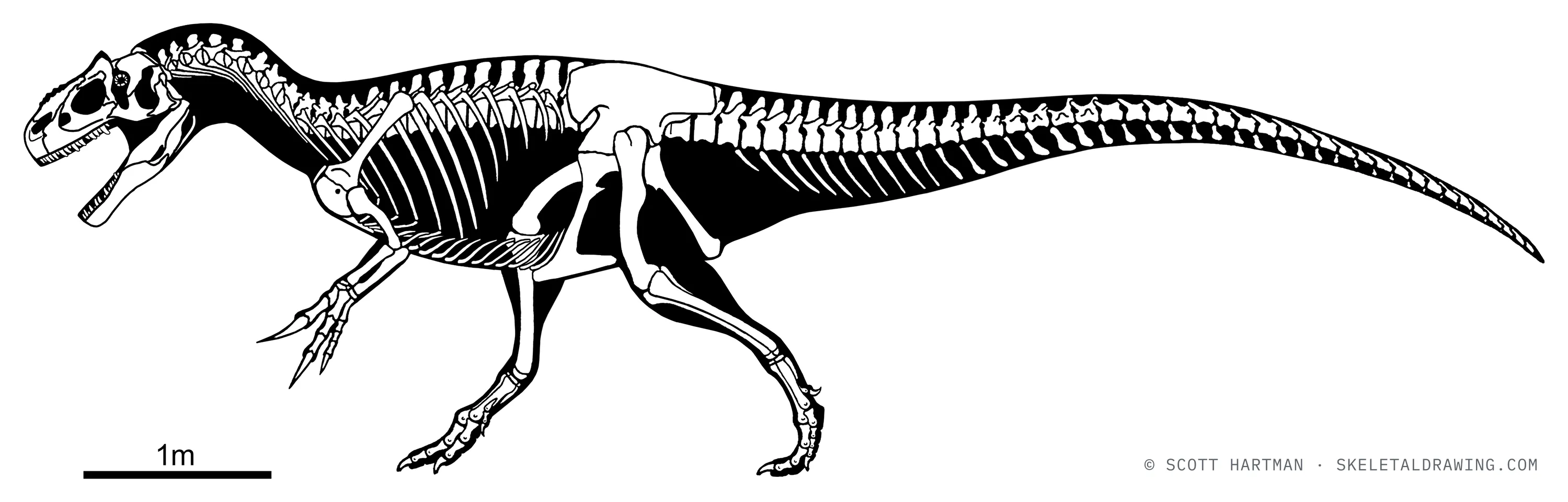
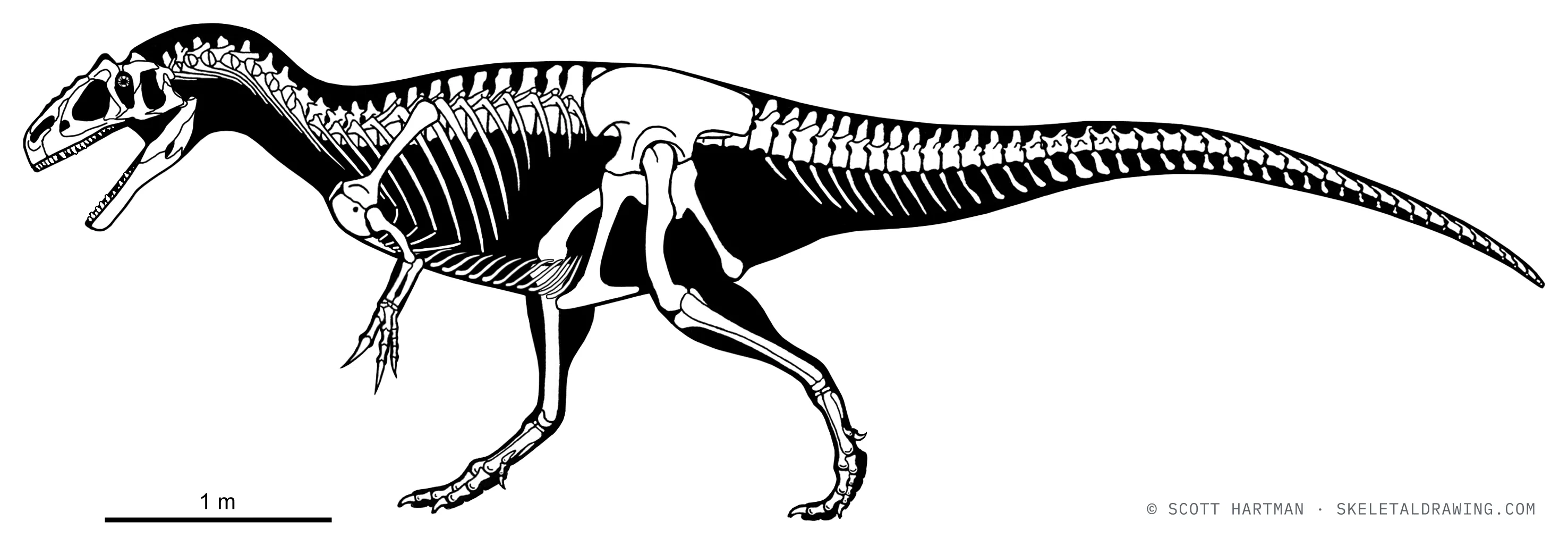
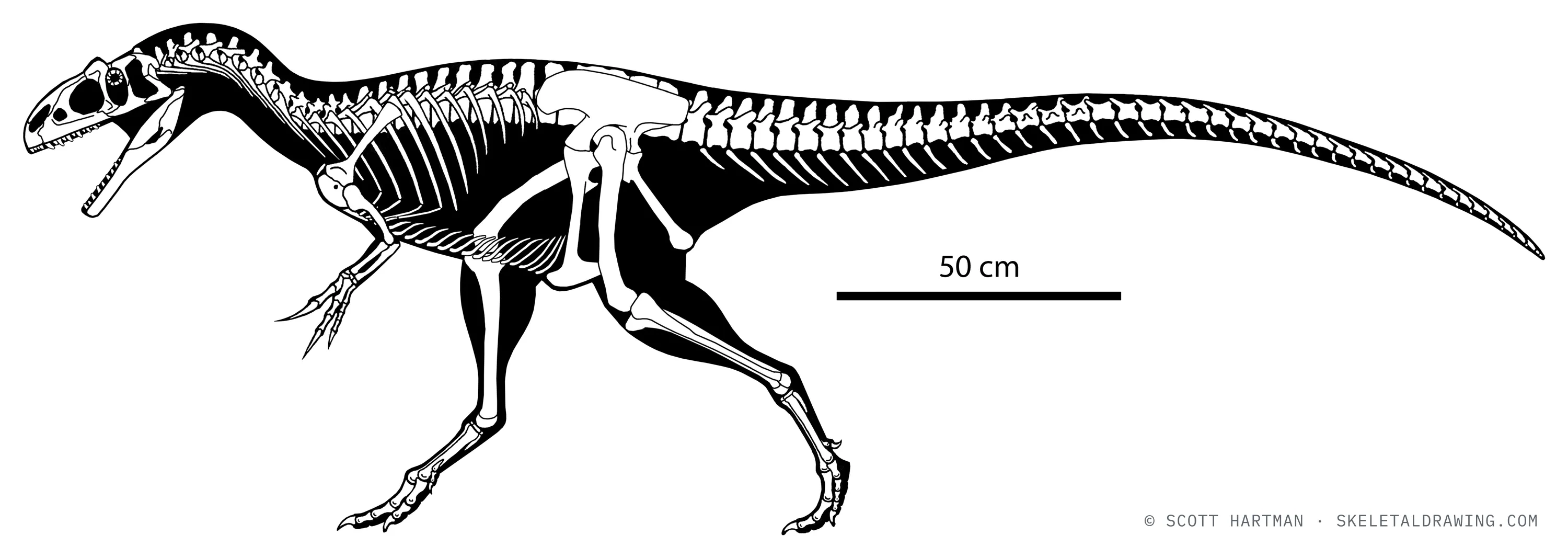
Scale comparison
Allosaurus is the most famous predatory dinosaur from the Late Jurassic of western North America. At a typical length of 7-9 m (22-29 feet) and weighing a couple of tonnes, they would have been formidable predators, although a lone animal might have struggled to tackle full-sized Stegosaurus, let alone the many sauropods they shared their habitats with (the Morrison Formation produces many of the most famous sauropods, including Diplodocus, Brontosaurus and Brachiosaurus).
Allosaurus had its share of naming debates, although many of them have receded further in time from the present than, say, the vigorous debate over Nanotyrannus. Still, the original name itself was disputed for quite a while - Allosaurus was named during the late 19th century Bone Wars era, when the feuding paleontologists Cope and Marsh competed to see who could name the most fossils. As you might expect from such a silly exercise, lots of times names were applied to scrappy remains, and several similar animals were named more than once, resulting in a mess that we are still straightening out to this day. Among several names (Creosaurus, Epanterias, etc.), in 1920 it was suggested that all of them, along with Allosaurus, should be sunk into the much older name Antrodemus.
Many books and museum displays of the mid-20th century adopted Antrodemus, but in 1976 Jim Madsen concluded that the single tail vertebra that Antrodemus was originally named for was not diagnostic, and worse, it’s not known which rock layers the Antrodemus tail vertebra was collected from. With that, Allosaurus fragilis became the correct name for most of the allosaurid specimens, and when it was determined that some of the specimens deserved a second species name, it was named Allosaurus jimmadseni in his honor.
There are still some interesting questions out there. Fragmentary remains indicate 10+ m (over 30 feet) long individuals, some of which might deserve their own species (or genus) as well. Specimens from Oklahoma have been variously named Saurophaganax and Allosaurus maximus, although, for reasons I won’t dive into here, those names have been retired in favor of Allosaurus anax. But the currently known A. anax remains are barely enough to deserve a name, and we will need additional specimens to unravel the mystery of these larger, more easterly allosaurs.
All documented skeletals — tap a column to sort
| Taxon | Author | Length | Specimen | |
|---|---|---|---|---|
| Allosaurus fragilis | Marsh, 1877 | ~8.3 m | — | View → |
| Allosaurus jimmadseni | Chure & Loewen, 2020 | ~6.9 m | MOR 693 | View → |
| Allosaurus jimmadseni | Chure & Loewen, 2020 | ~2.8 m | Privately held | View → |