OrnithischiaSaurolophinaeROM 44770

Maiasaura peeblesorum

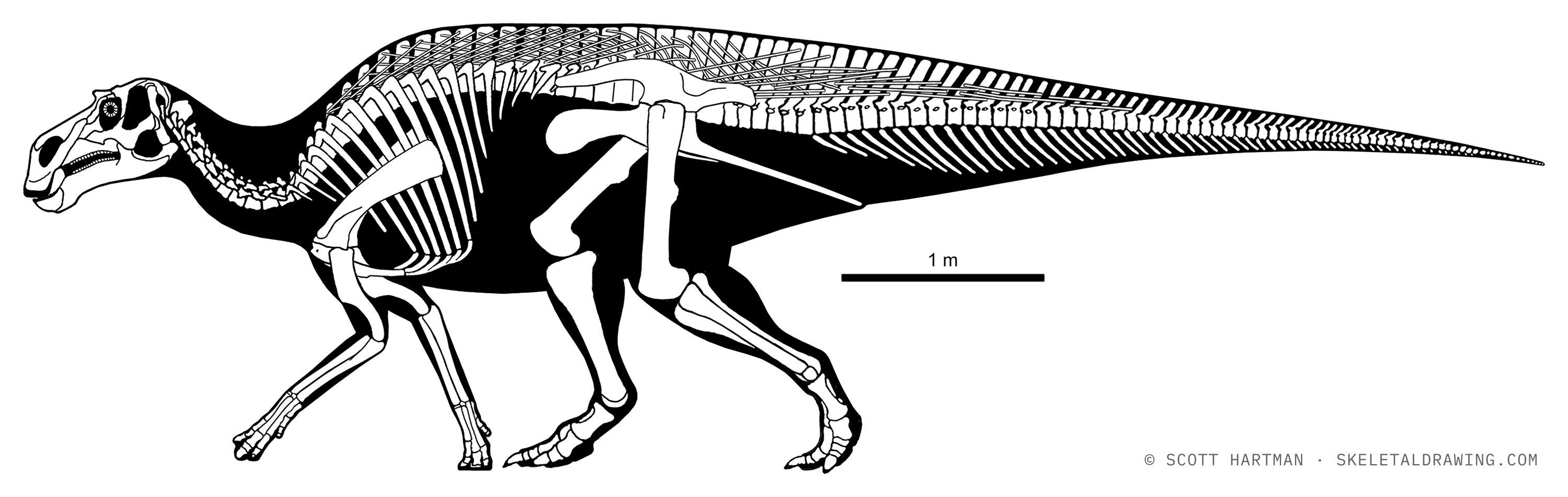
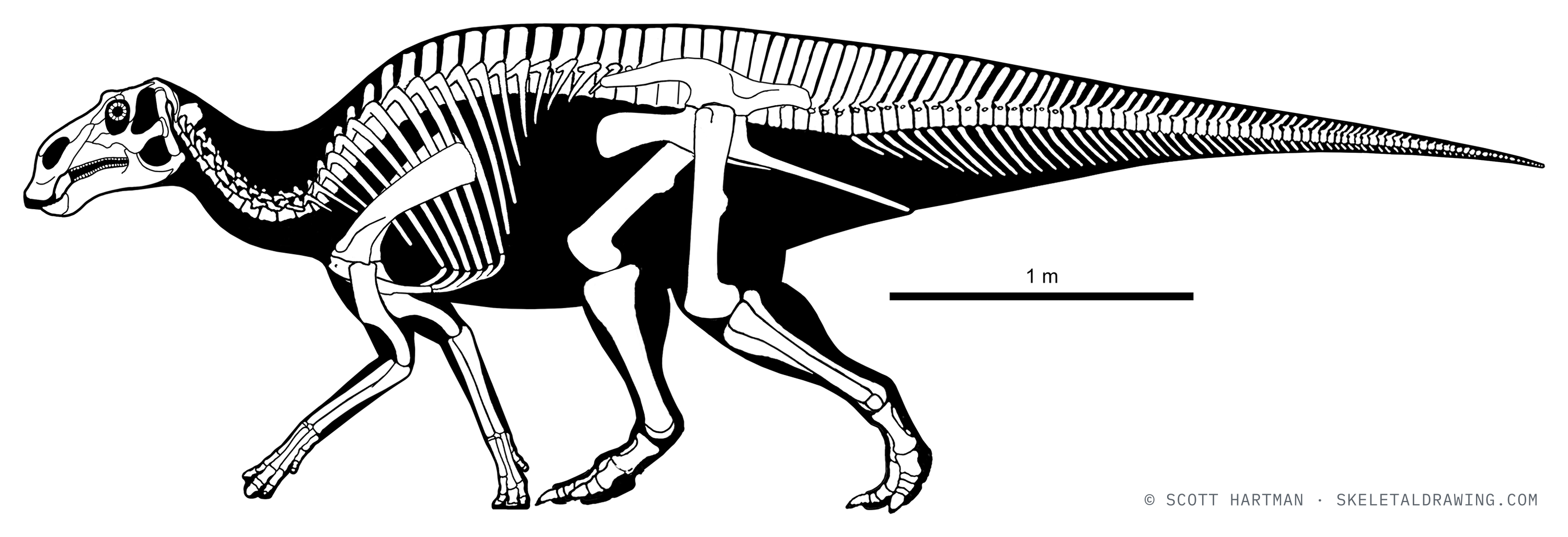
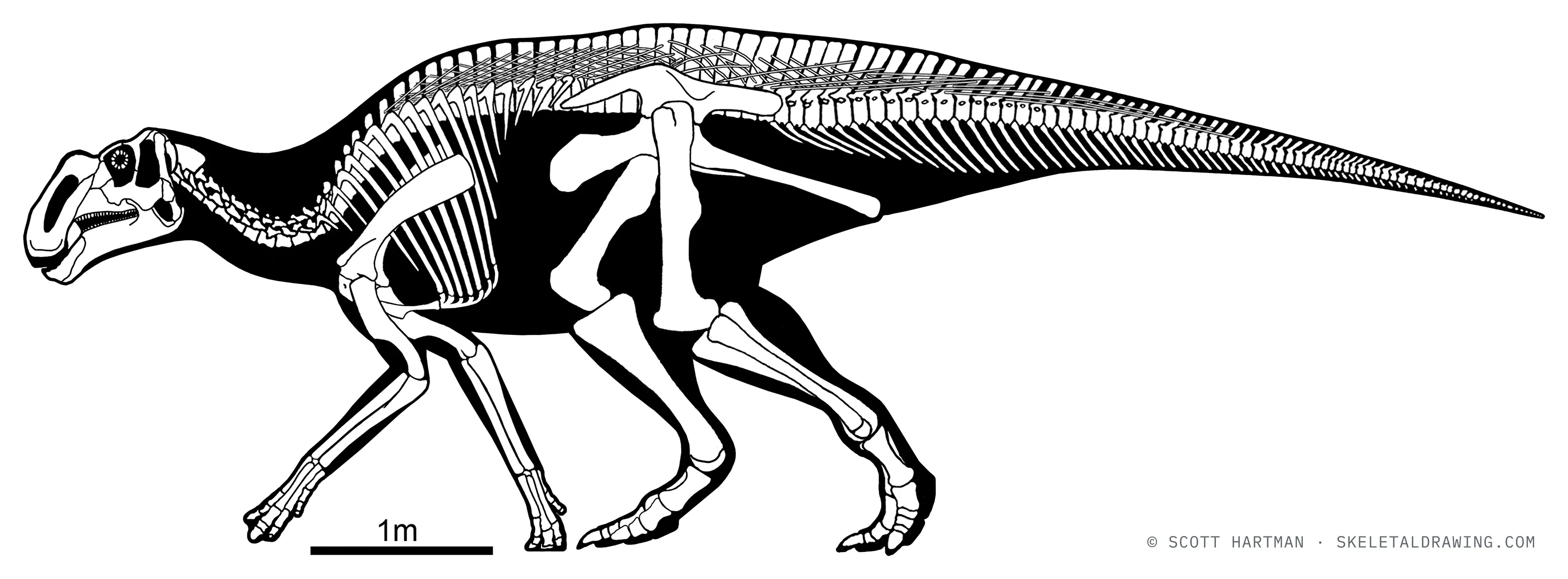
Maiasaura peeblesorum skeletal reconstruction, left lateral view, reconstructed length ~7 m.
Scale bar = 1 meter
Taxon
Maiasaura peeblesorum Horner & Makela, 1979
Specimen
ROM 44770
Reconstructed length
~7.5 m (25 feet)
Life stage
Adult
View
Left lateral
Drawing
© Scott Hartman
Drawn
2004, revised 2018
Clade
  1. Ornithischia
  2. Neornithischia
  3. Ornithopoda
  4. Iguanodontia
  5. Hadrosauridae
  6. Saurolophinae

Available for editorial, museum & print licensing — inquiries & rates →

A saurolophine hadrosaurid (duck-billed dinosaur) from the Late Cretaceous of Montana. Maiasaura is famous from vast bonebeds and nesting colonies that provided the first strong evidence of parental care in dinosaurs, inspiring its name, “good mother lizard.”

The evidence

What the specimen actually preserves

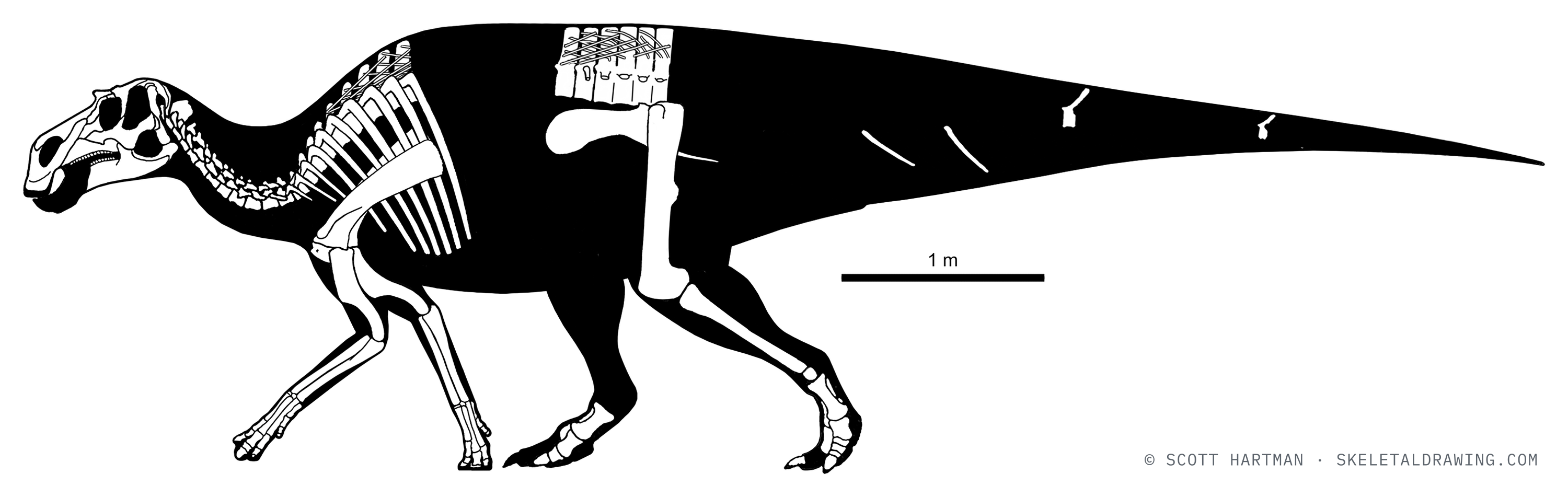
Maiasaura peeblesorum — known skeletal material (ROM 44770), left lateral view; preserved elements in white against a black body silhouette.
Known material of ROM 44770: elements preserved in the specimen are shown in white; unpreserved regions are left as black silhouette. Drawn 2004, revised 2013

Growth series

05meters from tail tip1.8 m
Adult7.5 mSubadult · 2 yr5 mYearling2.75 mHatchling0.5 m

Maiasaura from hatchling to adult. Maiasaura is mostly known from bonebeds, so outside of the adult, the growth stages are composed of composite skeletals, rather than skeletals based on individual specimens.

How the proportions change

Quite a lot happens as a young Maiasaura grows up. As a hatchling, the head and femur (upper leg bone) are about the same length. By the yearling stage the femur has pulled ahead, and the ratio changes comparatively little after that — most of the shift in head proportion happens in the first year of life.

StageLength mSkull mFemur mHumerus mSkull ÷ femurHumerus ÷ femur
Adult7.5m0.75m0.97m0.51m0.770.53
Subadult2 yr5m0.54m0.72m0.39m0.750.54
Yearling2.75m0.28m0.41m0.20m0.680.49
Hatchling0.5m0.07m0.07m0.04m1.000.57

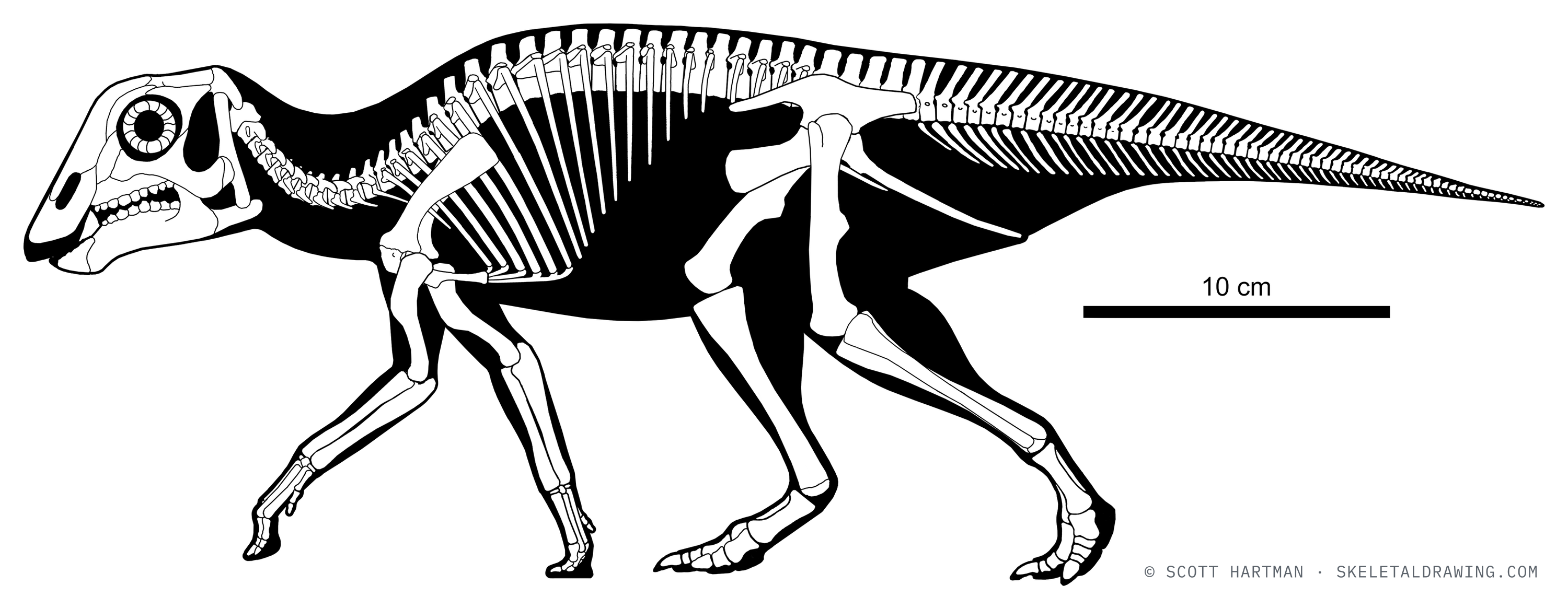
Hatchling

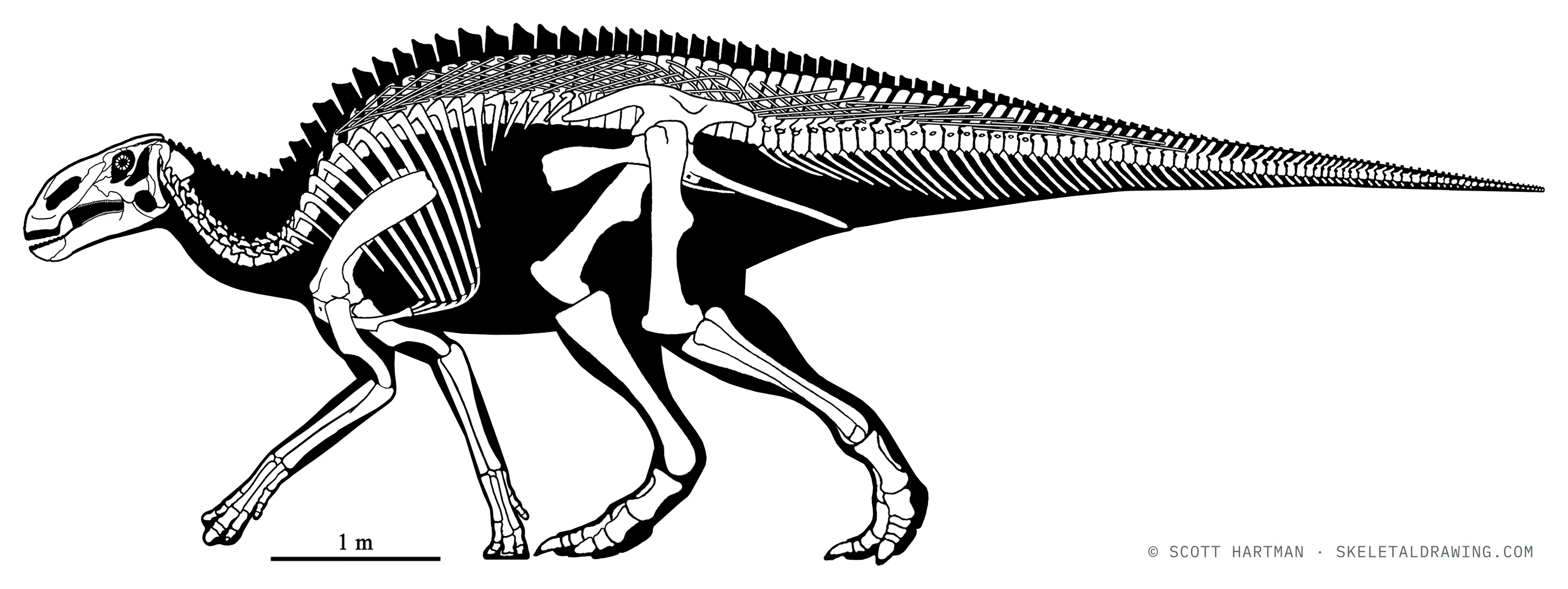
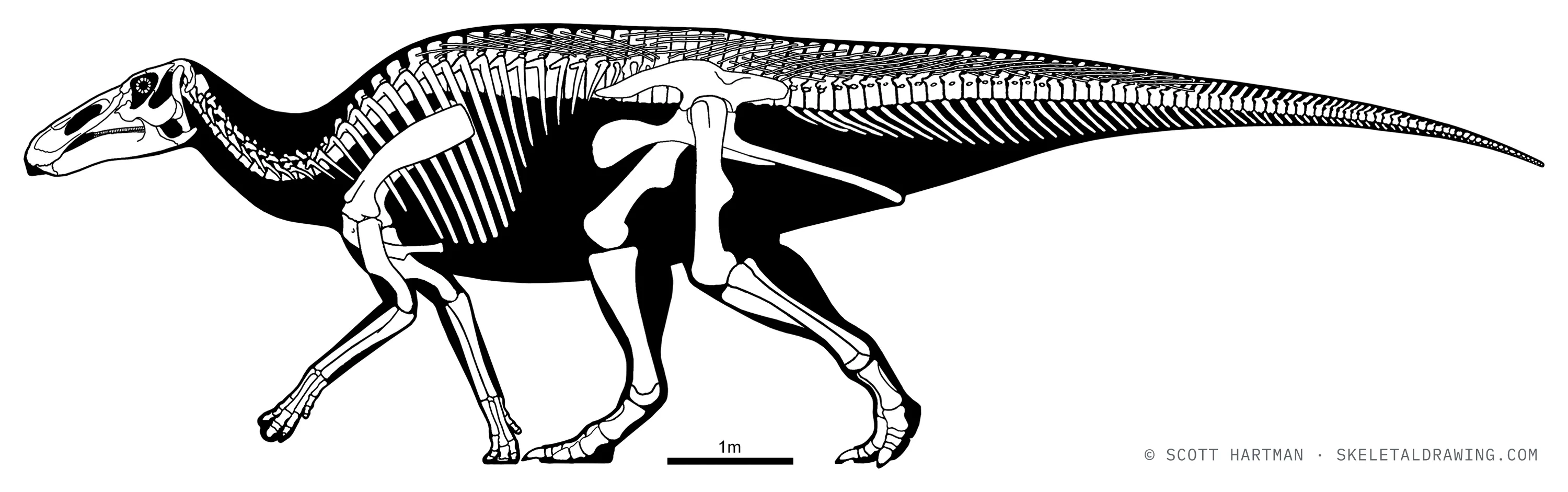
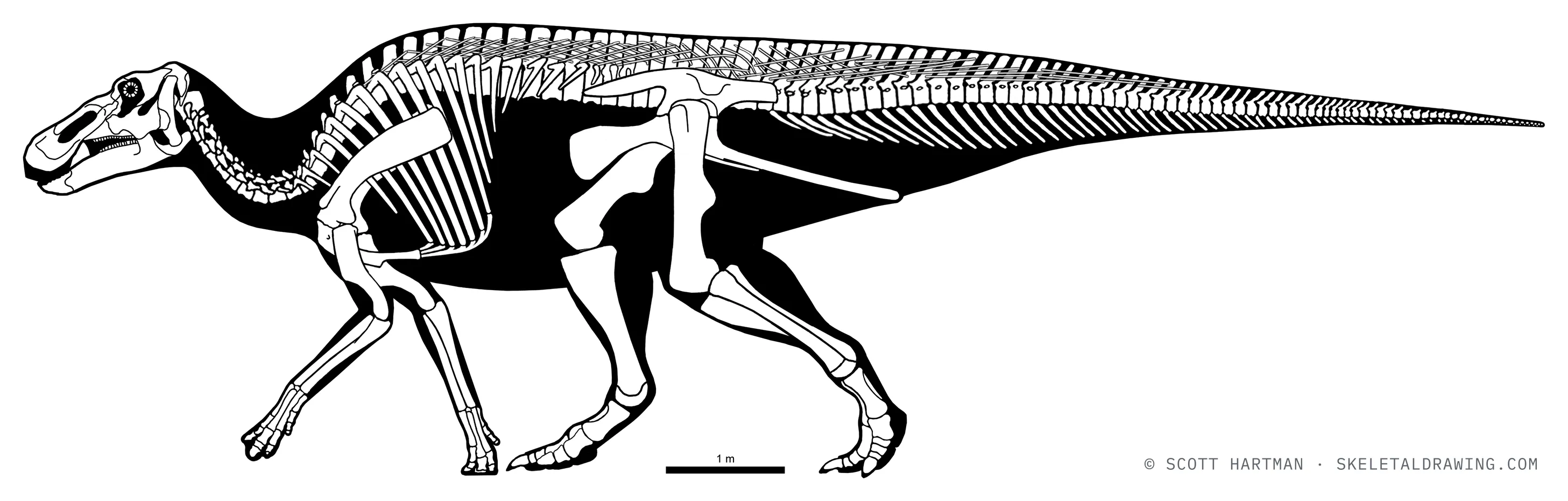
Maiasaura peeblesorum skeletal reconstruction — hatchling.
Drawn 2016

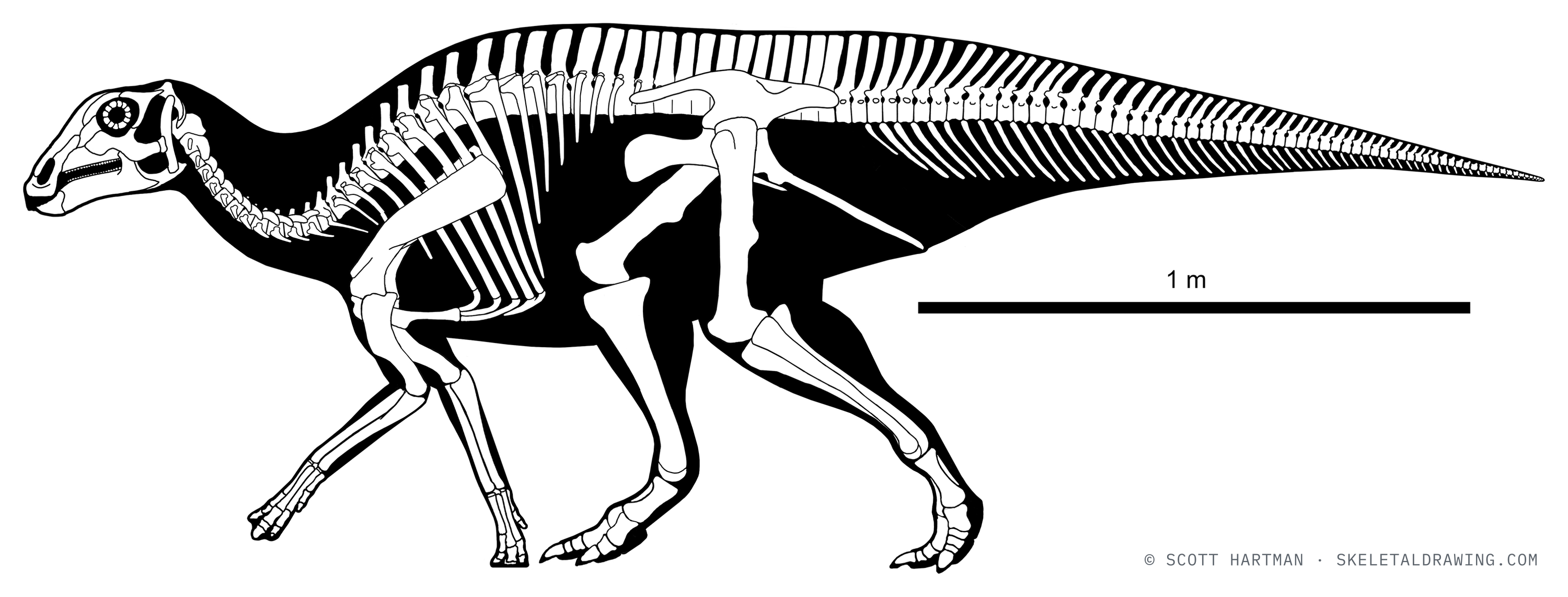
Yearling

Maiasaura peeblesorum skeletal reconstruction — yearling.
Drawn 2025

Subadult (two years)

Maiasaura peeblesorum skeletal reconstruction — subadult (two years).
Drawn 2025