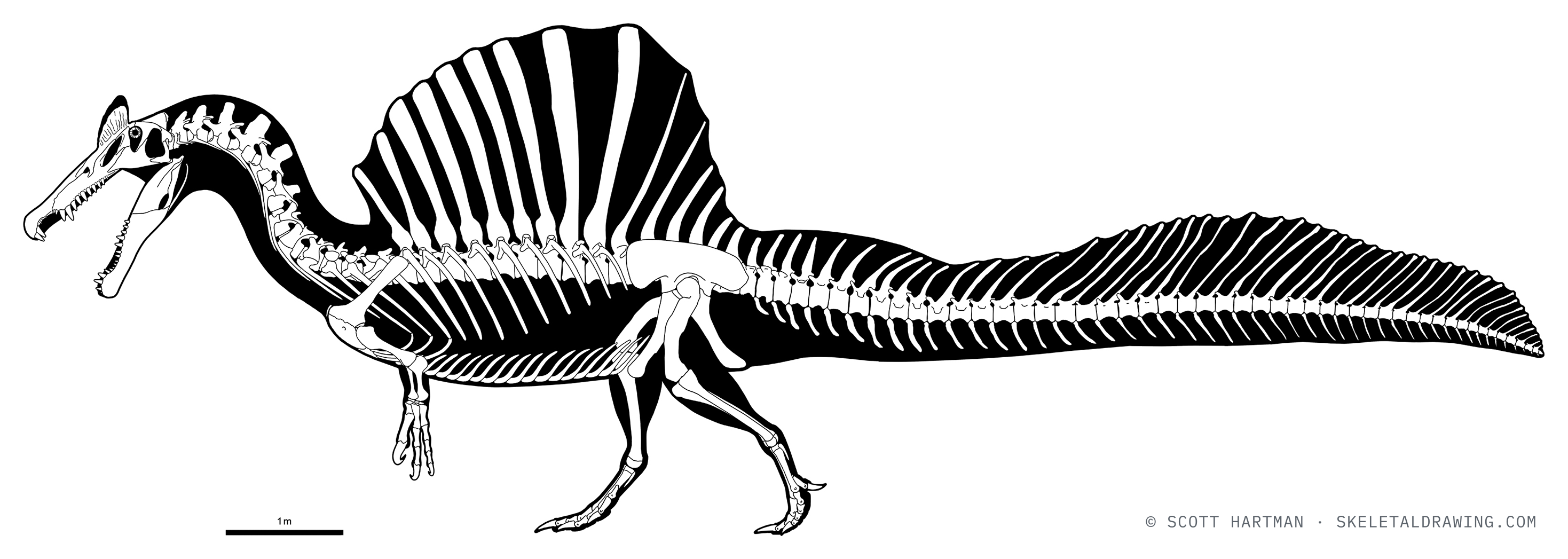
Spinosaurus was a giant spinosaurid (duh) from the mid-Cretaceous of northern Africa. Growing up to 14 m (45 feet) long, it was among the longest predatory dinosaurs known to date, although it appears to have had a lighter build than either Tyrannosaurus or Giganotosaurus, so it may not have been as heavy.
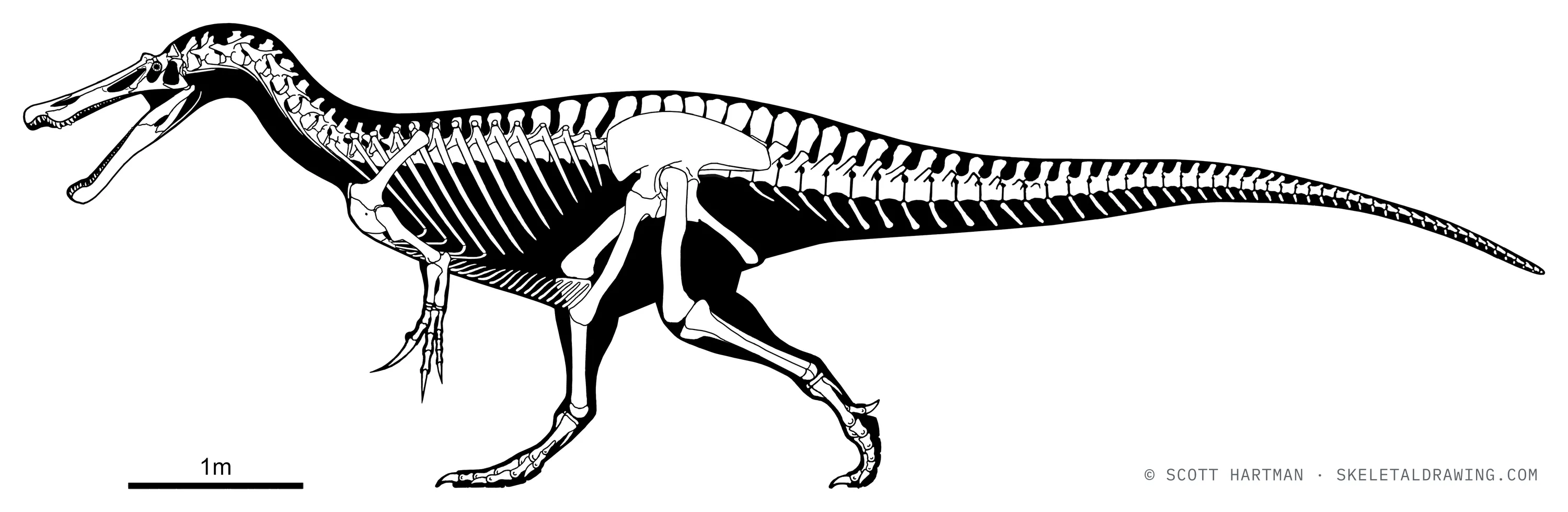
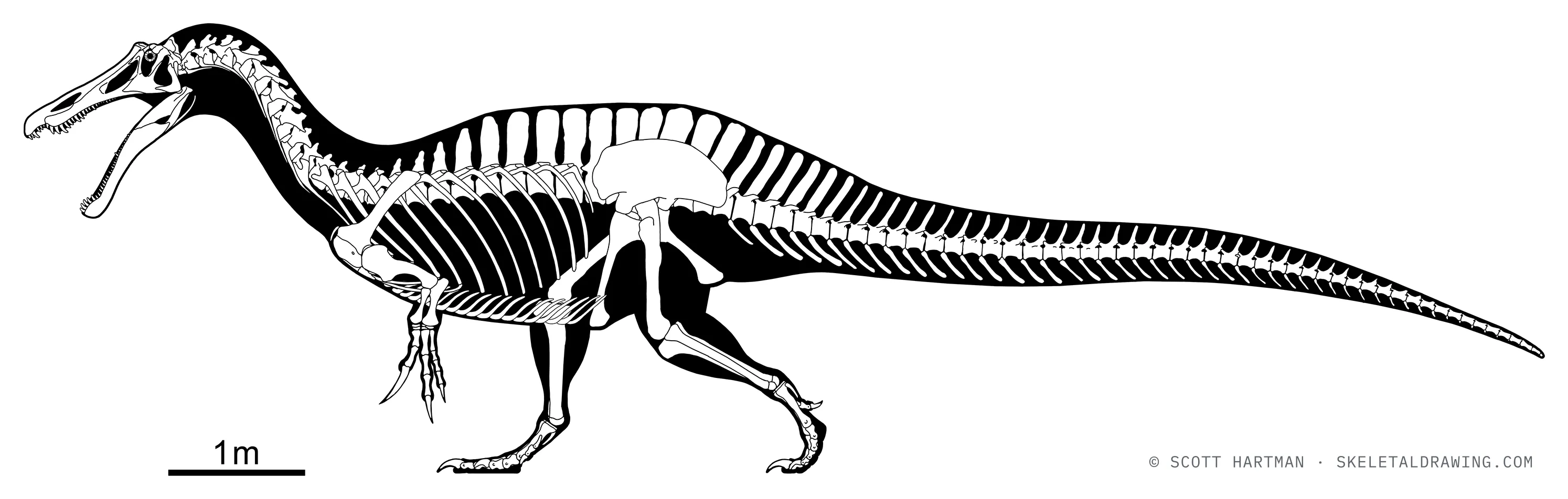
Famously, Spinosaurus has undergone multiple revisions in appearance over the last three decades, from the version that swallowed a satellite phone in Jurassic Park 3, to the putatively quadrupedal version published in 2013, to several revised versions published since. Since Spinosaurus is still not known from a complete specimen, and there is some taxonomic debate over which specimens even belong in Spinosaurus, there will most likely continue to be new versions for some time to come.
In fact, you get a new one right now, right here! Compared to the version I wrote about previously, this one has two major changes. First, while the publishing of a second species, Spinosaurus mirabilis, shows off a tall, pointed crest, it also is a good reminder that all current Spinosaurus aegyptiacus crests are in fact broken, so I’ve updated it to be somewhat closer to S. mirabilis. Also, while unpublished, photos have been shared online suggesting that the sail fell off much quicker over the pelvis, so I’ve also updated the primary skeletal to reflect this new information.
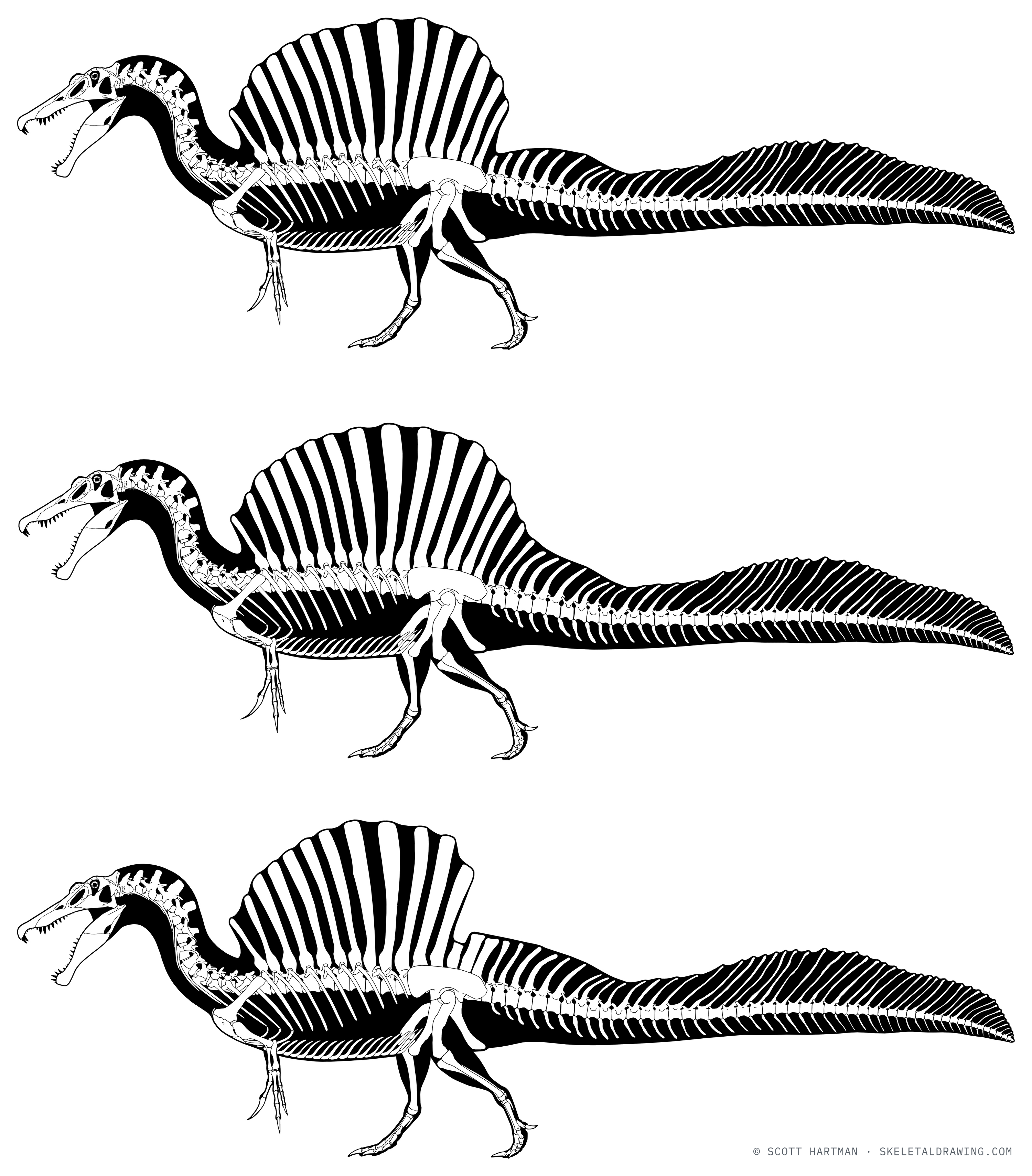
Again, it’s entirely possible that the new posterior sail vertebrae are from a different spinosaurid, but as it’s the best information available I wanted to add it to the mix. There are still many unknowns, including the actual shape of the sail (see image below for alternative sail possibilities). One thing I want to make clear is there’s absolutely no evidence for the M-shaped sail so often copied from the 2013 publication - that was an artifact of combining dorsal vertebrae from differently-sized individuals at different growth stages. Of course since we don’t have a complete sail from one individual it’s impossible to rule out, but there’s zero reason why other artists should be copying it. One possibility, if the sail’s main purpose was display, is the shape could have varied from individual to individual…although again not something we can know with our current specimens.
As if that’s not enough, the lifestyle of Spinosaurus is also in dispute. Everyone agrees that spinosaurids had crocodile-like snouts and conical teeth that would have been effective at a fish-eating lifestyle, but some still argue that Spinosaurus went into the water to actively swim after aquatic prey - a lifestyle that even living crocodilians usually don’t attempt, which perhaps makes this interpretation less likely than alternatives that would include waiting in the water for fish to come to you, or stalking shallow waters or shorelines to catch fish and small vertebrates as you discover them. It’s worth noting that there is direct fossil evidence that spinosaurids also ate pterosaurs and iguanodontids when they could, so they were not strictly restricted to an all-fish diet.
In addition to the Jurassic Park III appearance, a version with a more modern appearance (but probably too good of swimming performance) appeared in the more recent Jurassic Park: Rebirth. An excellent, very up-to-date Spinosaurus also appeared in Netflix’s documentary The Dinosaurs in 2026.