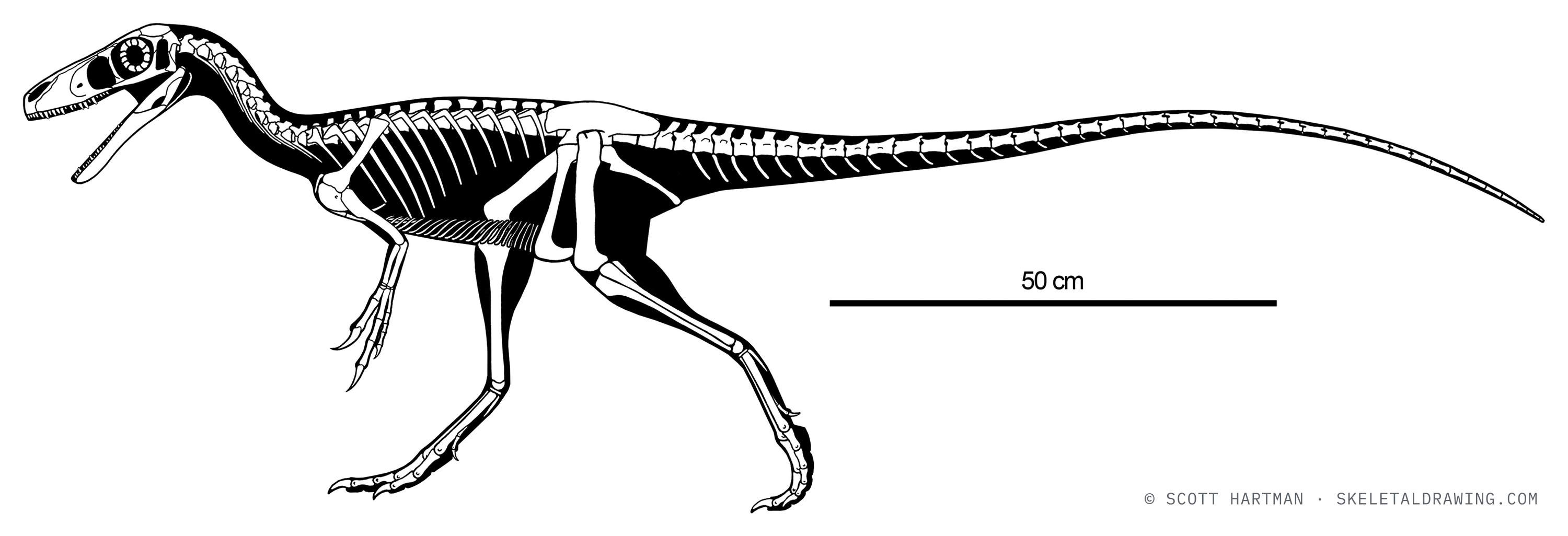
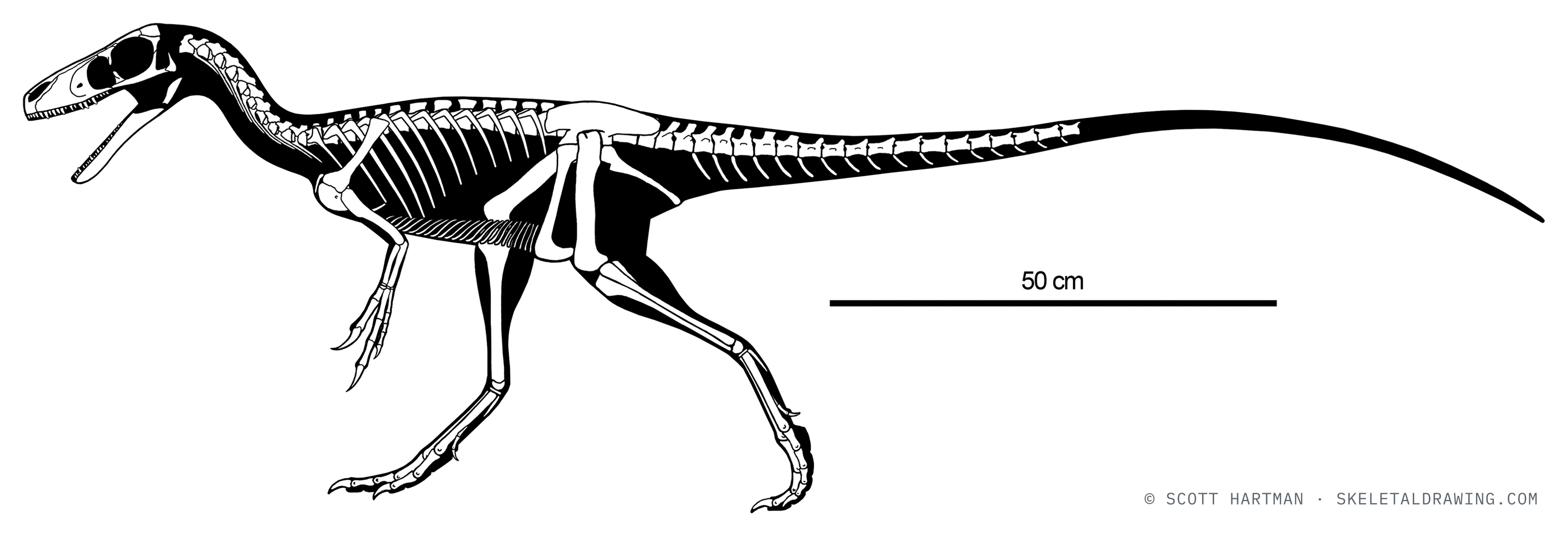
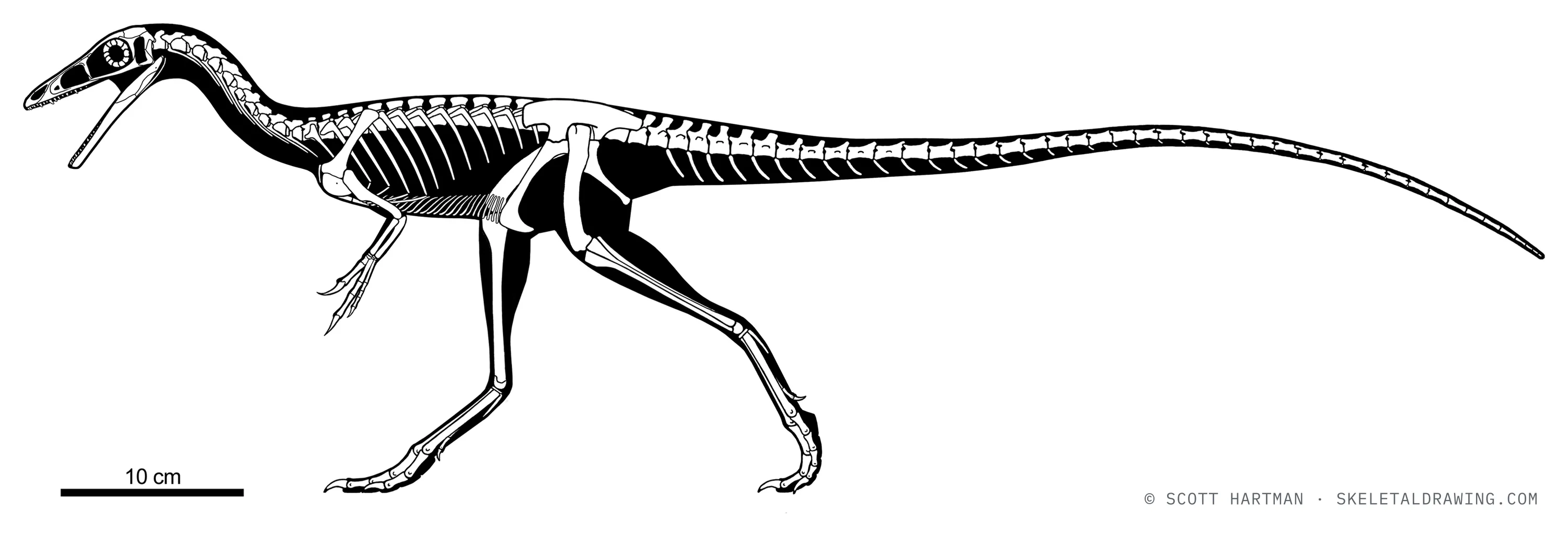
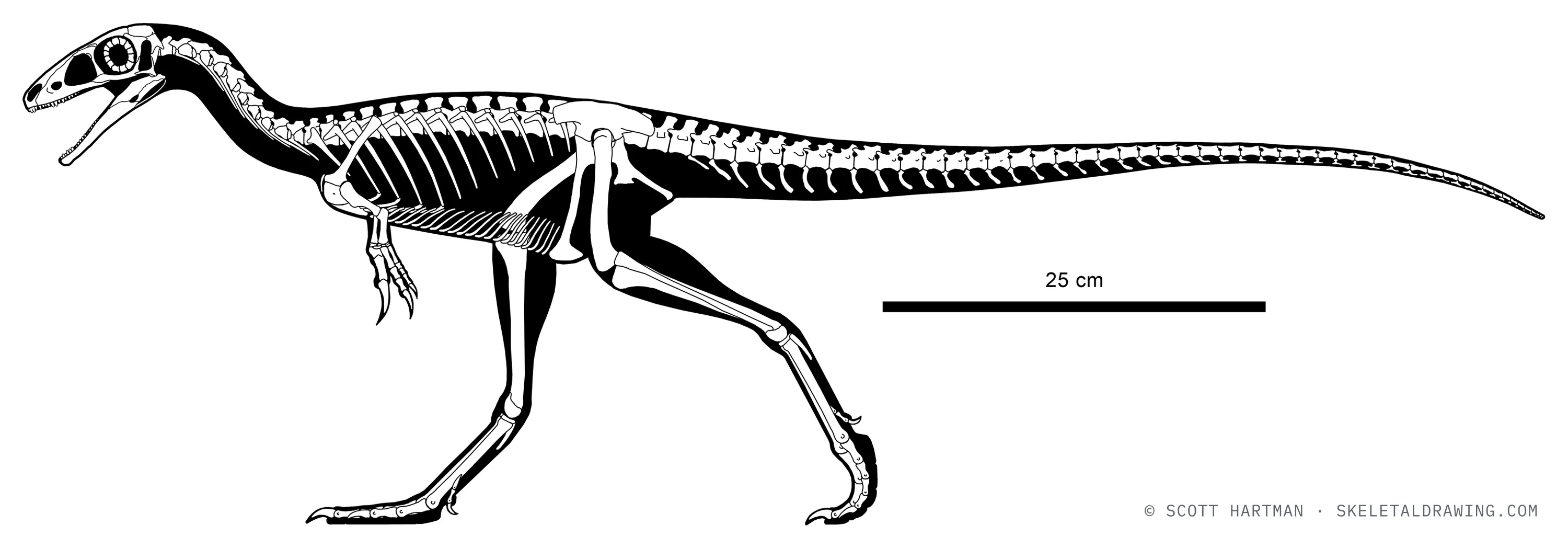
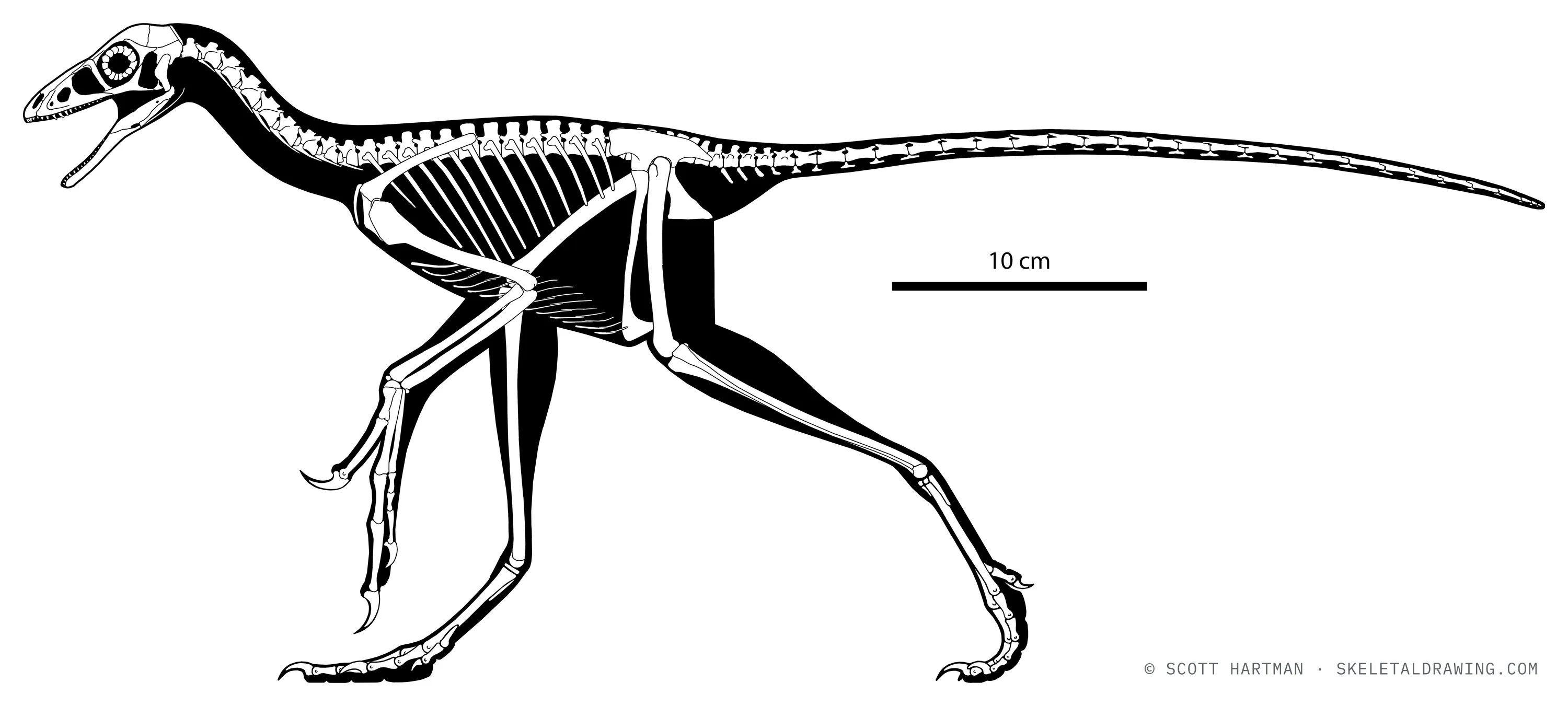
Huaxiagnathus was a compsognathid theropod from the Early Cretaceous of northeastern China. Although a length of 1.7 m (6 feet) doesn’t sound like a giant, it’s larger than most other species considered compsognathids. It was also found with a dense covering of fur-like bristles like its smaller relative Sinosauropteryx, at a time when finding fuzzy and feathery non-avian dinosaurs was still rare. This was seen as something of a breakthrough in how large fuzzy theropods grew, although with the power of hindsight it seems trivial after the 9 m (30 foot) theropod Yutyrannus was also found to be covered in fuzz.
Like other compsognathids, Huaxiagnathus presumably chased after small prey like mammals, lizards and amphibians, where its long grasping hands may have helped catch and/or carry such prey items.