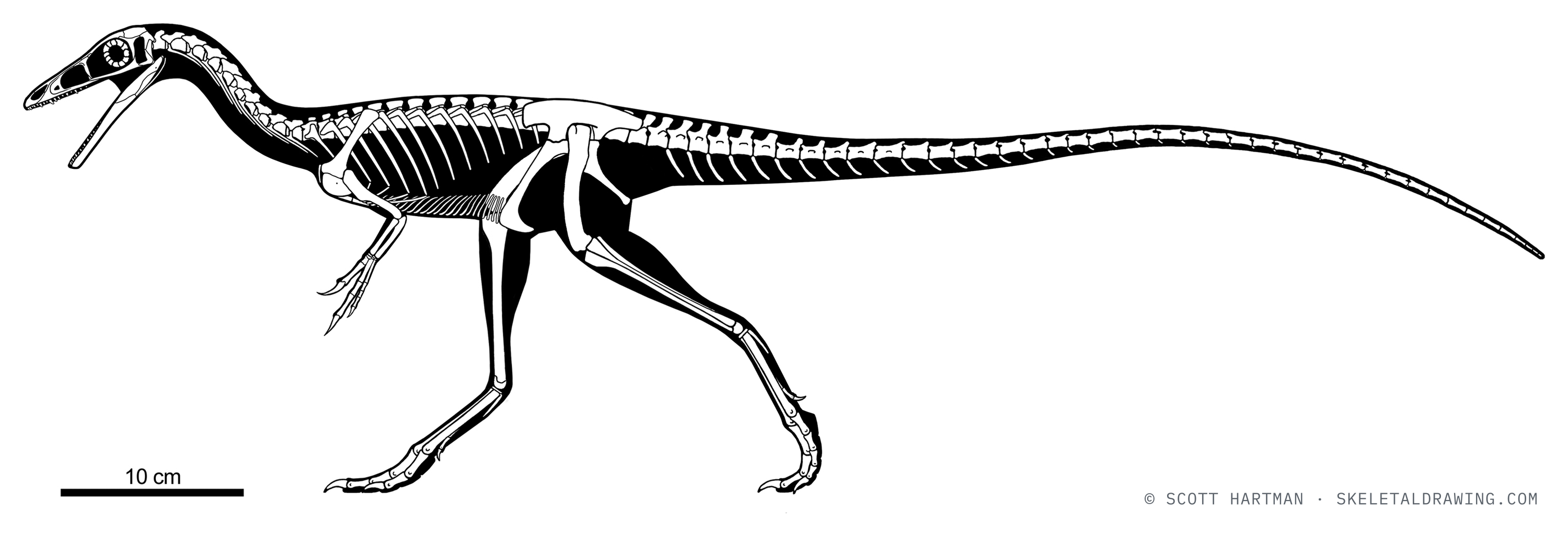
TheropodaCompsognathidaeBSP AS I 563

Compsognathus longipes

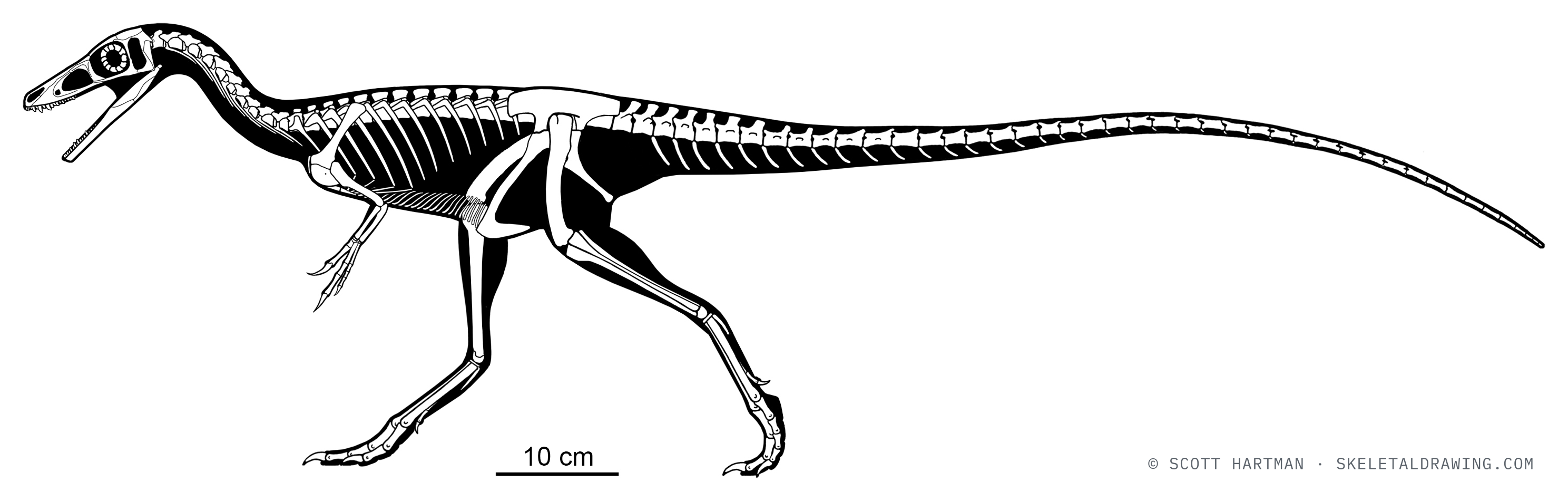
Compsognathus longipes skeletal reconstruction, left lateral view, reconstructed length ~0.85 m.
Scale bar = 10 centimeters
Taxon
Compsognathus longipes Wagner, 1859
Specimen
BSP AS I 563
Reconstructed length
85 cm (3 feet)
View
Left lateral
Drawing
© Scott Hartman
Drawn
2004, revised 2022
Clade
  1. Theropoda
  2. Tetanurae
  3. Coelurosauria
  4. Compsognathidae

Available for editorial, museum & print licensing — inquiries & rates →

Compsognathus is a small, coelurosaurian theropod from the Late Jurassic of Germany and France. At around 1.25 meters (4 feet) and weighing less than a house cat (less than 1 kg / 2 pounds) it has historically been famous for being a tiny dinosaur among a group long known for its giants. While not covered in vaned feathers, Compsognathus almost certainly was covered in dense, fuzzy structures, as seen in its close relative, Sinosauropteryx. Presumably a hunter of small game, lizard skeletons were preserved in the gut contents of both specimens, recording the last meals of at least these two individuals.
The evidence

What the specimen actually preserves

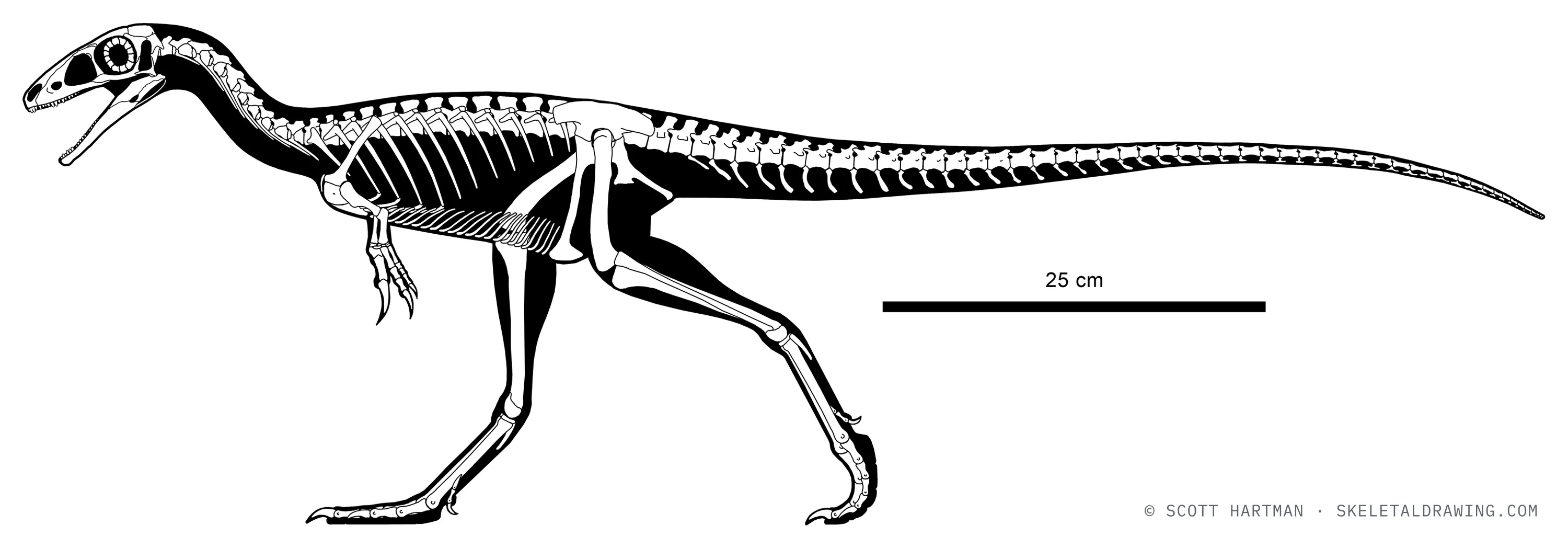
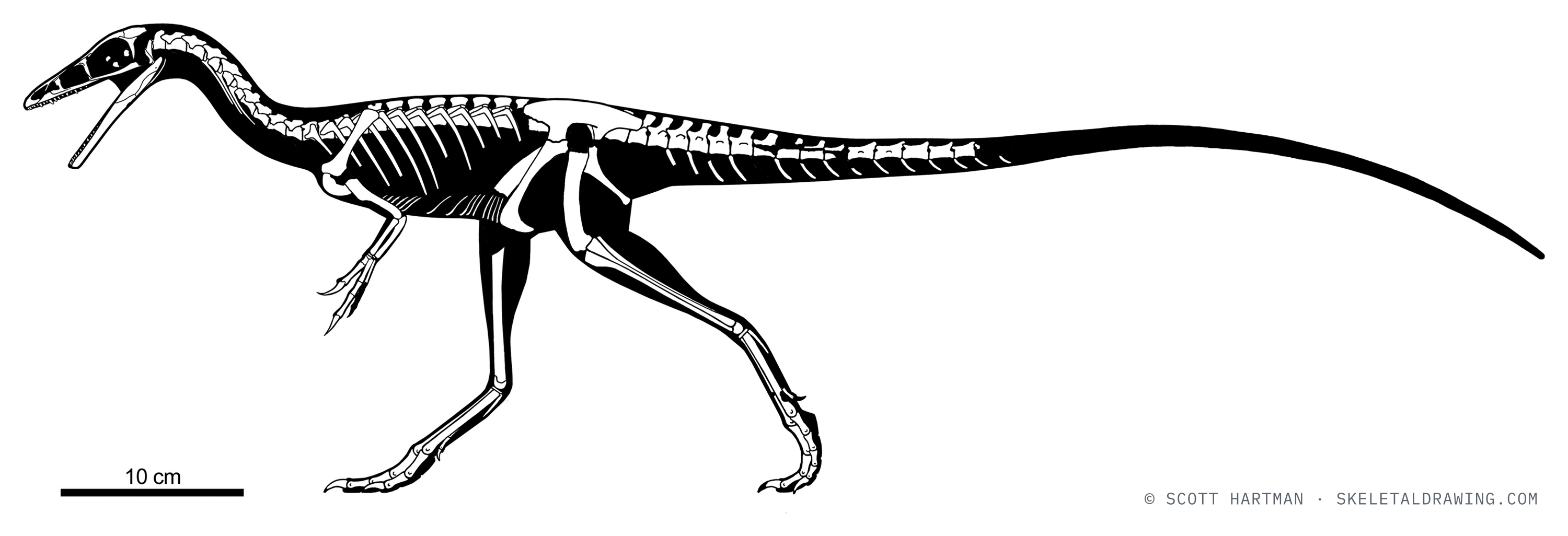
Known skeletal material of Compsognathus longipes: preserved elements shown in white against a black body silhouette.
Known material of BSP AS I 563: elements preserved in the specimen are shown in white; unpreserved regions are left as black silhouette. Drawn 2004, revised 2026
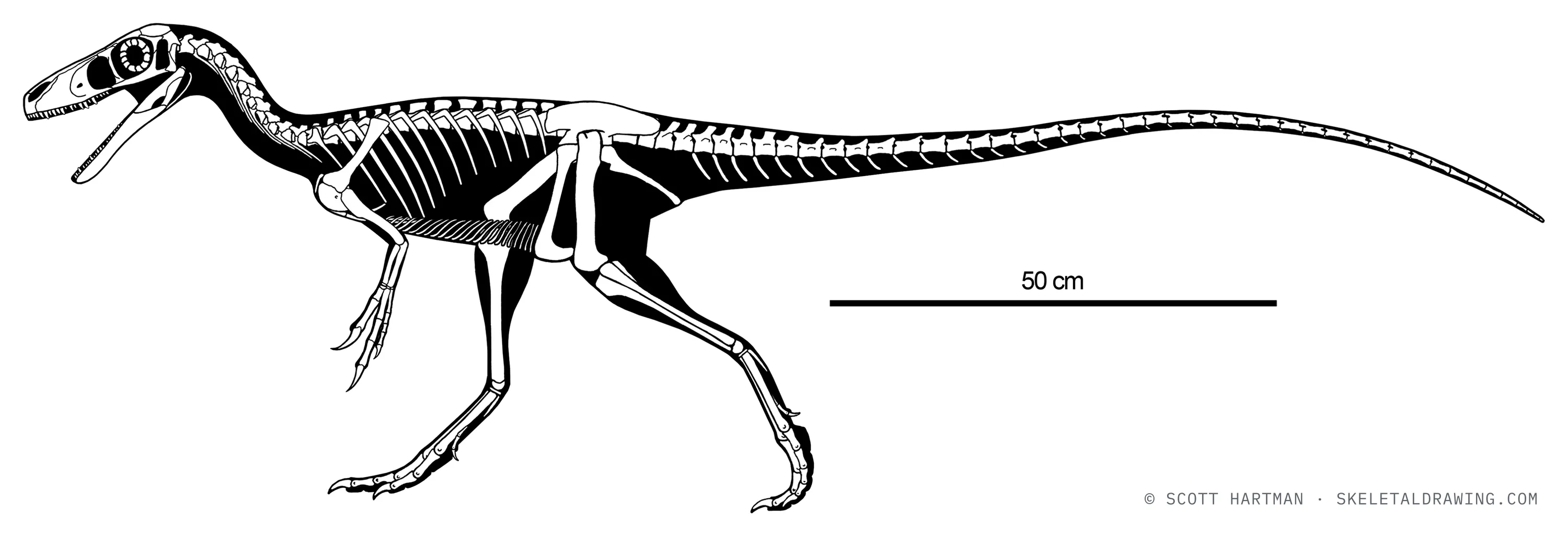
Compsognathus longipes — The larger French specimen (the former "Compsognathus corallestris"), ~1.25 m, shown for comparison with the German type.
The larger French specimen (the former "Compsognathus corallestris"), ~1.25 m, shown for comparison with the German type. Drawn 2004, revised 2026