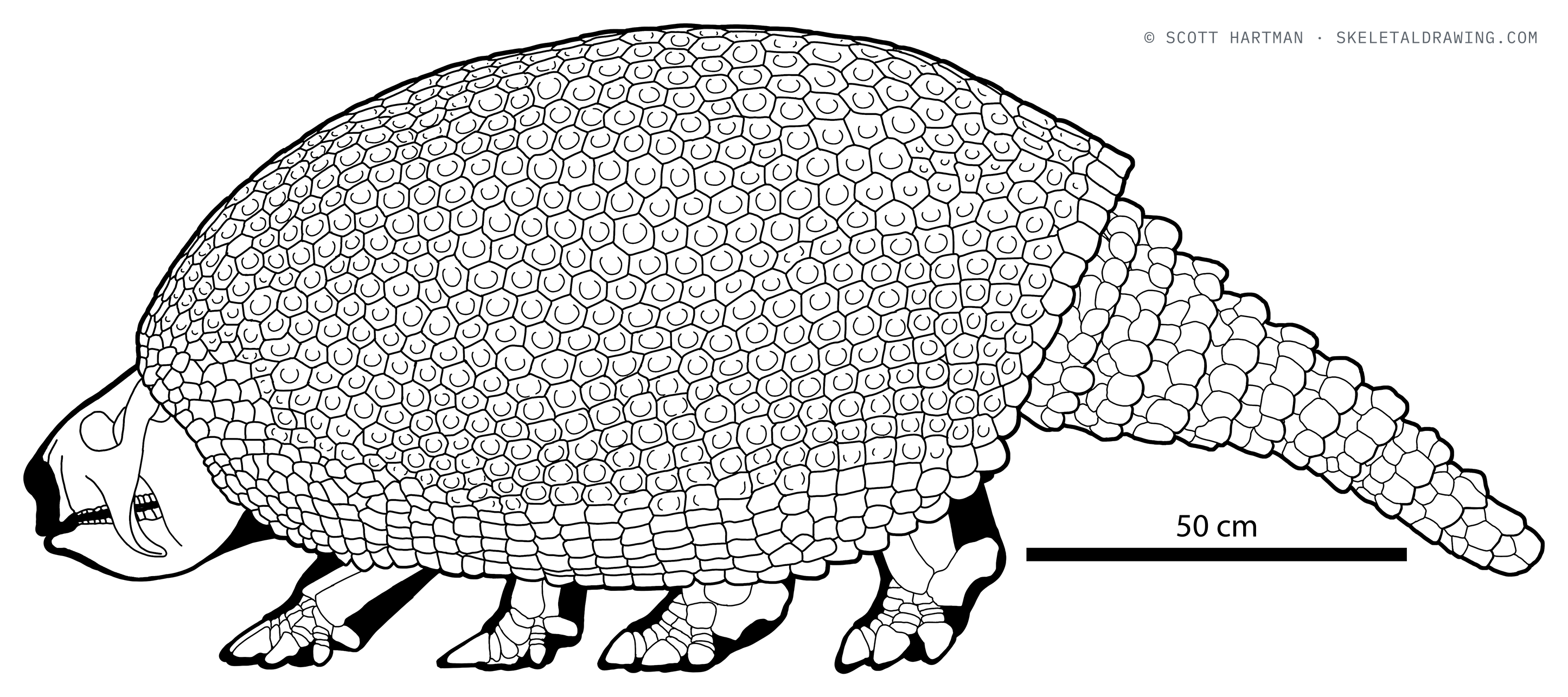
Glyptotherium is the most famous Pleistocene glyptodont. A giant armadillo relative encased in a rigid domed carapace of fused bony plates, with an armored tail and a bony cap over the skull. Glyptodonts thrived before and during the ice ages of North and South America. The reconstruction here is based primarily on USNM 10-V-10336, a specimen on display in the recently renovated fossil halls at the Smithsonian.
The taxonomy of Glyptotherium texanum has had a confusing and winding path. Throughout the 20th century many genera (and even more species) of glyptodont were named from the Americas, sometimes from spotty fossil remains. Recent work has moved most of the North American individuals back into the single species, G. texanum. It’s worth noting that another species, Glyptotherium cylindricum, is considered valid, although it is currently only known from South America.