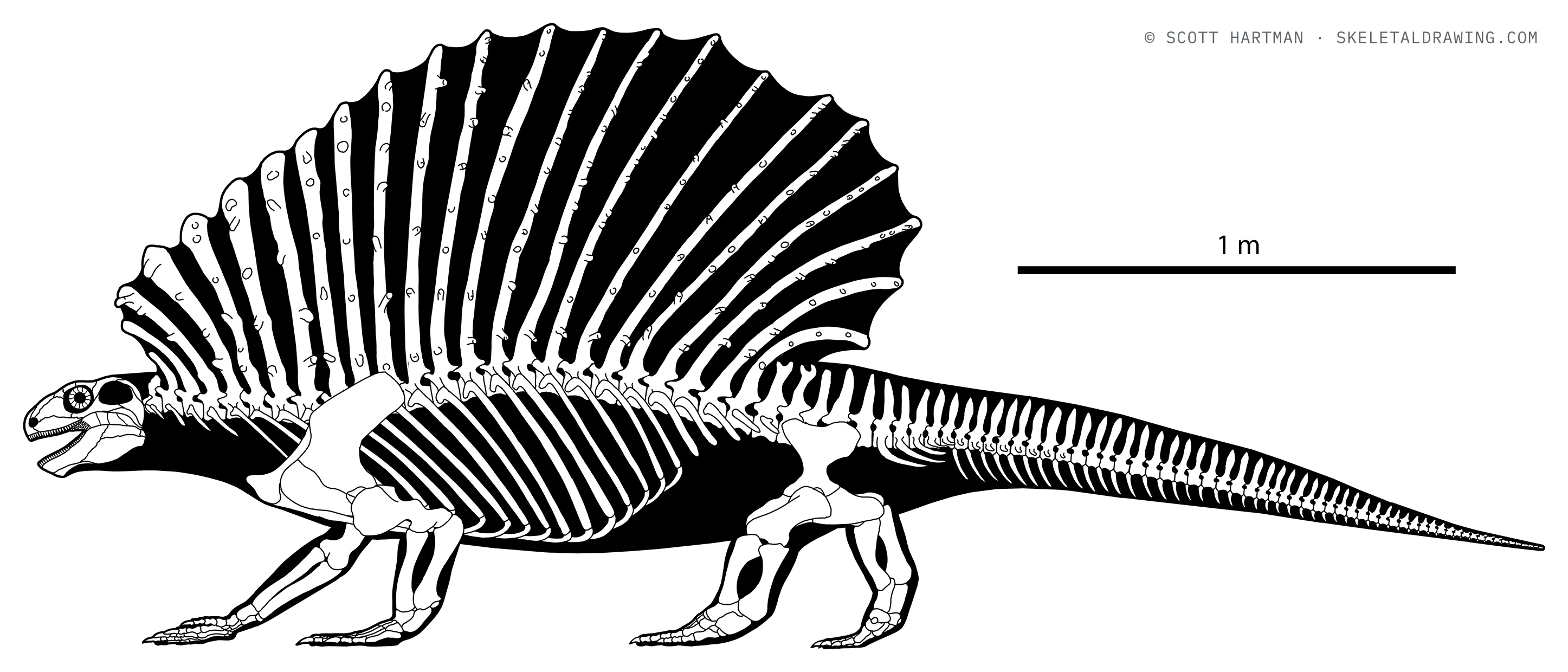
Dimetrodon grandis
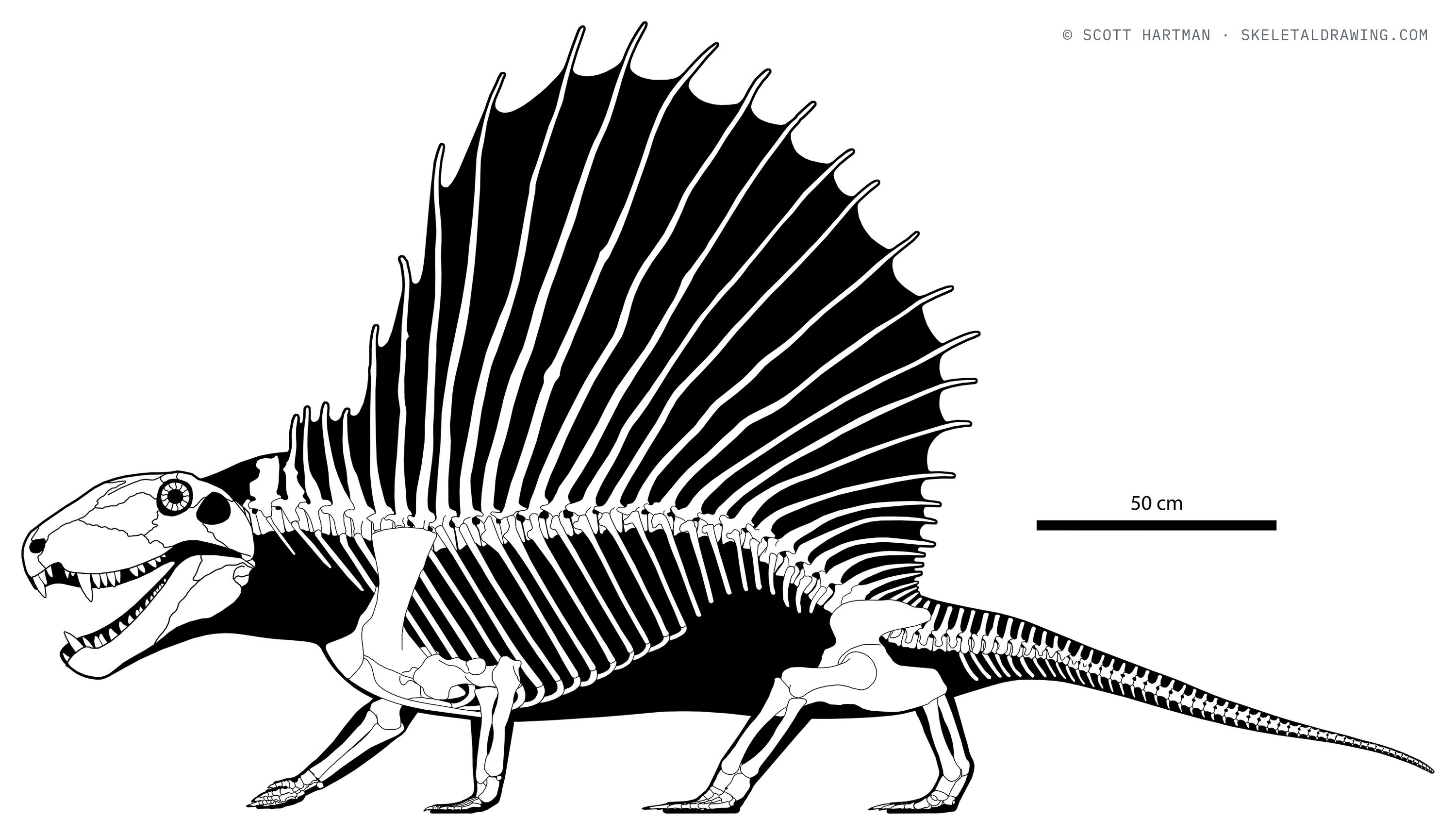
Taxon
Dimetrodon grandis (Case, 1907)
Reconstructed length
~3.1 m (10 feet)
View
Left lateral
Drawing
© Scott Hartman
Drawn
2016, revised 2026
Clade
- Synapsida
- Eupelycosauria
- Sphenacodontidae
See how Dimetrodon grandis compares to any other animal →
Dimetrodon is probably the most famous Early Permian animal, full stop. It’s the iconic sail-backed synapsid, and though it’s often mistaken for a dinosaur, it actually lived long before the dinosaurs, and is actually more closely related to mammals than to dinosaurs. It would have been the top predator in its environments, which tended to be swampy areas of what would become Texas and the American South.
While Dimetrodon has often been portrayed hunting the sail-backed herbivore Edaphosaurus, it probably also ate fish and fresh-water sharks in its environment. The function of the sail is still something of a debate. It has been suggested that it could have helped regulate body temperature, although the similarly-sized predator Sphenacodon lacks a sail. It also could have been for display, showing it off to win friends and intimidate rivals.
Available for editorial, museum & print licensing — inquiries & rates →