Adalatherium hui
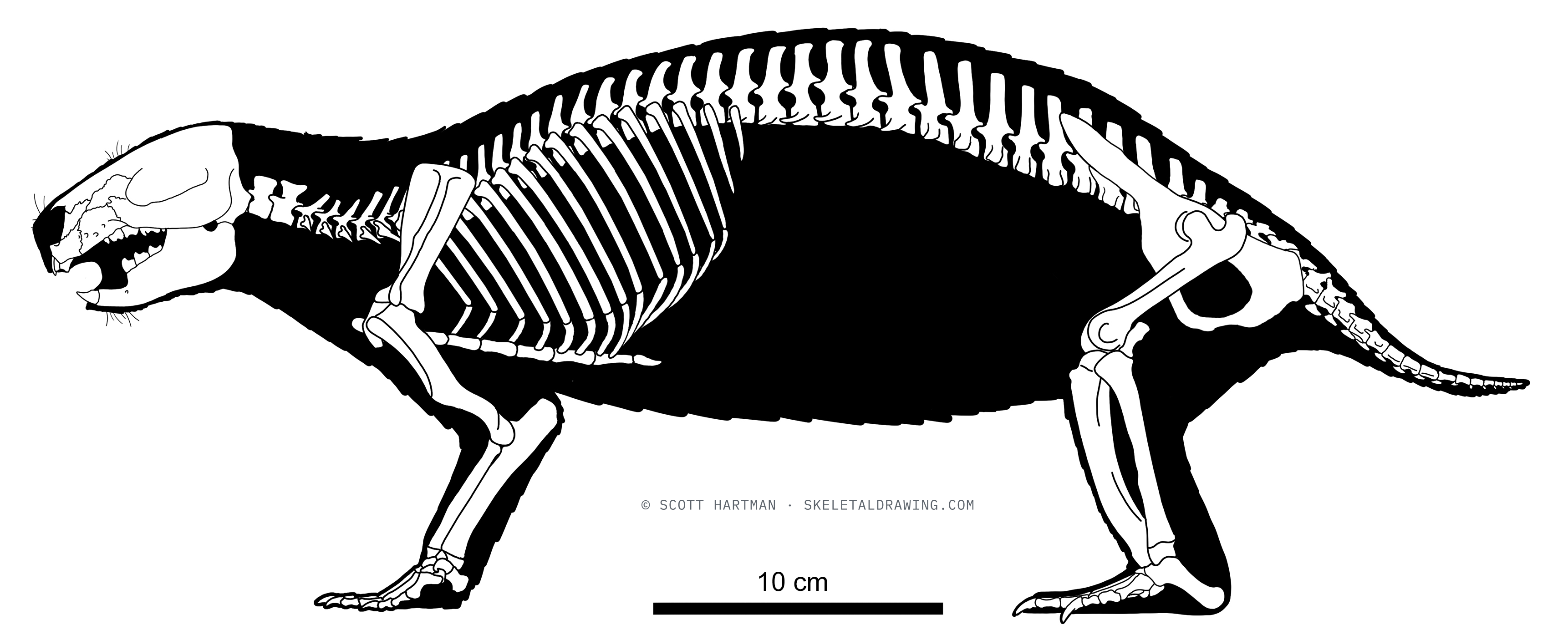
Taxon
Adalatherium hui Krause et al., 2020
Reconstructed length
52 cm (20 inches)
View
Left lateral
Drawing
© Scott Hartman
Drawn
2018, revised 2020
Clade
- Synapsida
- Therapsida
- Mammalia
See how Adalatherium hui compares to any other animal →
Adalatherium is a gondwanathere from the Late Cretaceous of Madagascar. The name Adalatherium translates as “crazy beast”, although if that’s generating images of it viciously hunting down baby dinosaurs…you might be disappointed to know it’s thought to have eaten plants, potentially digging for roots in its underground burrows. It may mollify you to know that growing to 50+ cm (20”) and tipping the scales at 5 kg (11 pounds), Adalatherium was among the largest mammals to live during the Mesozoic.
Assuming, that is, Adalatherium was actually a mammal. Gondwanatheres are an enigmatic group of (probably?) basal-mammals that lived in the southern hemisphere, during the latter half of the Mesozoic through the first half of the Cenozoic. Typically they have been found to be related to another extinct mammal clade, the multituberculates, united within the “different beasts,” or Allotheria. But a 2020 study found them to instead group with other almost-mammals just outside of Mammalia. This may go back and forth for a while in the scientific literature, but here we will consider them mammalian allotheres.
Available for editorial, museum & print licensing — inquiries & rates →