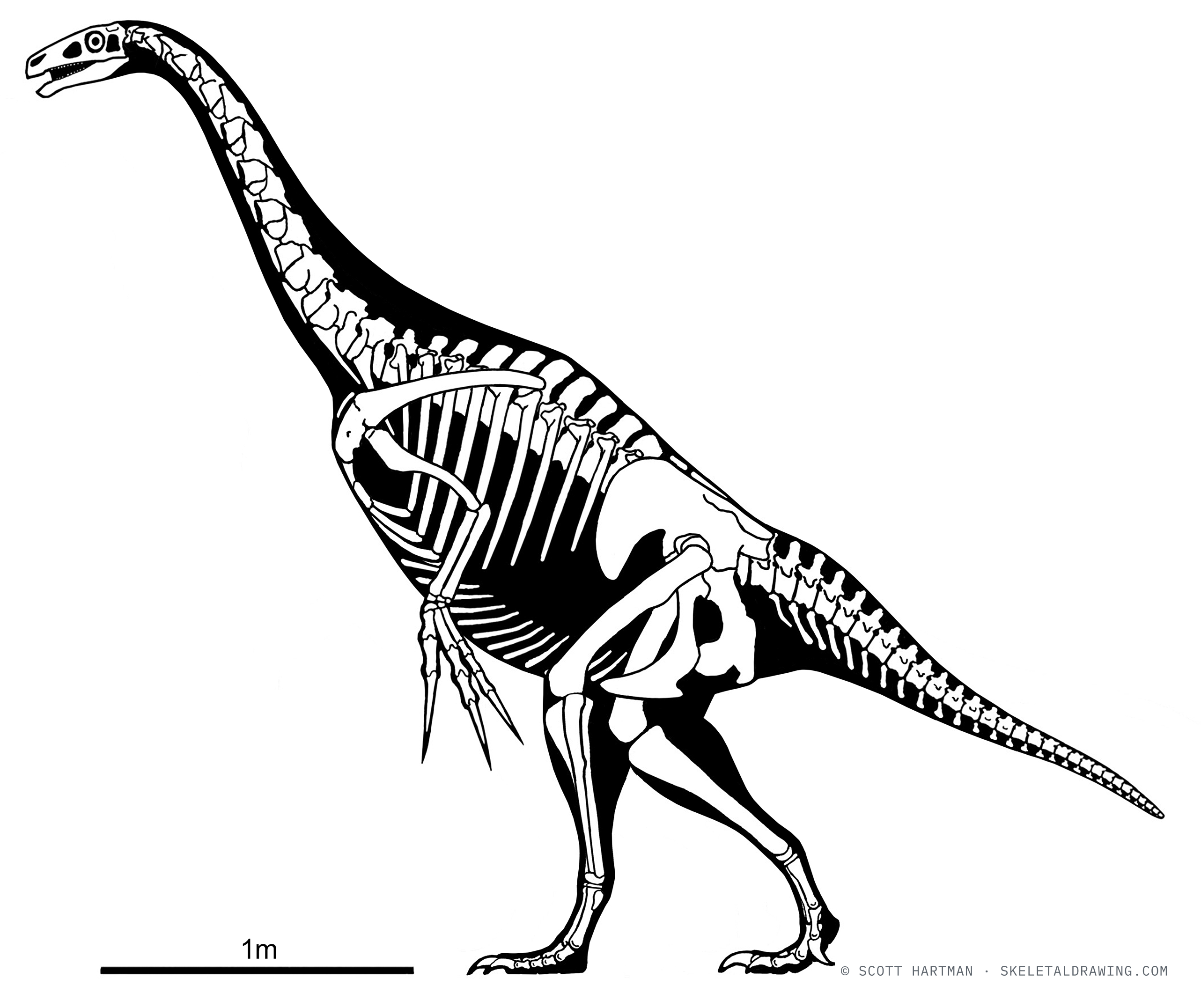
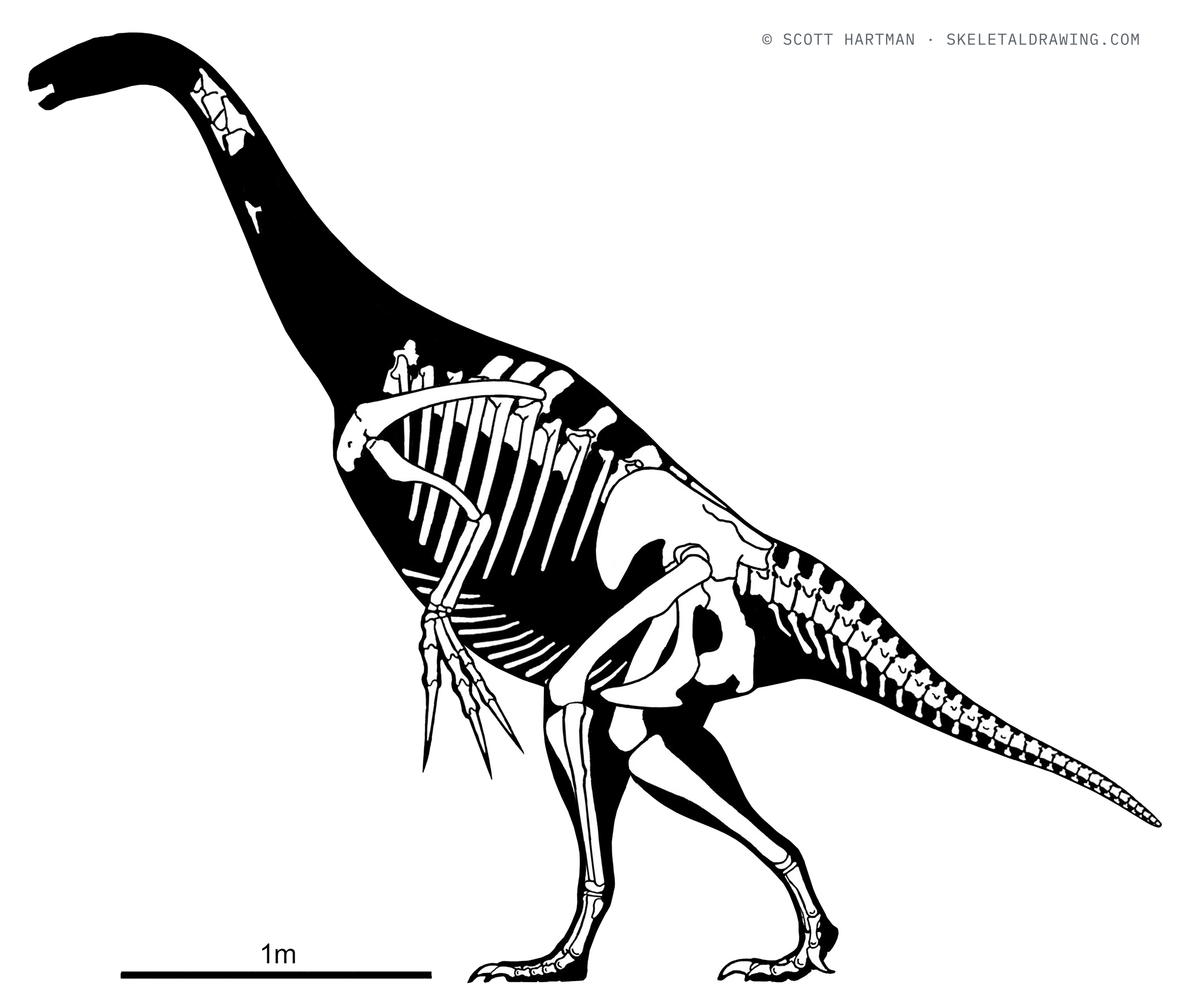
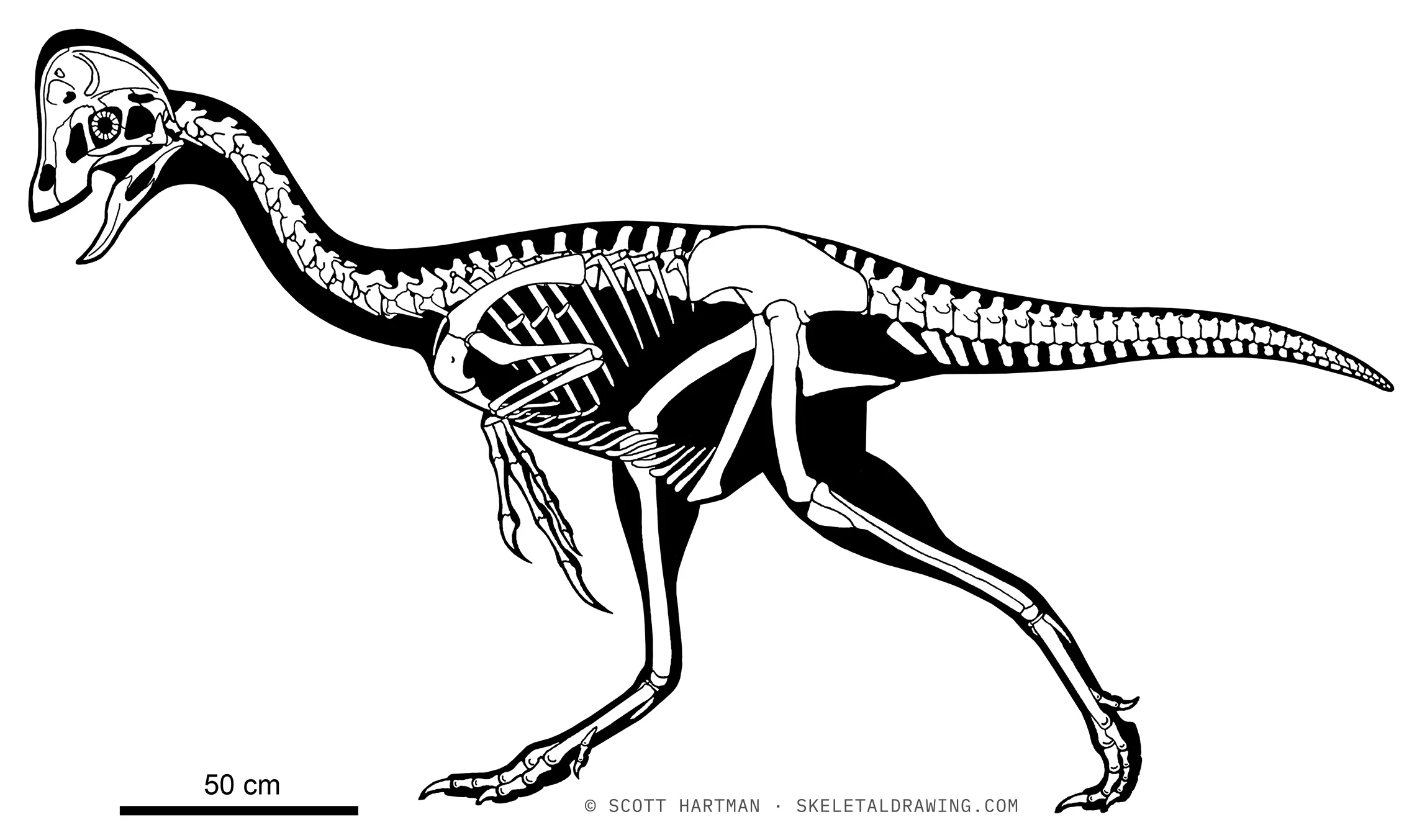
Nothronychus was a plant-eating therizinosaur from the Late Cretaceous of Utah. Typical of more advanced therizinosaurs, Nothronychus had a small head, long neck, short, downcurved tail, broad body and enormous hand claws. There are two fairly similar species of Nothronychus described to date, the type species N. mckinleyi, and the more completely preserved N. graffami, and is notable for being a marine-deposited find far offshore.
The type specimen of N. graffami (UMNH VP 16420, shown here) was actually found in shallow, inland sea deposits. After it died, it apparently underwent “bloat and float” transport further out into the inland sea, eventually bursting and sinking to the bottom to be buried. This resulted in a very complete specimen, missing only the skull and most of the neck. Happily, those exact parts are most well-represented in the N. mckinleyi specimen, making Nothronychus as a whole among the best-represented therizinosaurs to date.