Nanotyrannus
Nanotyrannus was a medium-sized eutyrannosaur from the Late Cretaceous. The name has had a rather lively historical debate, which you can read about below, or while you're at it, check out their (quite similar) size comparison, or select one of the two currently named species for more specific information.
- Skeletals shown
- 2
- Species
- 2
- Size range
- 6.3–6.4 m
Skeletals
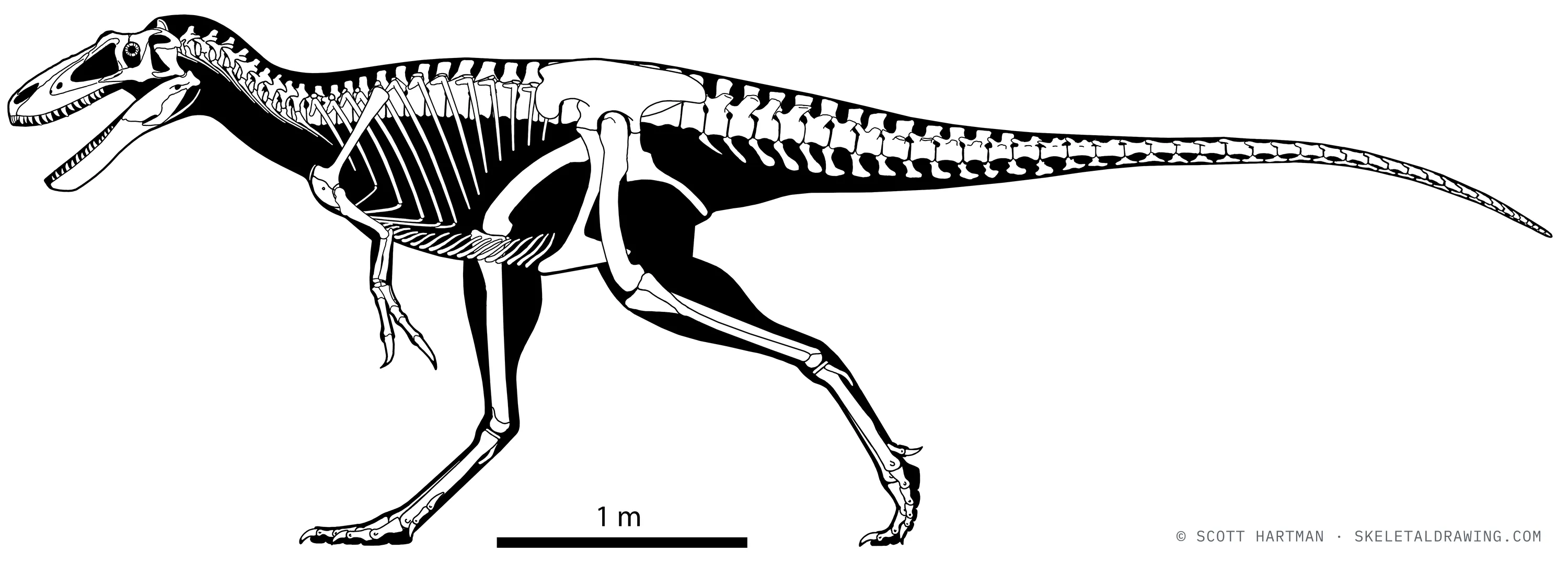
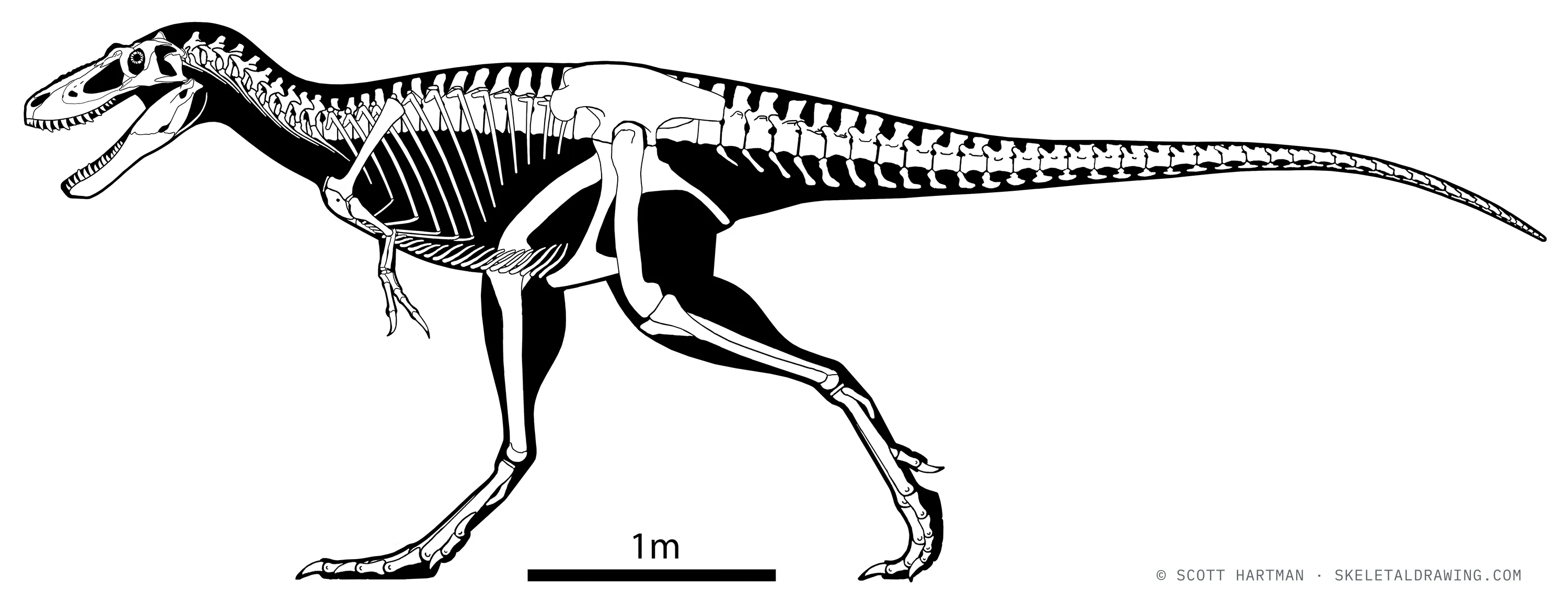
Scale comparison
The life and times of the name Nanotyrannus have been fraught with changed ideas and forks in the road. The first specimen, a somewhat battered skull, was originally named as a new species of Gorgosaurus. This new skull was slightly younger than other Gorgosaurus remains (it was found in rocks from the very end of the Cretaceous, where we also find Tyrannosaurus rex), but only by a couple of million years, nothing that would be particularly surprising.
In 1988 a group of researchers felt the skull (on display in the Cleveland Museum of Natural History) was too different from Gorgosaurus to remain in the same genus, so they gave it a new name: Nanotyrannus. This went largely unchallenged for most of a decade, although with only a skull, there were lots of questions about exactly what Nanotyrannus was.
One question that vexed paleontologists was why we don’t seem to find juvenile T. rex specimens, but did start finding specimens that were referred to the smaller Nanotyrannus? That seemed to be answered in the late 1990s, when some researchers reinterpreted all Nanotyrannus specimens from the latest Cretaceous as juvenile T. rex. This nicely answered the question of where the little rexes were, but not everyone agreed.
This remained contentious for two decades, until the publication of NCSM 40000 in 2025 - a specimen of gracile eutyrannosaur that was fully grown, but at just 6.4 m (21 feet) long was far smaller than Tyrannosaurus. Since it wasn’t a juvenile, and shared key skull features with the original Nanotyrannus skull in Cleveland, the name was resurrected, and as a bonus we now have a virtually complete Nanotyrannus lancensis. So there really was a smallish, fast eutyrannosaur living alongside its gigantic relative, Tyrannosaurus rex.
And there was one more surprise - the same 2025 paper also found that a fairly complete specimen of tyrannosaur that had been dubbed “Jane” was also Nanotyrannus, although the authors felt it was different enough to warrant its own species, Nanotyrannus lethaeus. N. lethaeus also appears to have been somewhat larger than N. lancensis - while both are almost identical in length, studies of Jane’s bone histology show it still had some growing to do, although it was close enough to the end of the S-shaped growth curve that the authors felt confident it end up far smaller than T. rex.
All documented skeletals — tap a column to sort
| Taxon | Author | Length | Specimen | |
|---|---|---|---|---|
| Nanotyrannus lancensis | Bakker, Williams & Currie, 1988 | ~6.4 m | NCSM 40000 | View → |
| Nanotyrannus lethaeus | Zanno & Napoli, 2025 | ~6.3 m | BMRP 2002.4.1 | View → |