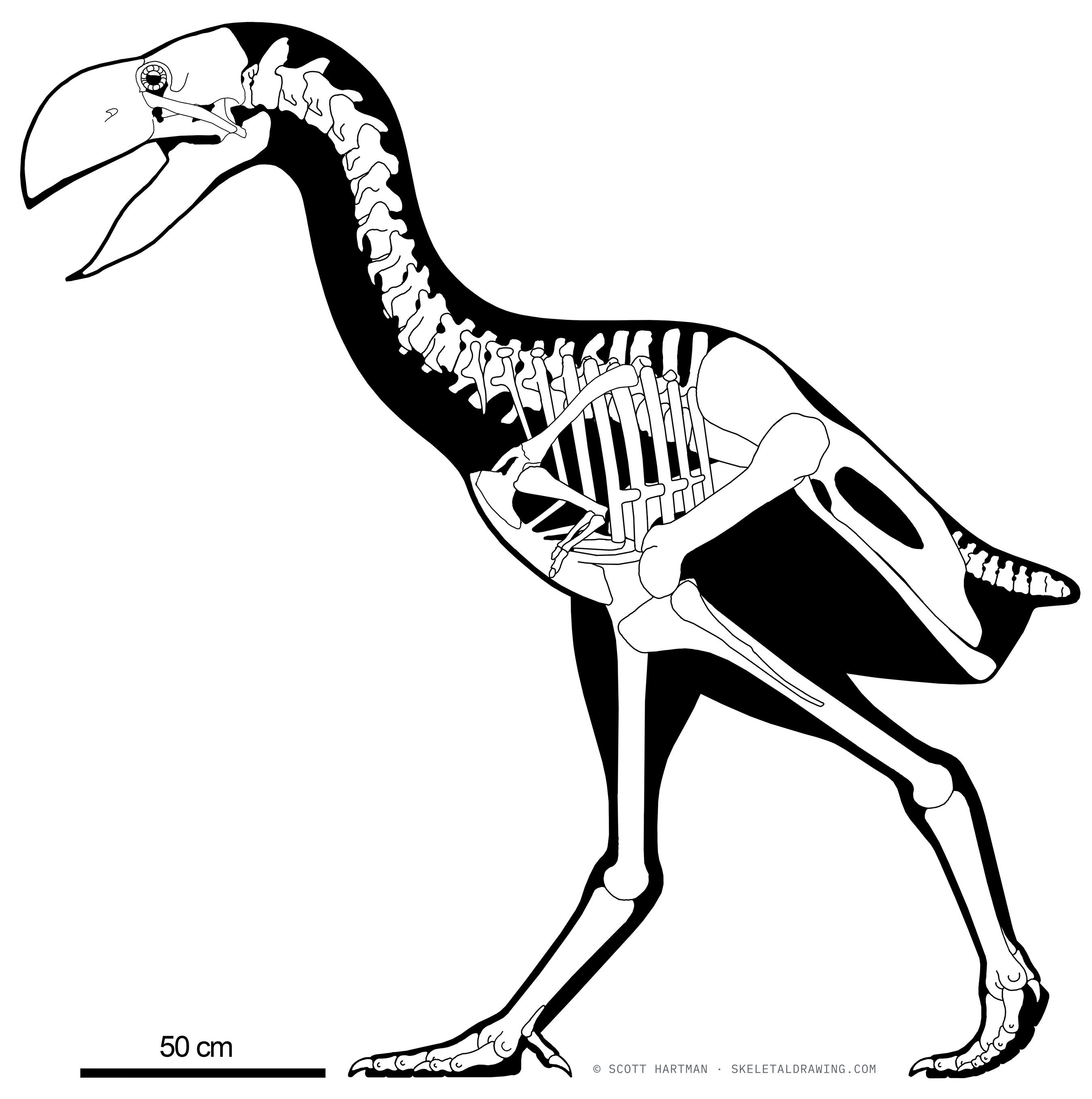
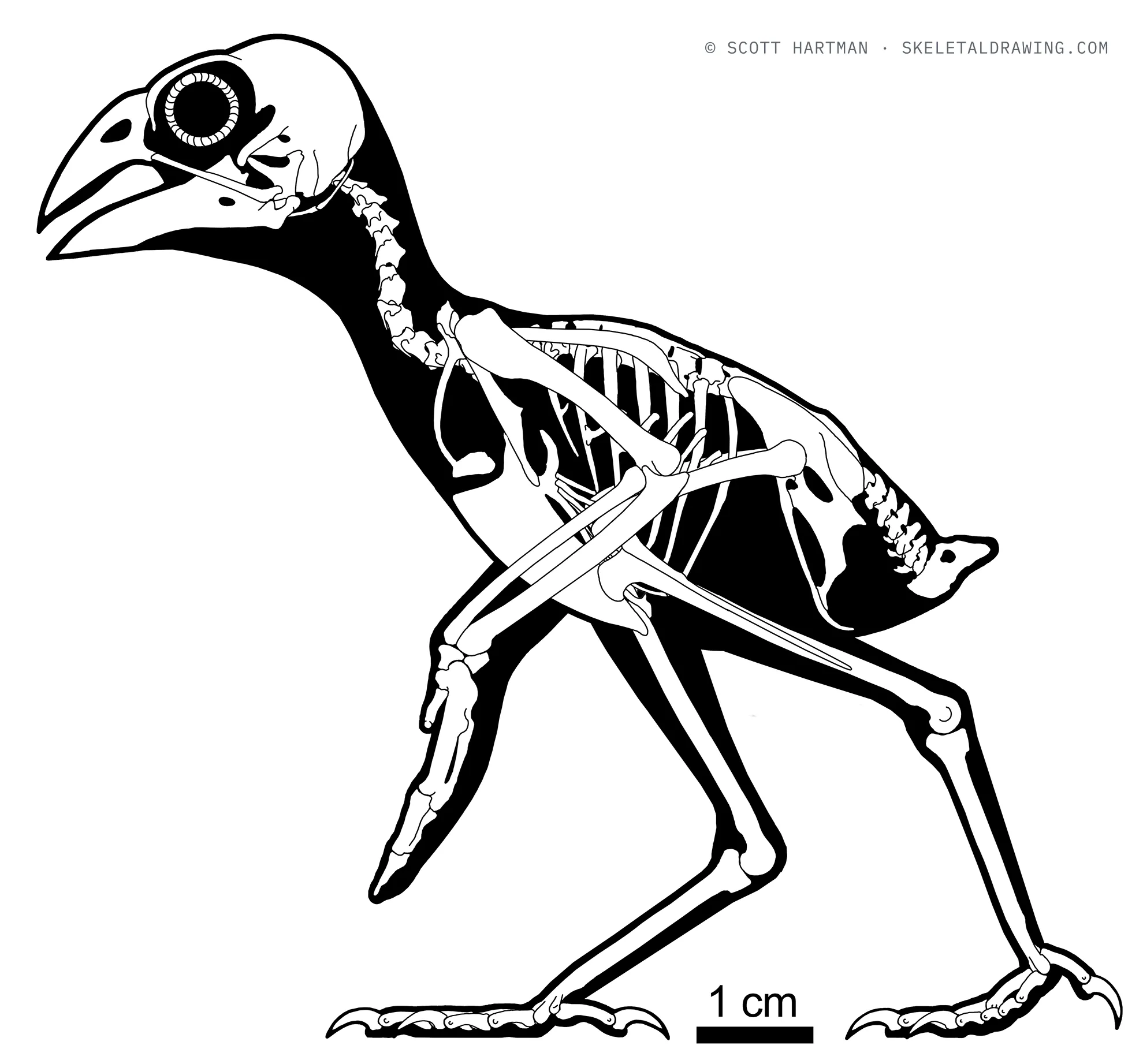
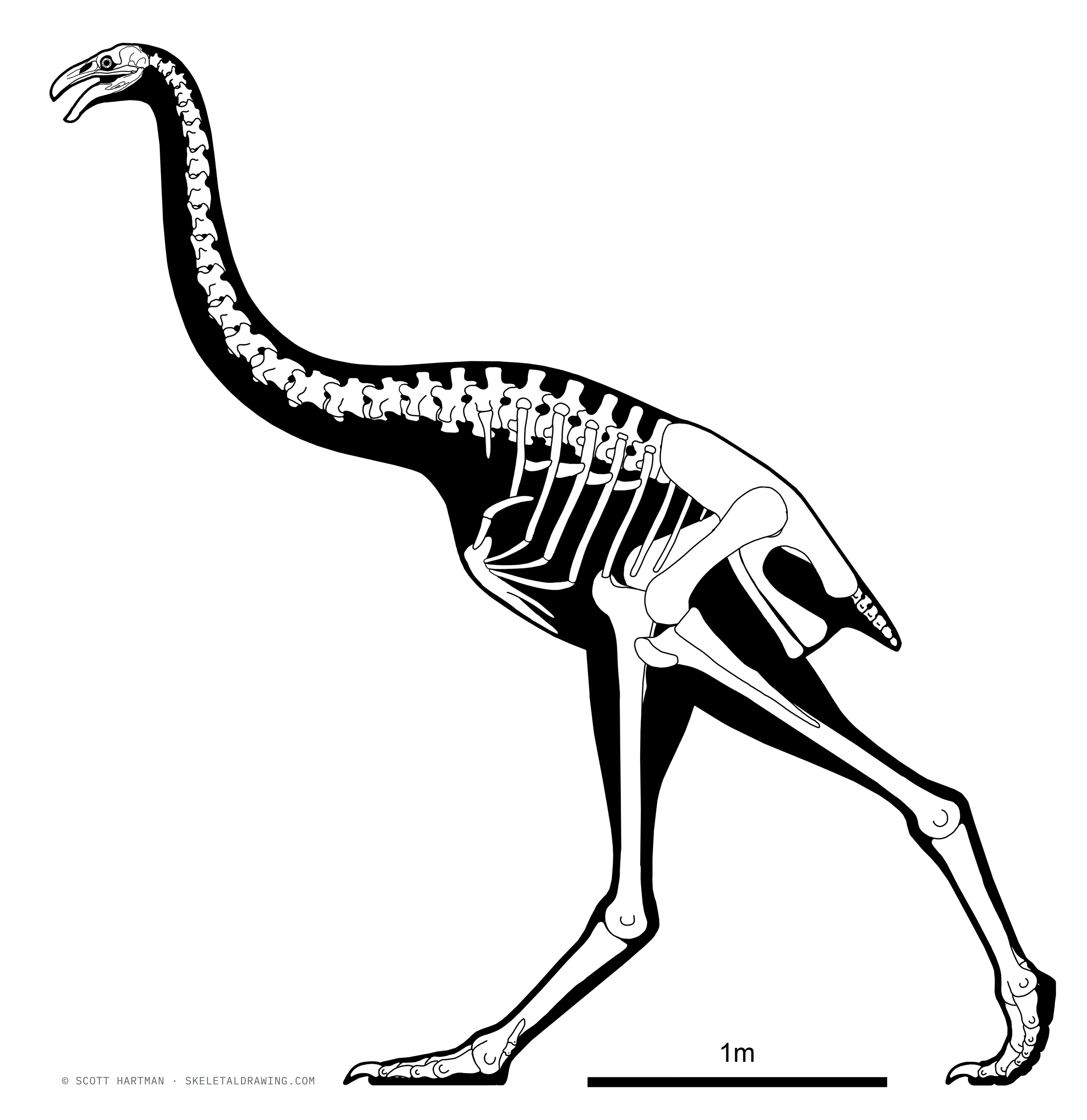
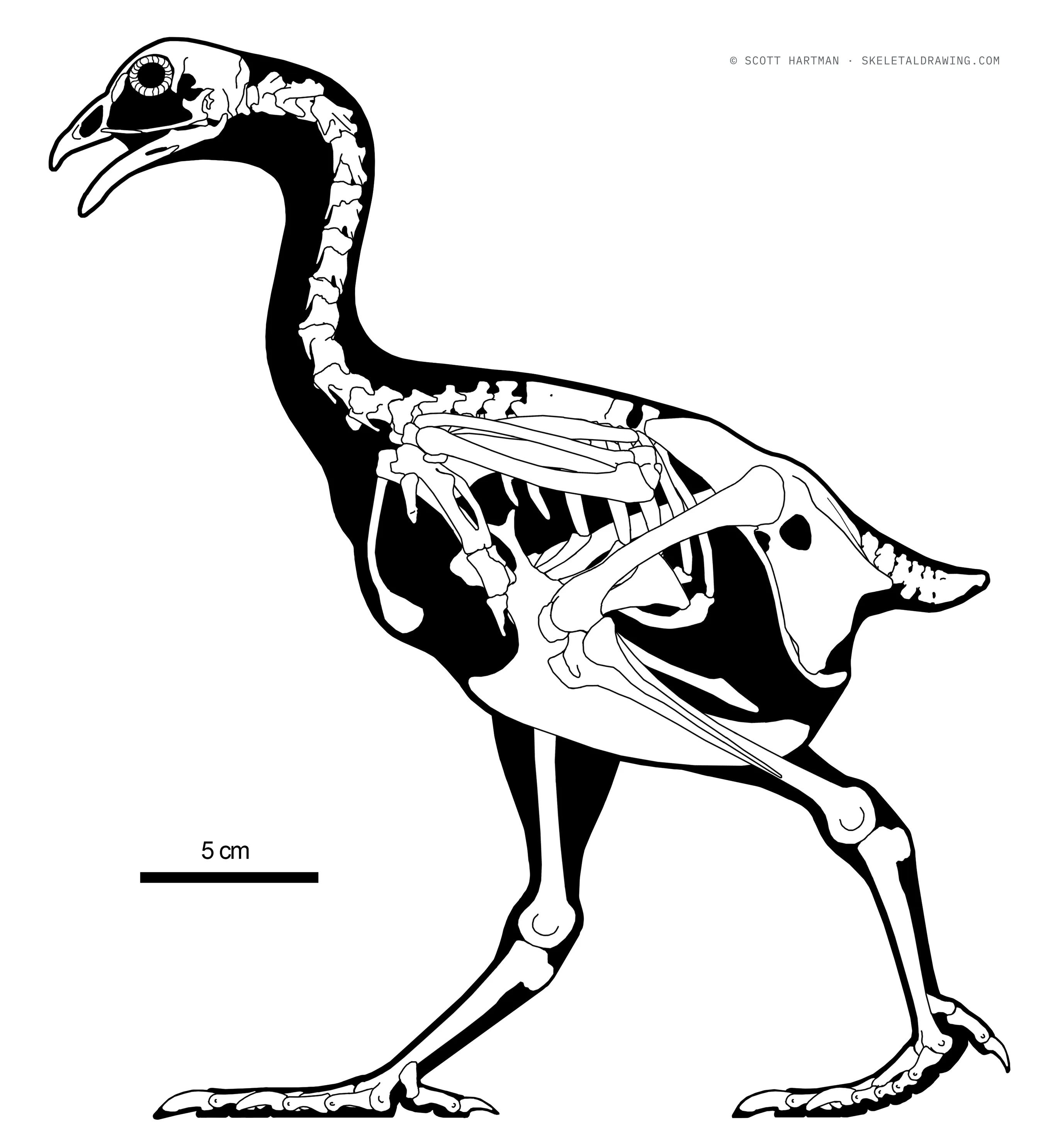
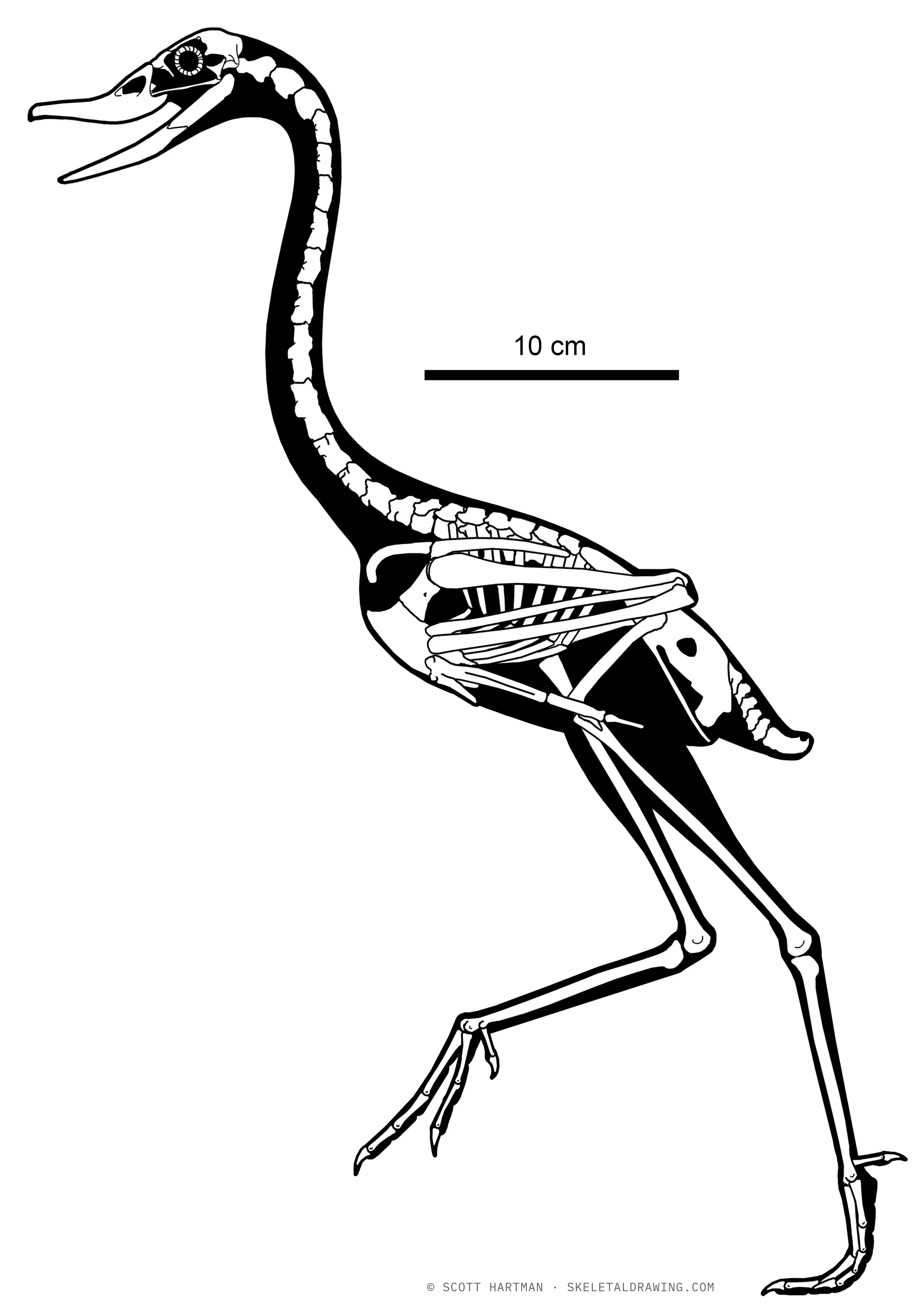
As a large, flightless ground bird from the Paleocene and Eocene of North America and Eurasia, Gastornis can be seen as quickly filling in the spaces vacated by its non-avian theropod relatives after the K/Pg extinction. But which role? Gastornis was traditionally seen as “the bird who ate horses”, since early horse relatives were the size of dogs at the time. But turns out the massive deep beak, once assumed to be the fearsome tool of a predator, has been shown to support a plant-eating lifestyle, an interpretation that is also supported by isotopic geochemical analysis of Gastornis remains.