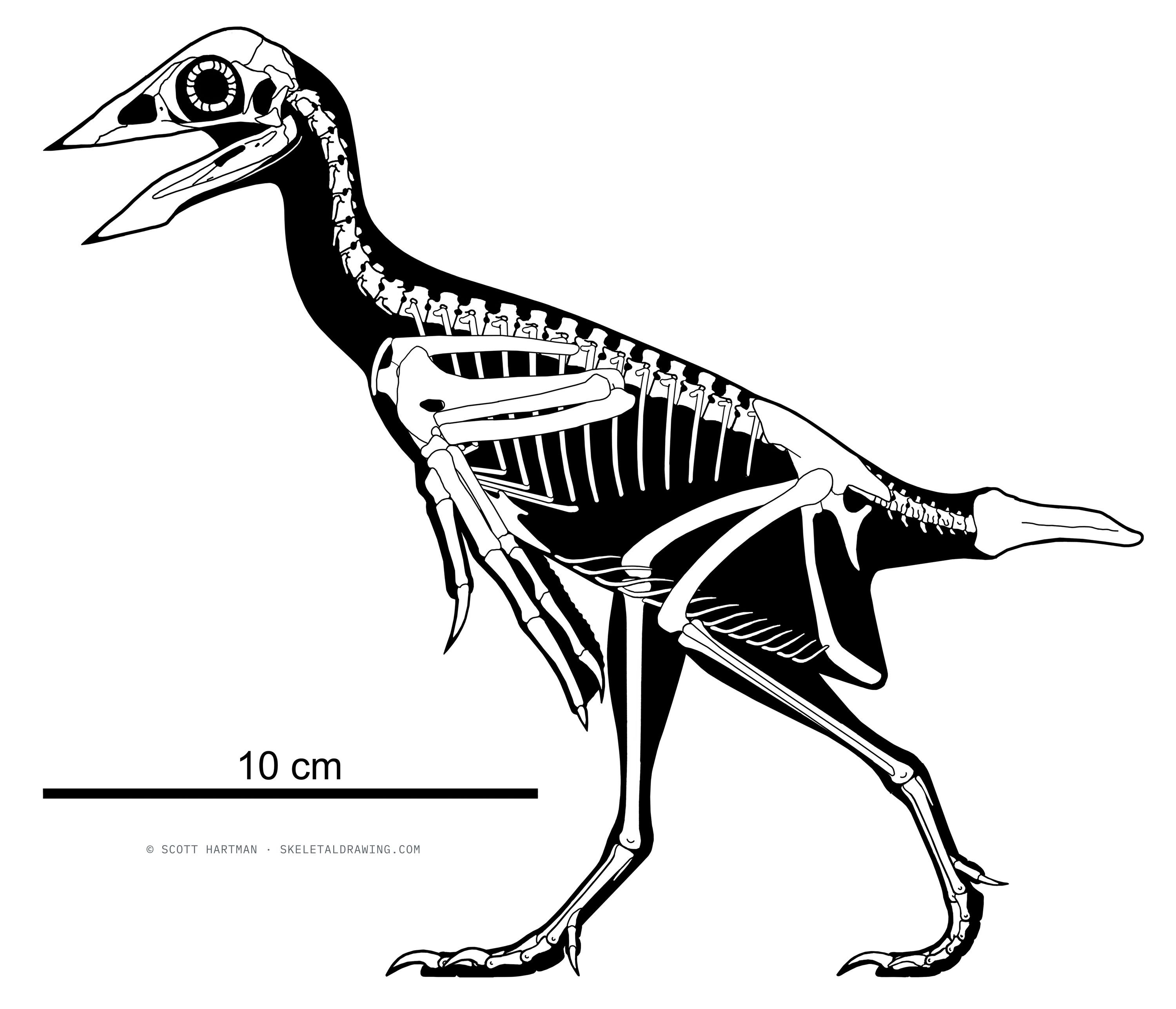
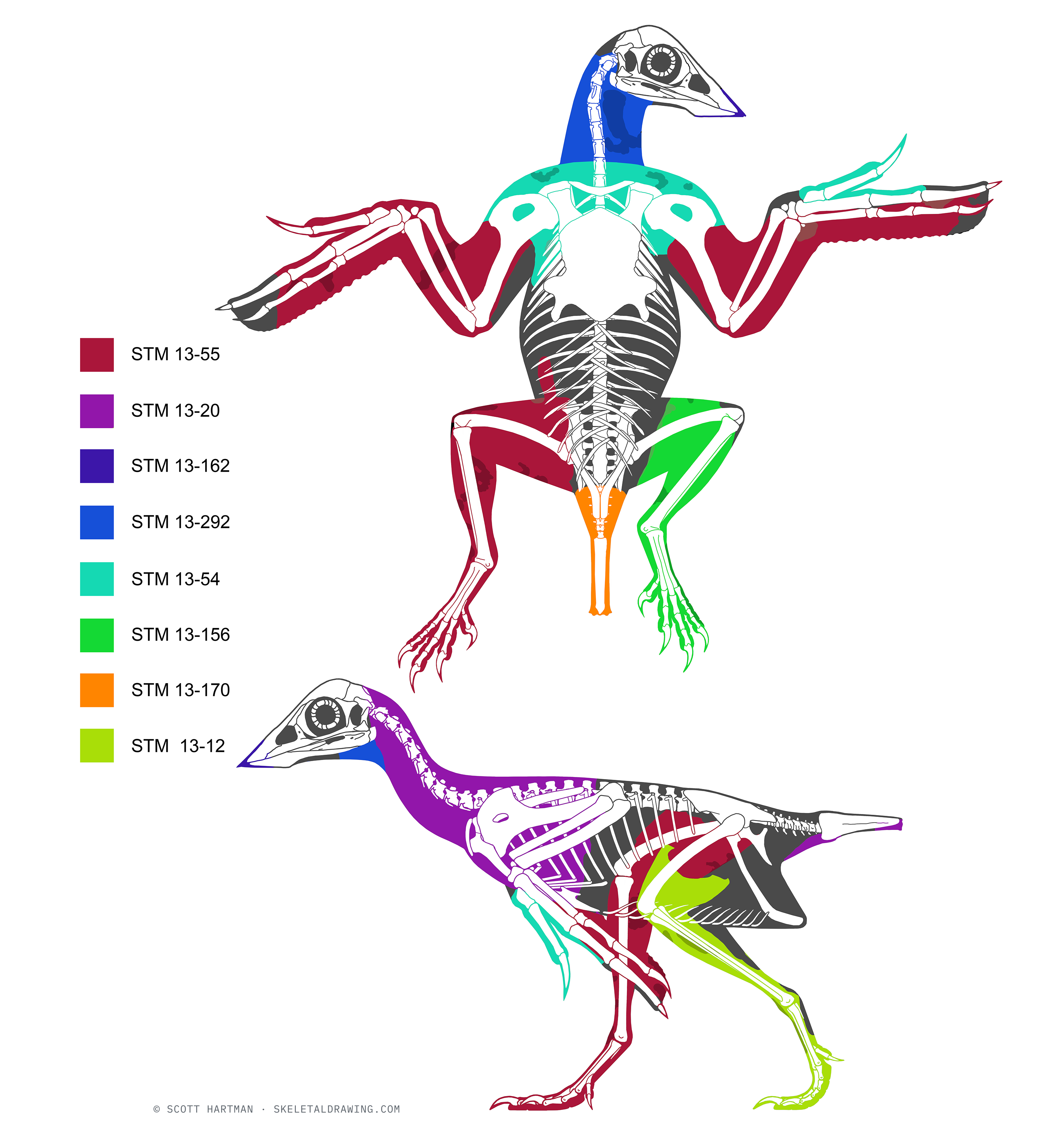
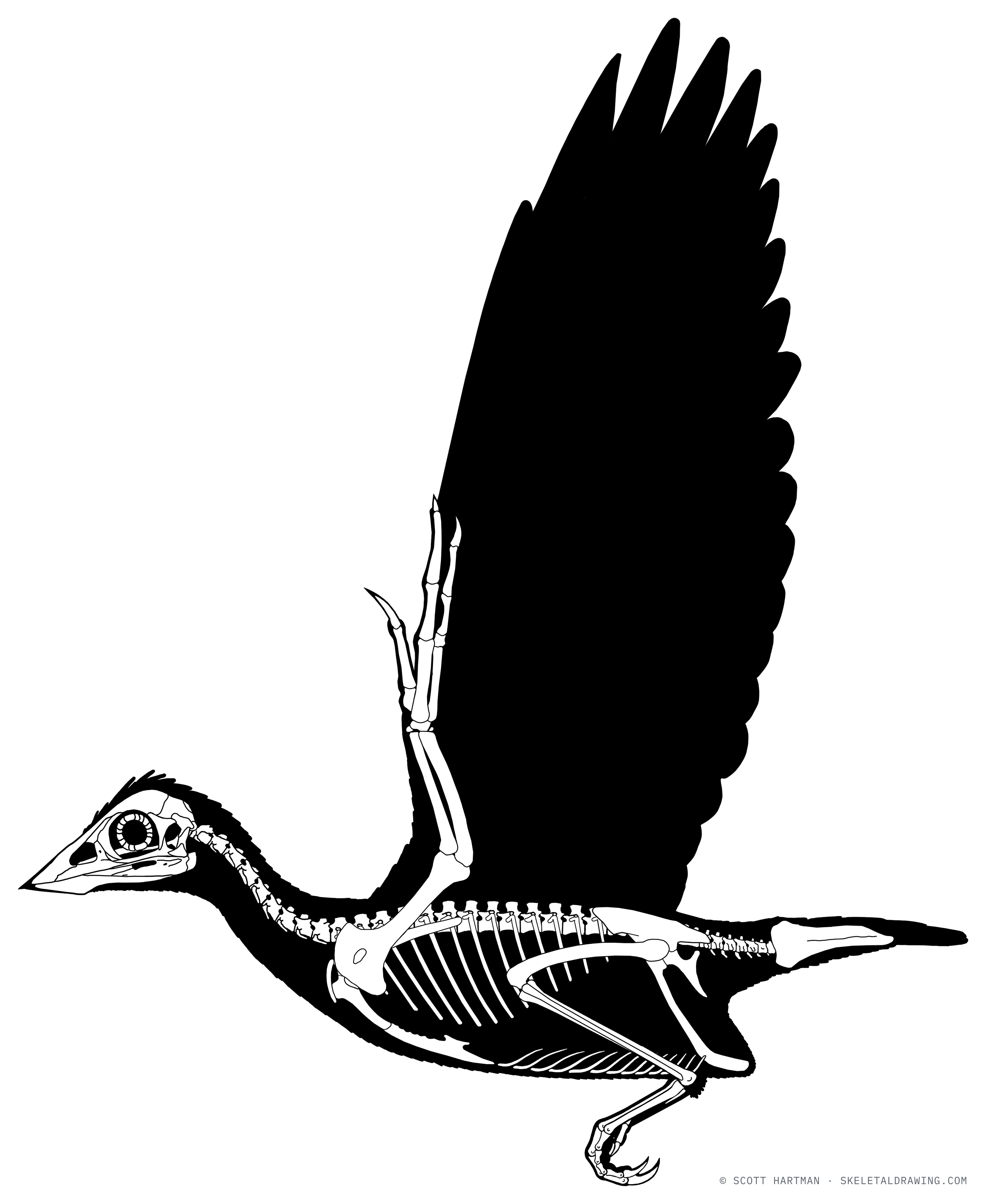
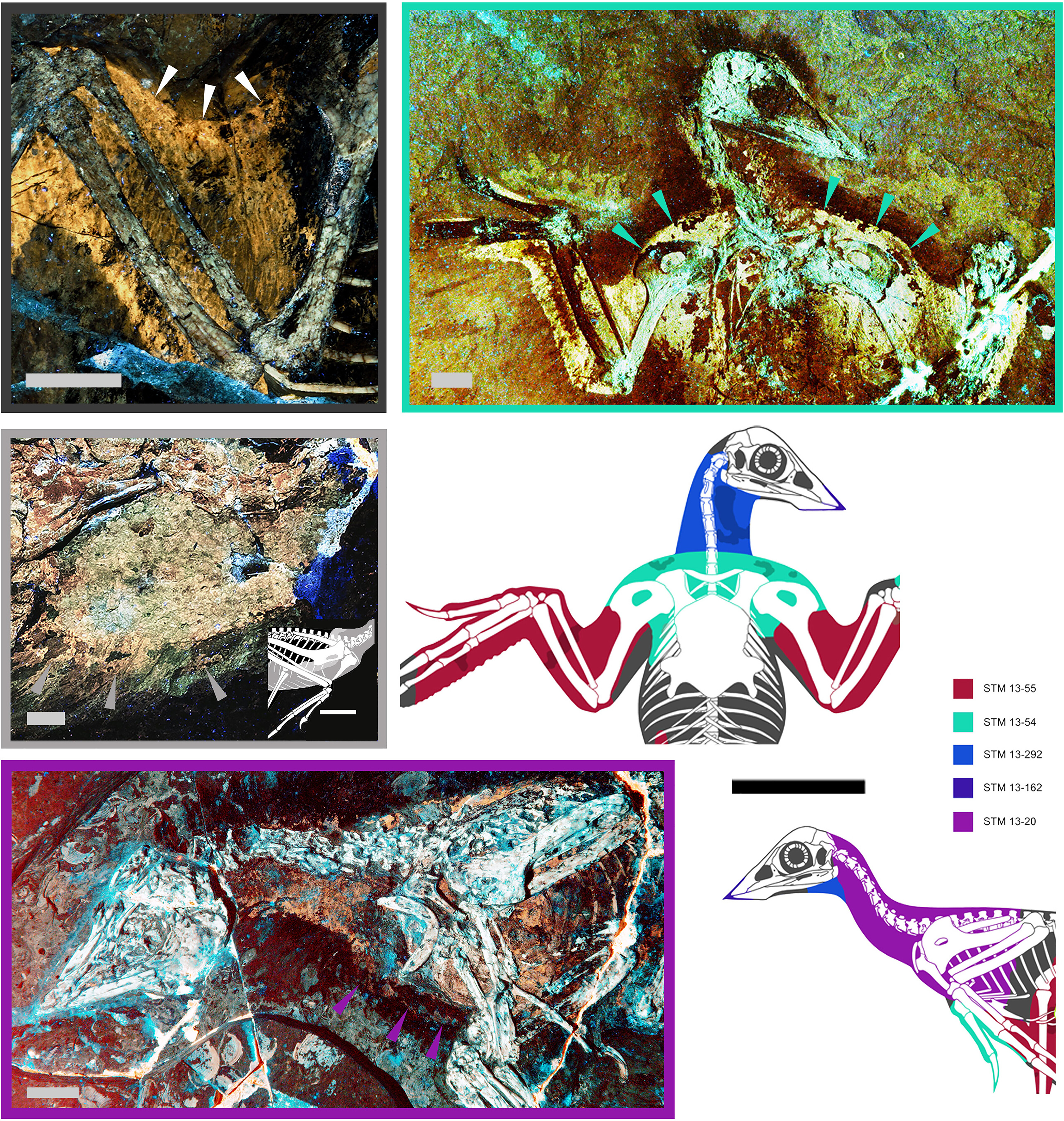
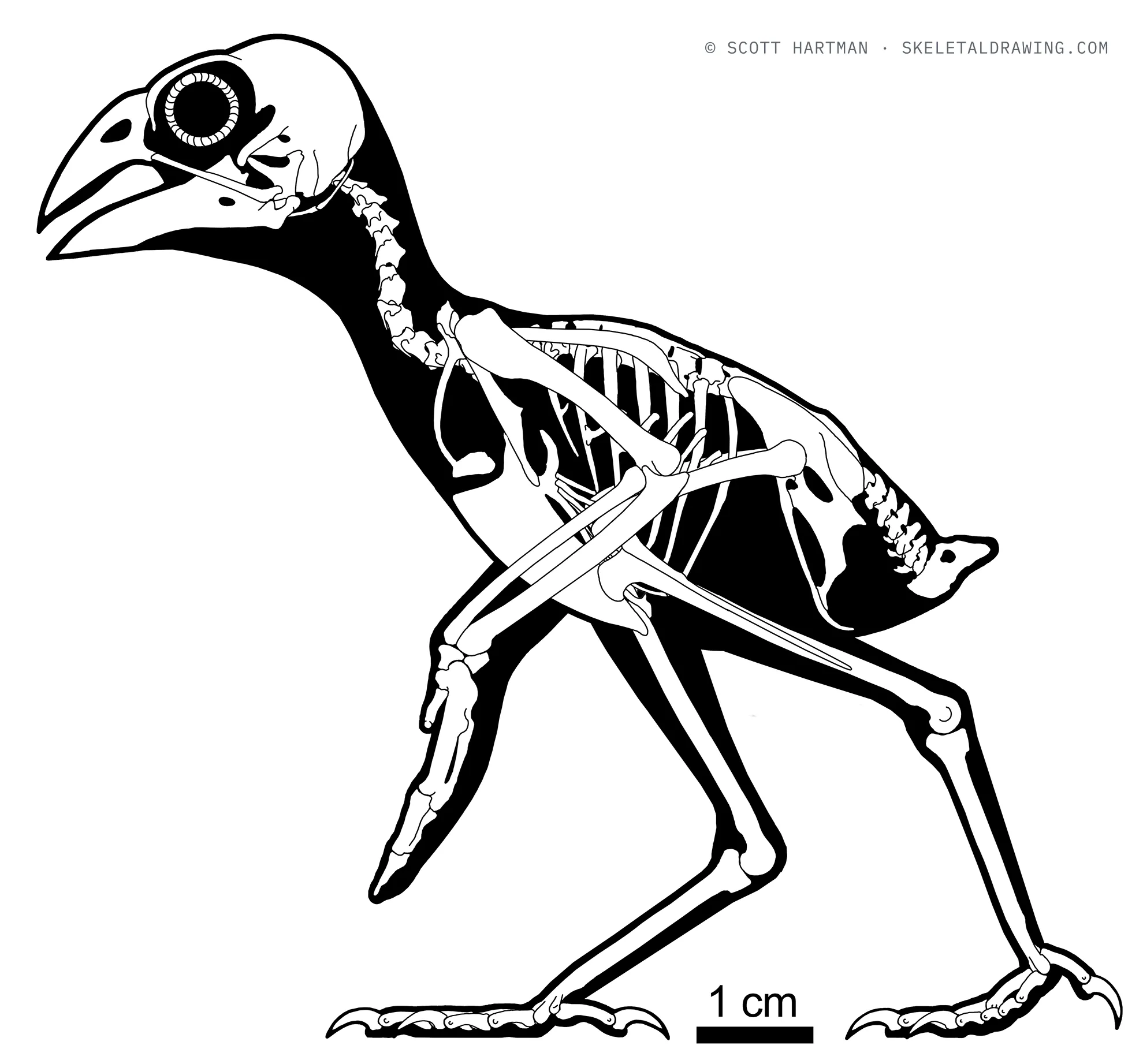
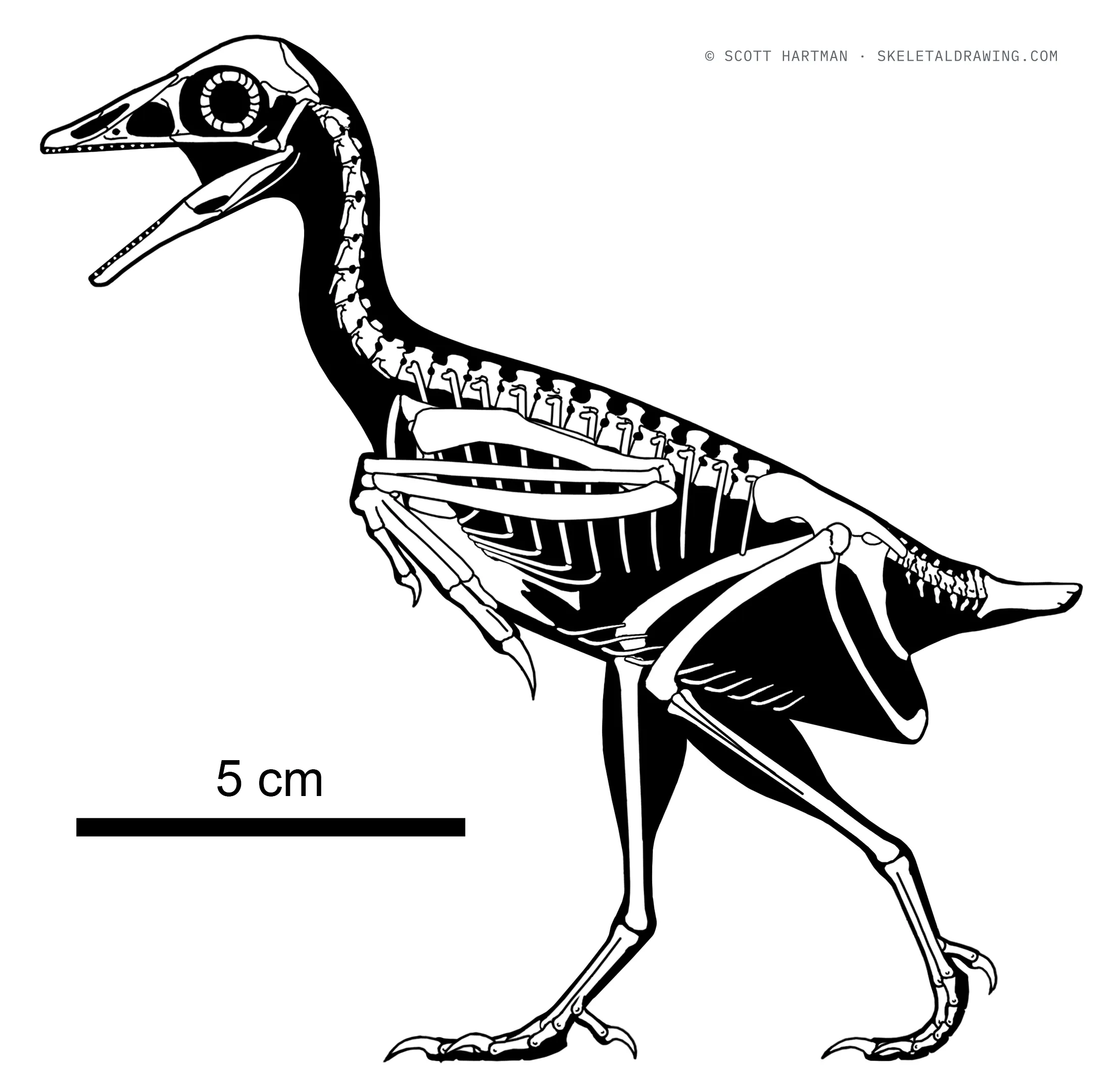
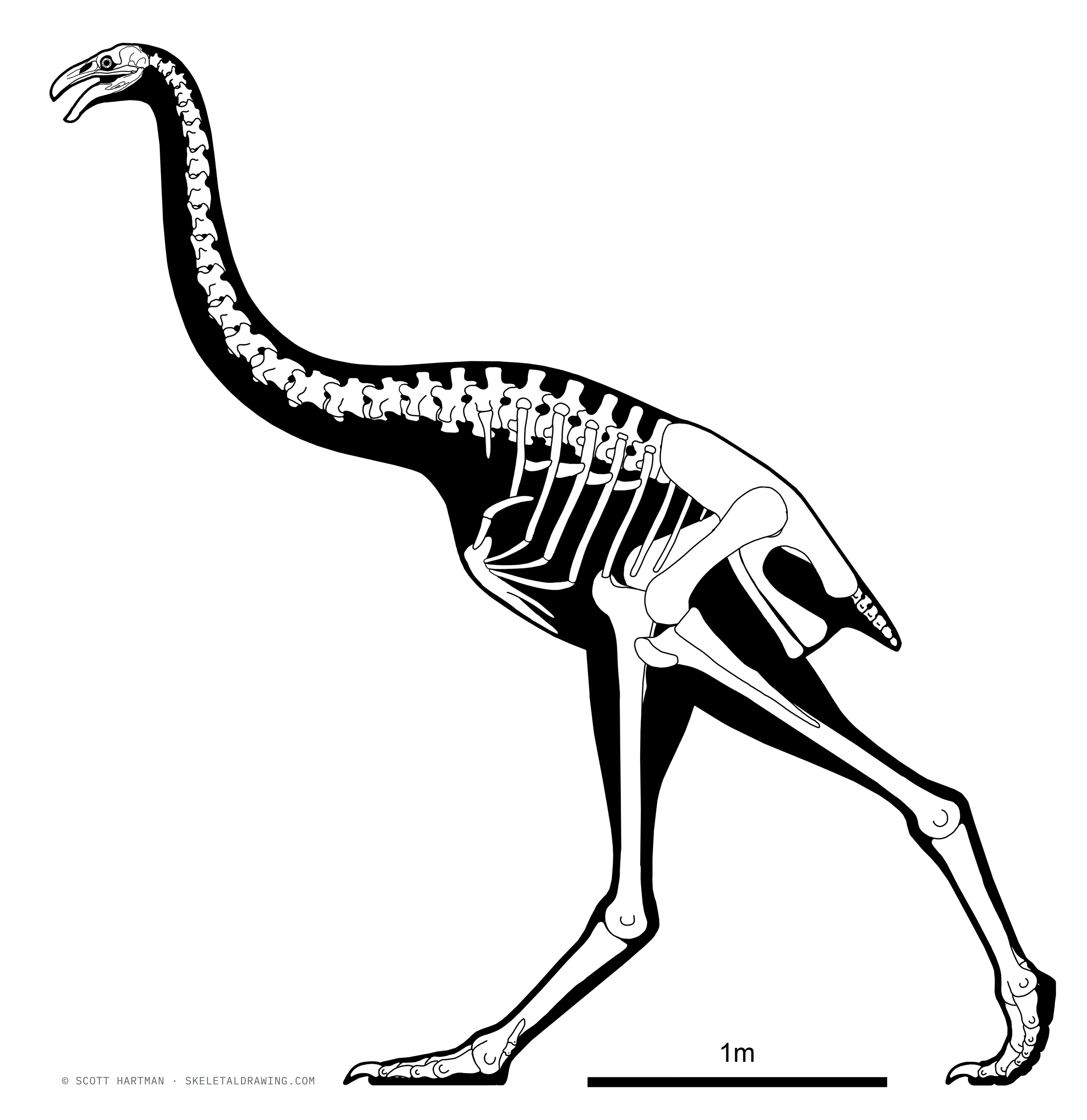
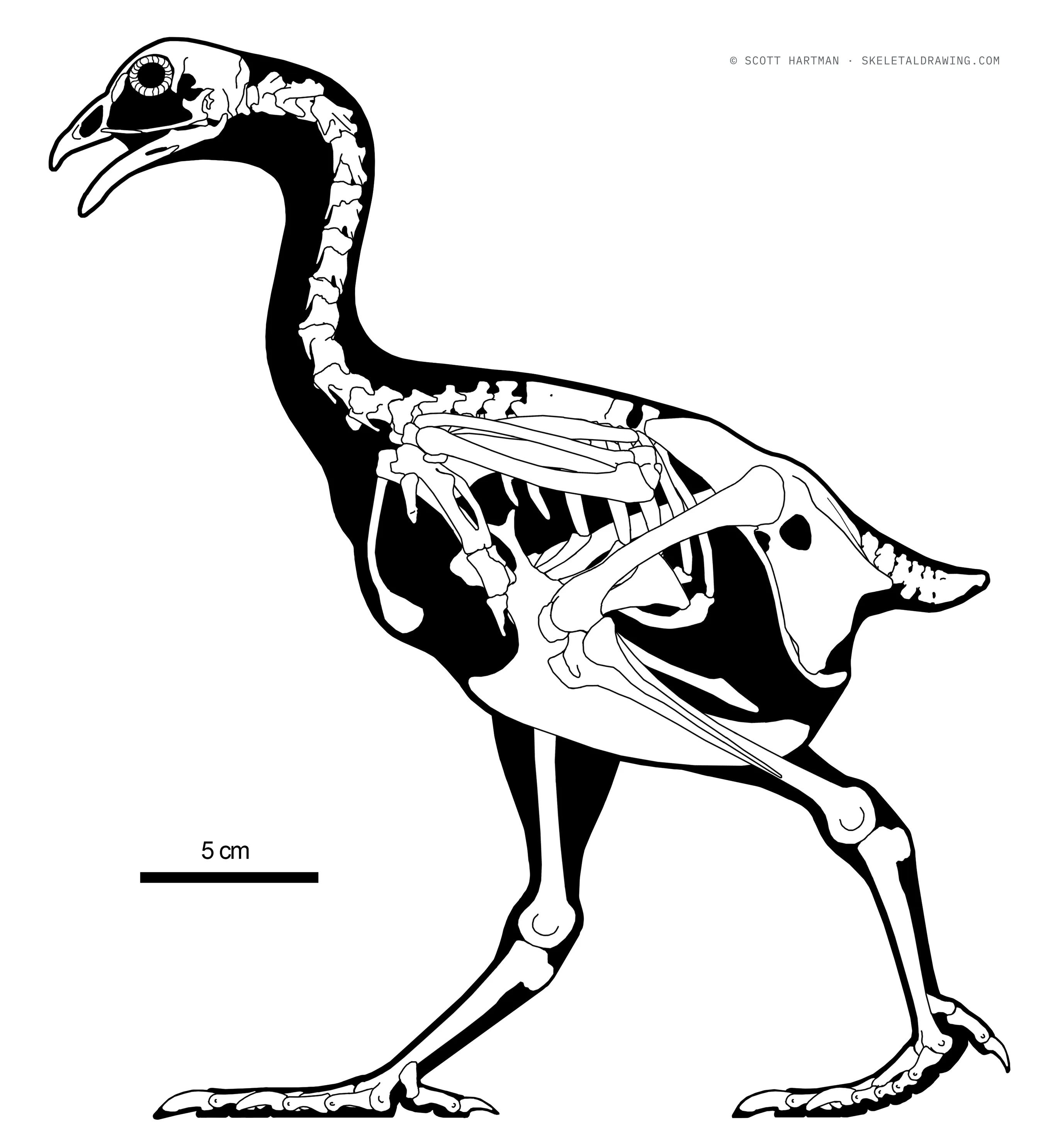
A basal avialan theropod from the Early Cretaceous of eastern China, Confuciusornis is known from hundreds of specimens, many of which record details about feathers, wing shape, and with the aid of laser-stimulated fluorescence, details of muscle size and skin texture.
A subset of adults (usually presumed to be males) had two long, ribbon-like tail feathers that must have been used for display; they otherwise lacked a tail fan as seen in living birds. Confuciusornis also was an early experiment in losing teeth to rely entirely on a toothless beak, although living birds evolved this trait independently. Confuciusornis lacked the full range of flapping motion and pectoral muscles seen in flying birds today, but it did have massive shoulder muscles that may have helped elevate the wing quickly (that is, raise it after flapping downward). This suggests some form of brief, but competent flight. The first toes of Confuciusornis also show some of the earliest evidence of becoming partially reversed, which may have allowed limited movement in trees.