Transitional series
June 26, 2013
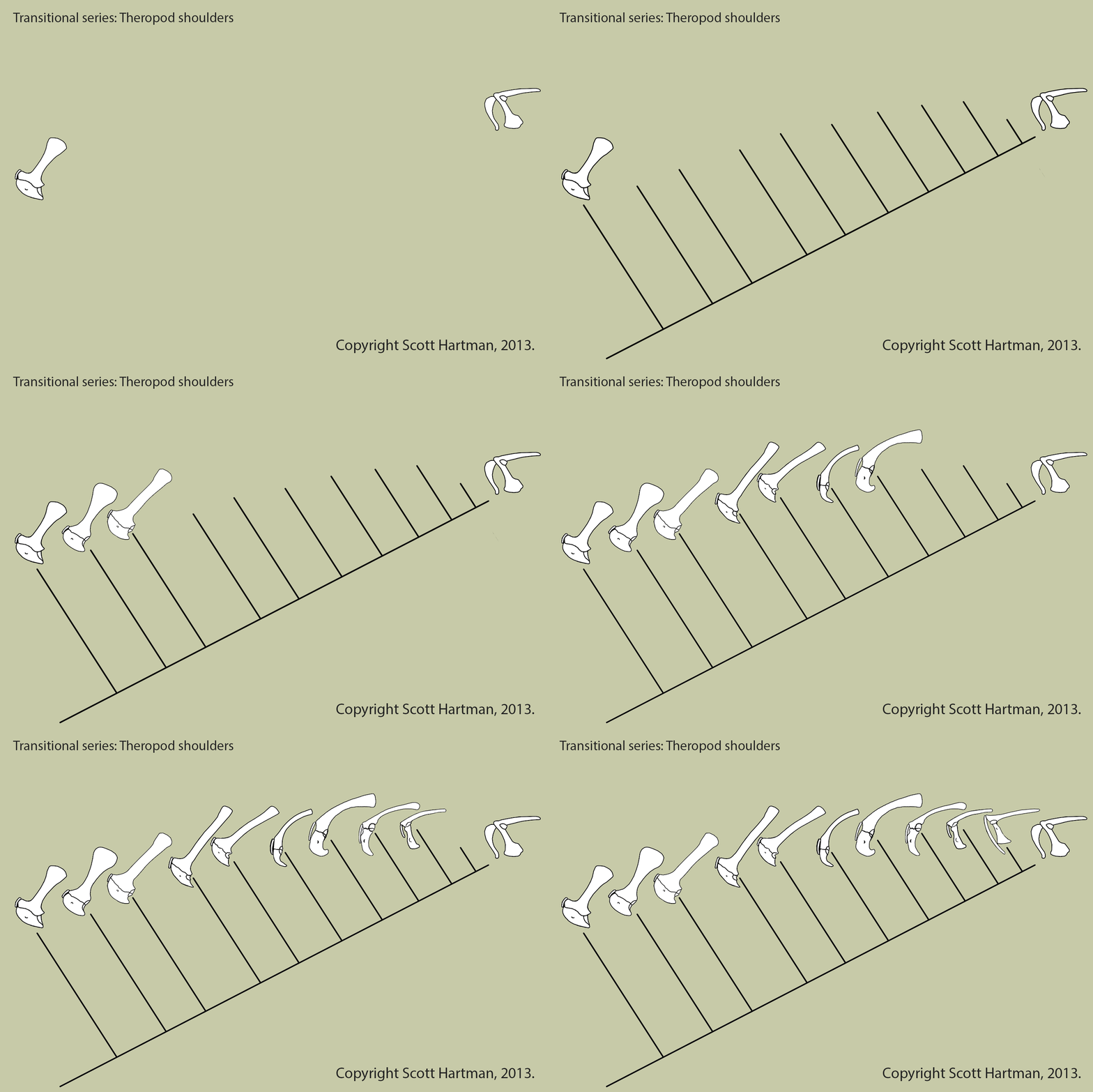
I’m often asked about what I think of “transitional fossils”. Here’s the thing: it’s a red herring. Not because we can’t see important transitions everywhere in the fossil record, but because a single fossil can’t show a transition by definition. If you want to see a transition you need a series of related animals, generally organized by who is related to whom.
I’ve taken one of the series I use for teaching and public speaking and turned it into an animated gif for you here. I realize there aren’t any names on this version - I’ll post a non-animated version with labels next week. In the meantime I think it shows off the more important concept: how easy it is to look at two very different structures and feel like they are insurmountably different up until you fill in other fossil relatives.
We’ll return to our regularly scheduled anatomy and giant sauropod posts soon!
3 comments
Insurmountably different? Not really. I can see the lizard in the fish, and vice versa. As a casual observer, view evolution the same way I view etymology. Noct and Night look and sound very similar to me, yet, there are thousands of years between them. Zeus - Dzeus - Dzeos - Deos - Dios (The evolution of the Greek word for God as it transitioned into Spanish).
That's why I said "some people" might feel it is insurmountable (the point is to demonstrate that the differences are not insurmountable). I would argue that anyone that understands linguistic evolution probably has a major head start on understanding biological evolution (as you seem to). Still, a lot of people (even good biologists) persist in talking about transitional taxa as individual points rather than transitional series of taxa, which I think people need to see if we're going to expect them to understand how these changes have taken place.
A little off topic, but Dios did come from Greek Zeus, but Latin Deus. Though both are cognates and ultimately derive from PIE *Dyēus Dios via *Deiwos.
Join the discussion
Thanks — your comment is in the queue!
It'll appear here in about 5–10 minutes, once I've approved it — you'll need to refresh the page to see it. (Comments don't post instantly anymore.)