Sauropod Gallery Overhauled!
January 23, 2014
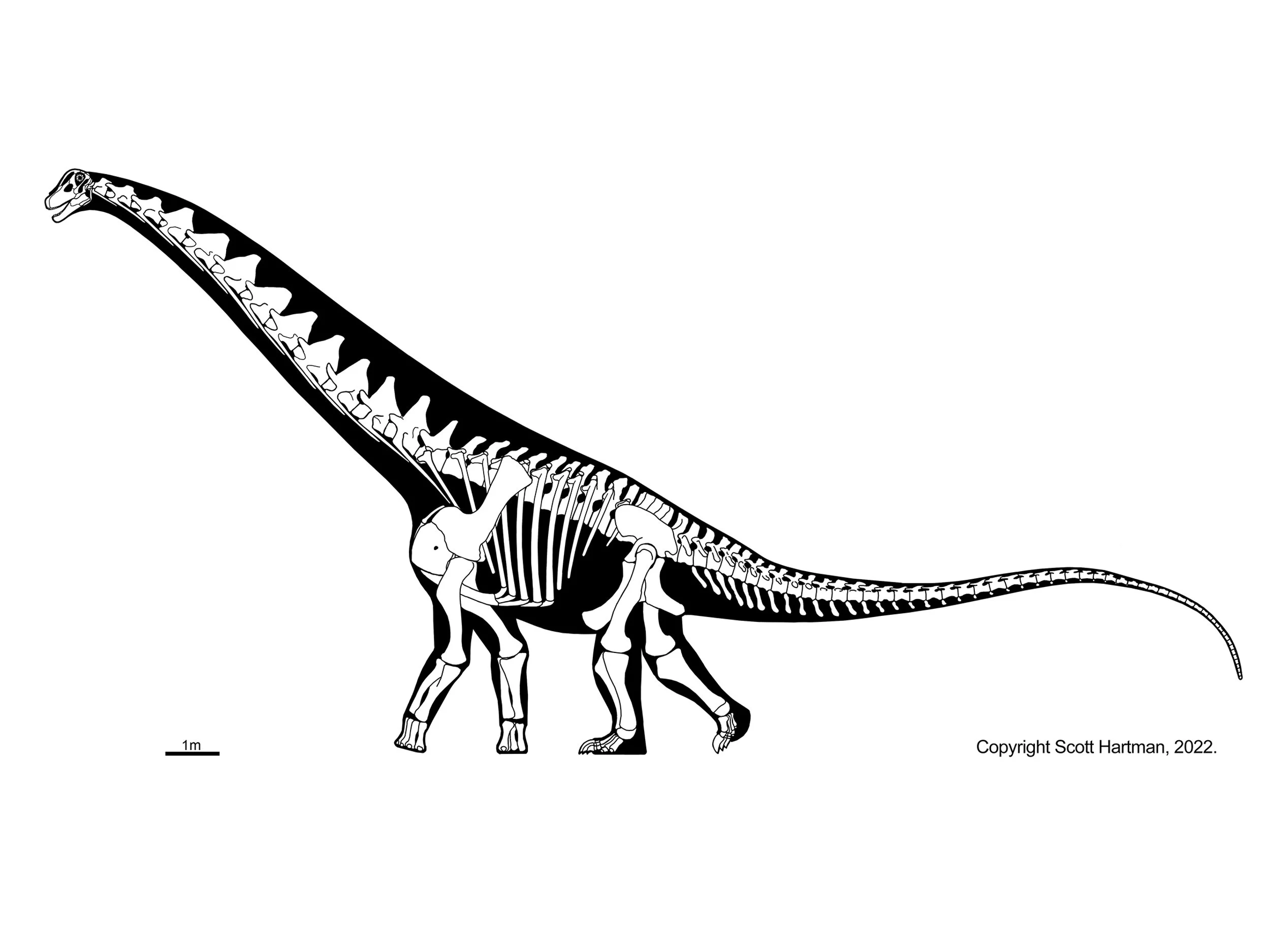
I’d like to offer a belated welcome to 2014. To start the new year off right, I’ve completely overhauled the sauropod skeletal gallery. This includes the debut of the Early Cretaceous brachiosaur Cedarosaurus and improved freshness dates (copyright) on all of them. You will no longer find a revision date older than 2013 (and really, 2012-2013 is about the oldest date you should accept if you want to make sure a skeletal is properly revised). The Great Skeletal Repose that started with theropods in 2011 has now reached sauropods (and their “prosauropod” cousins).
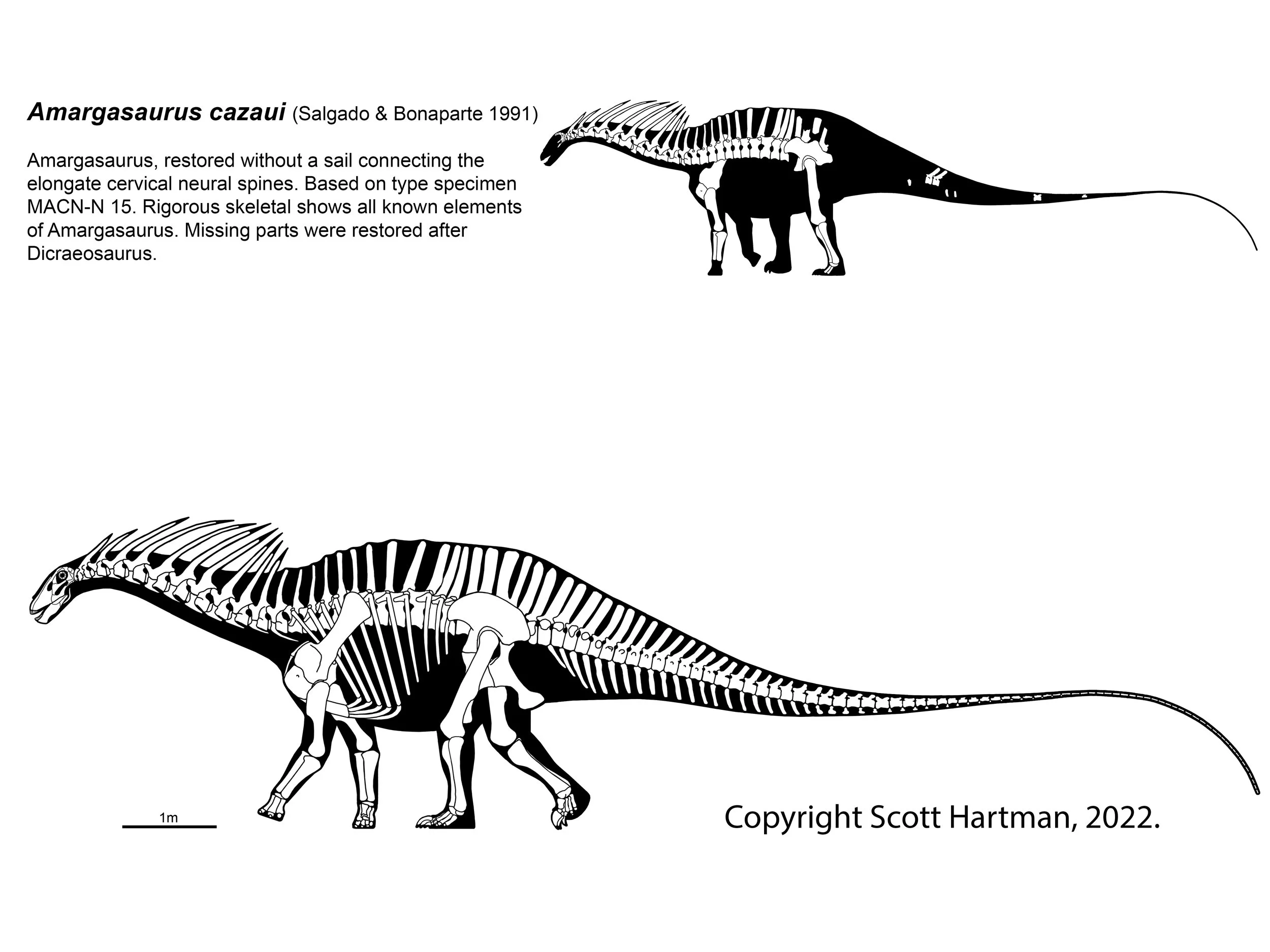
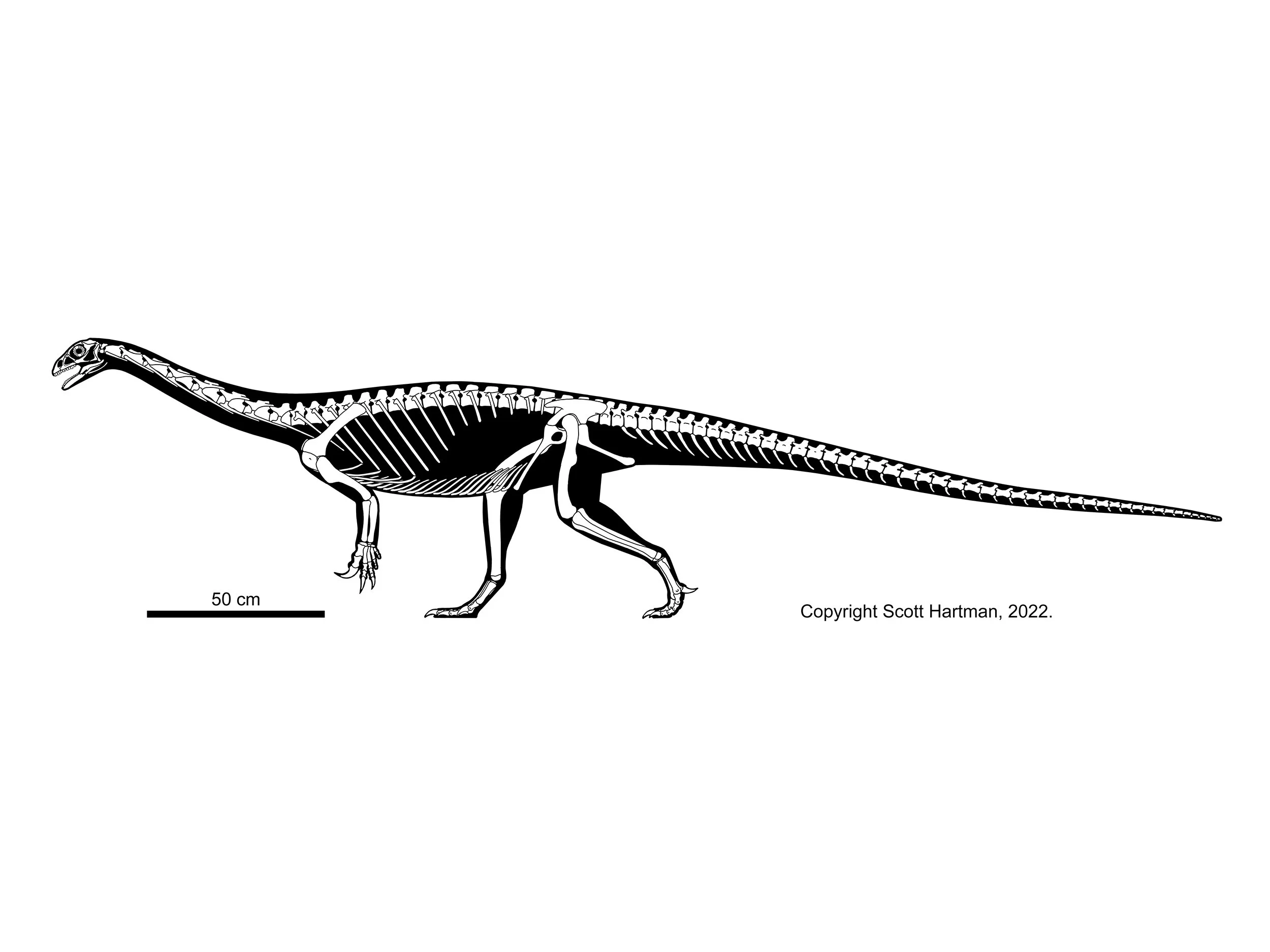
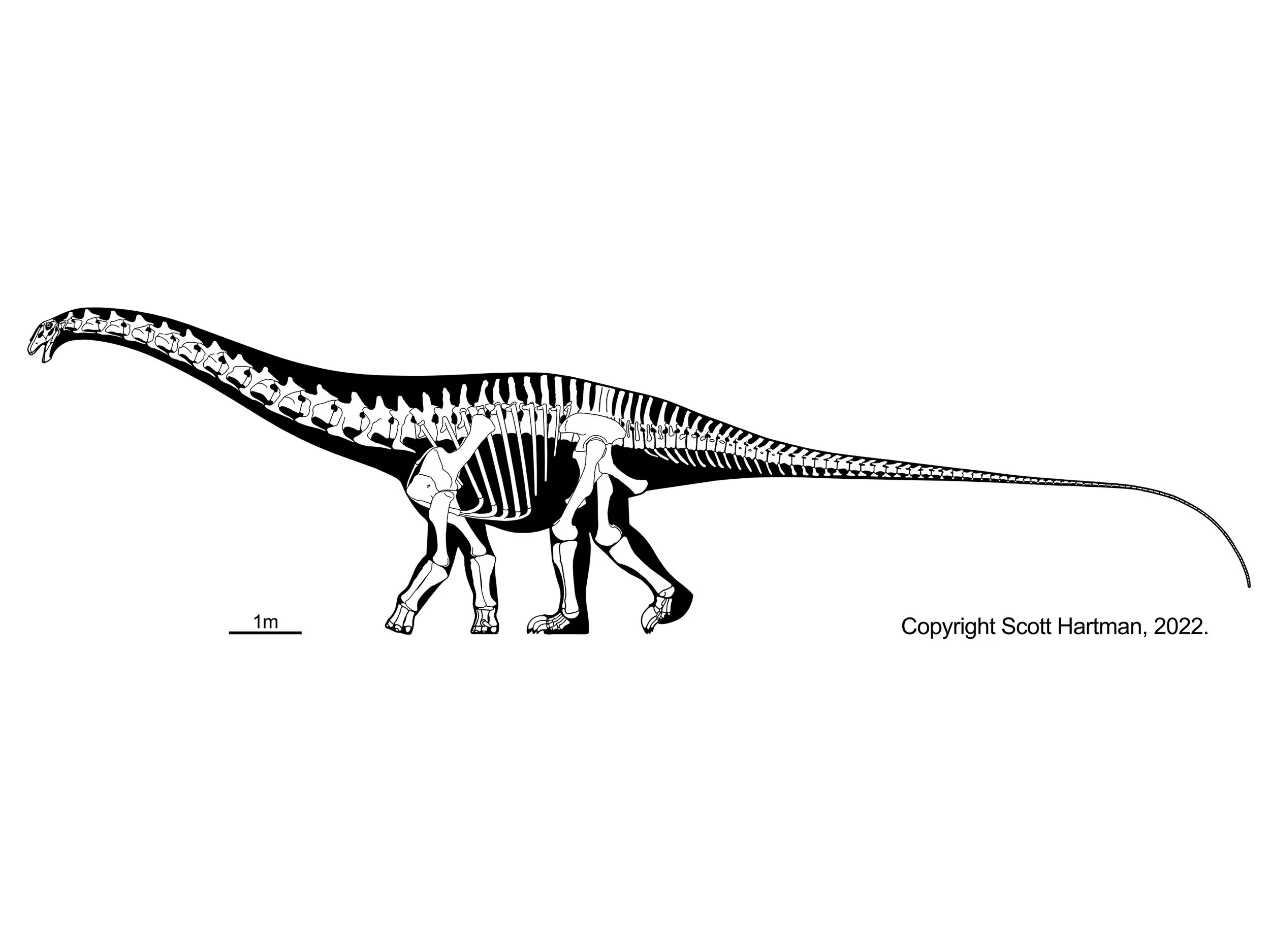
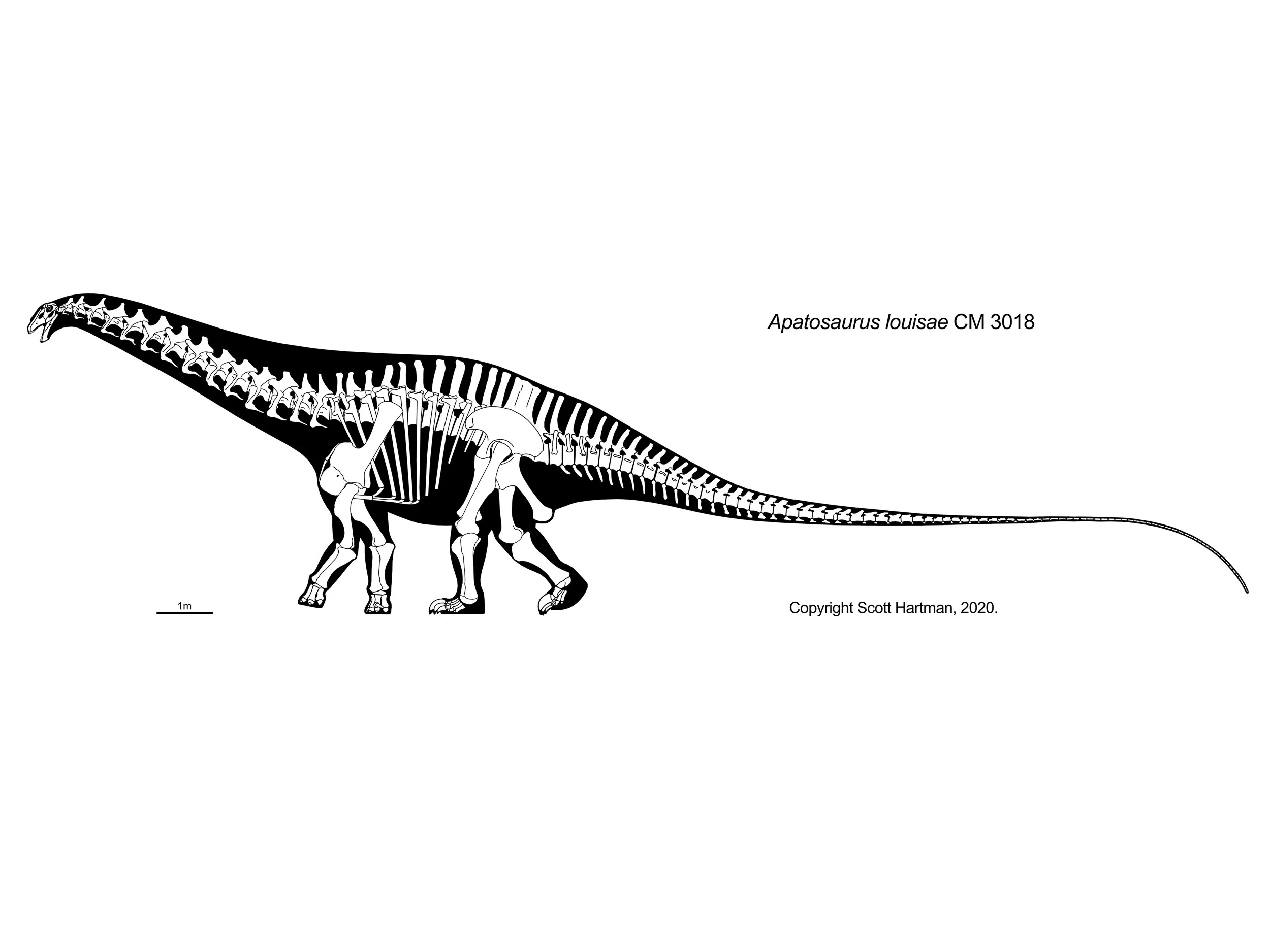
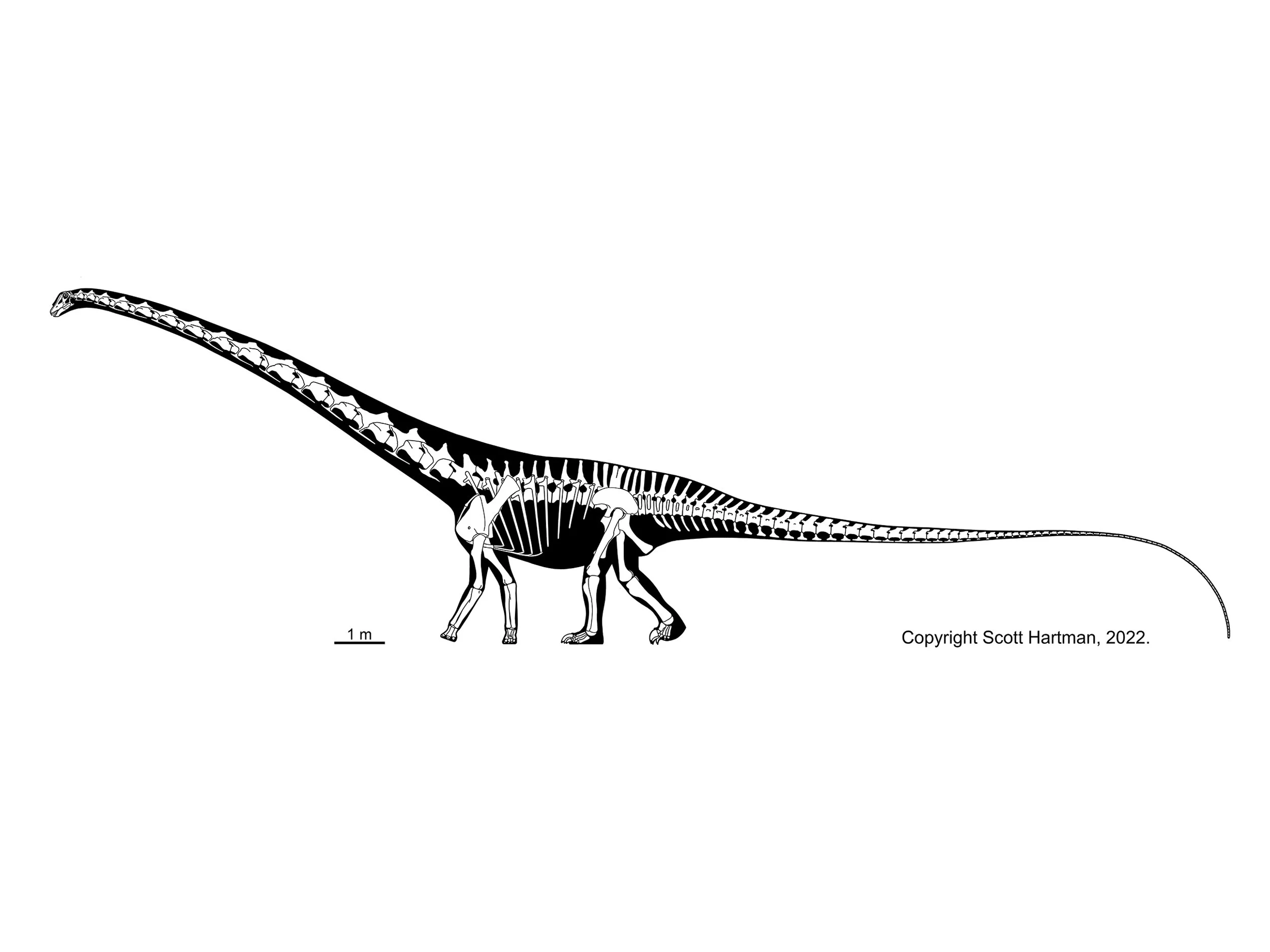
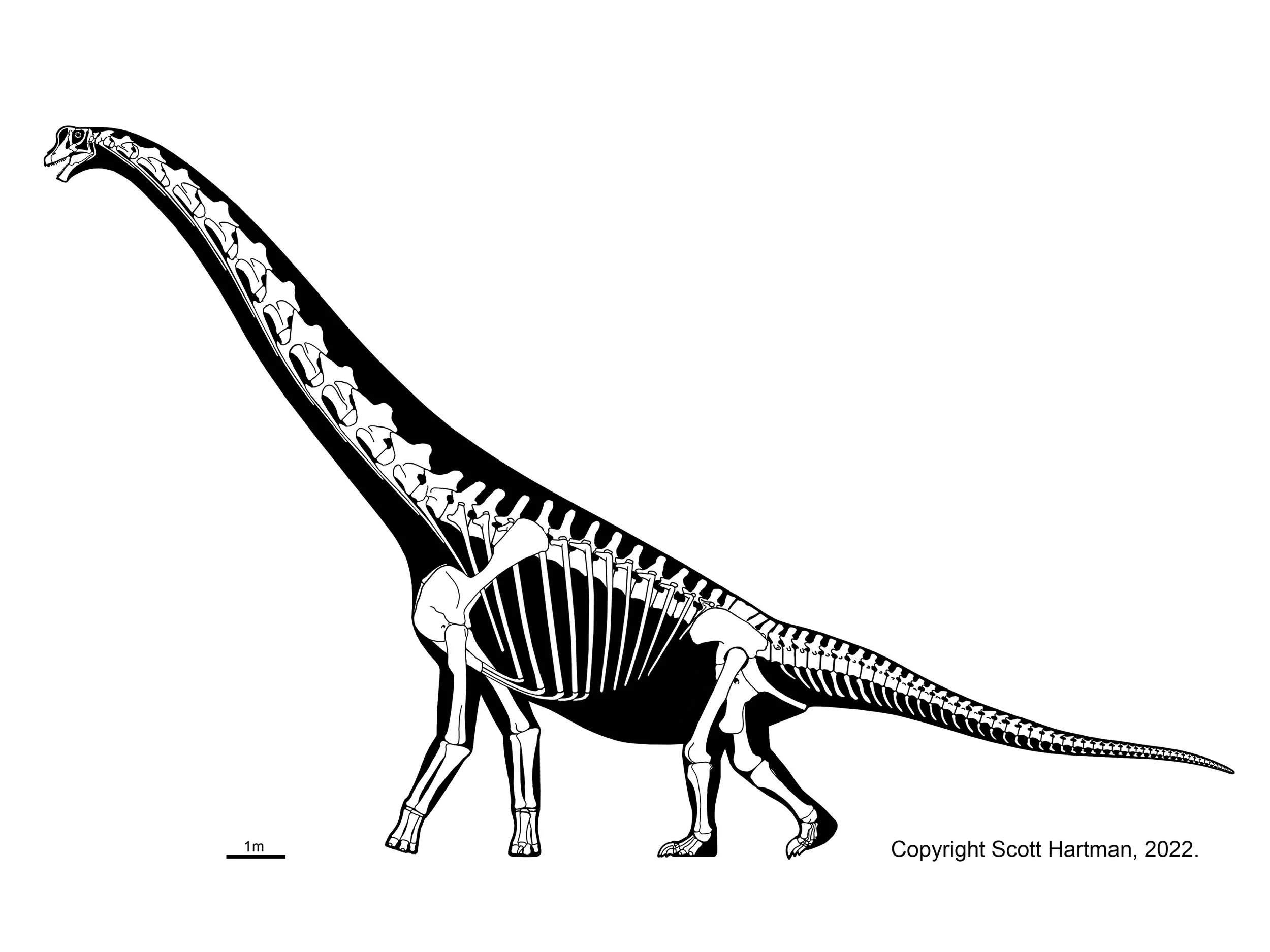
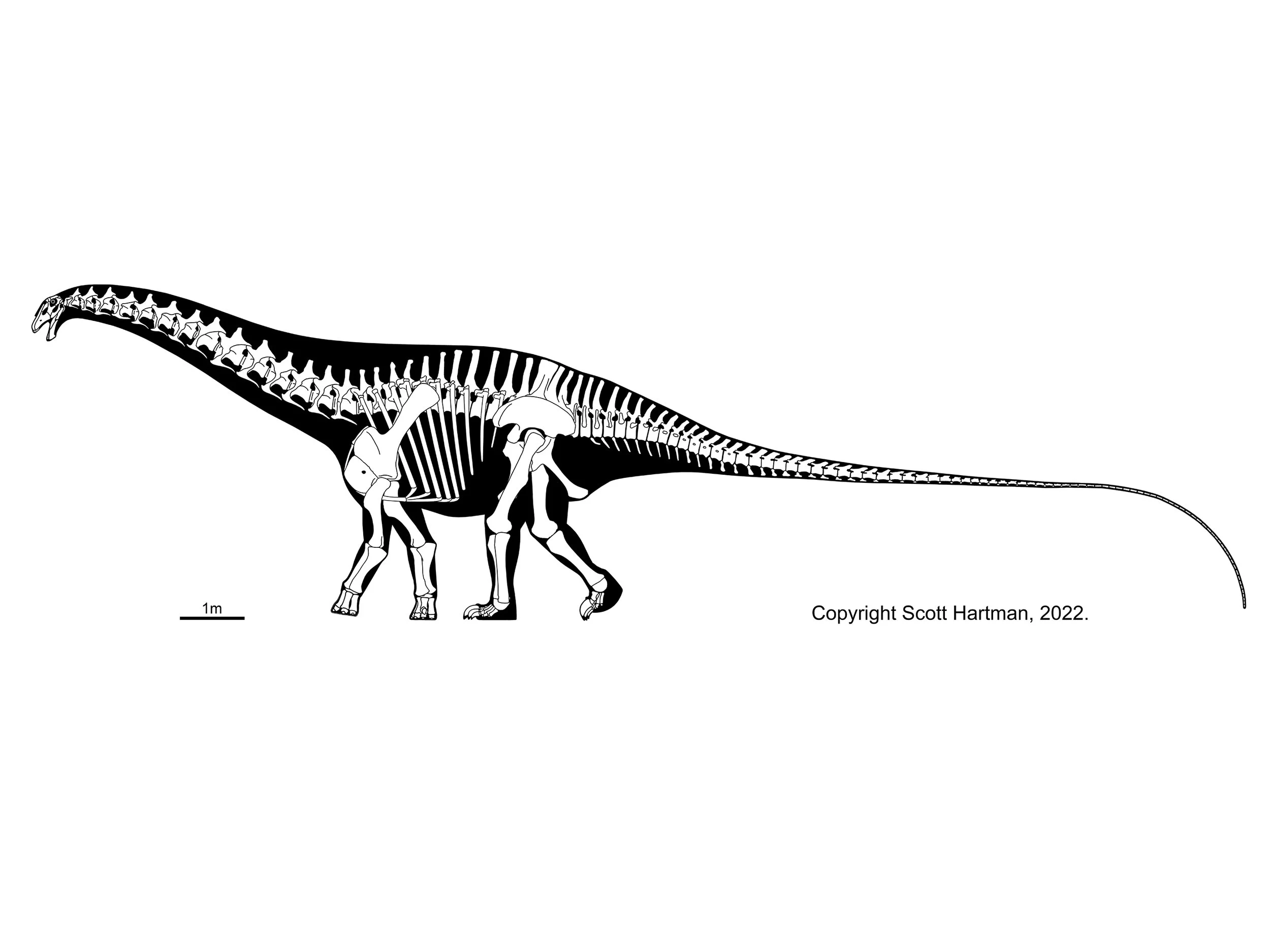
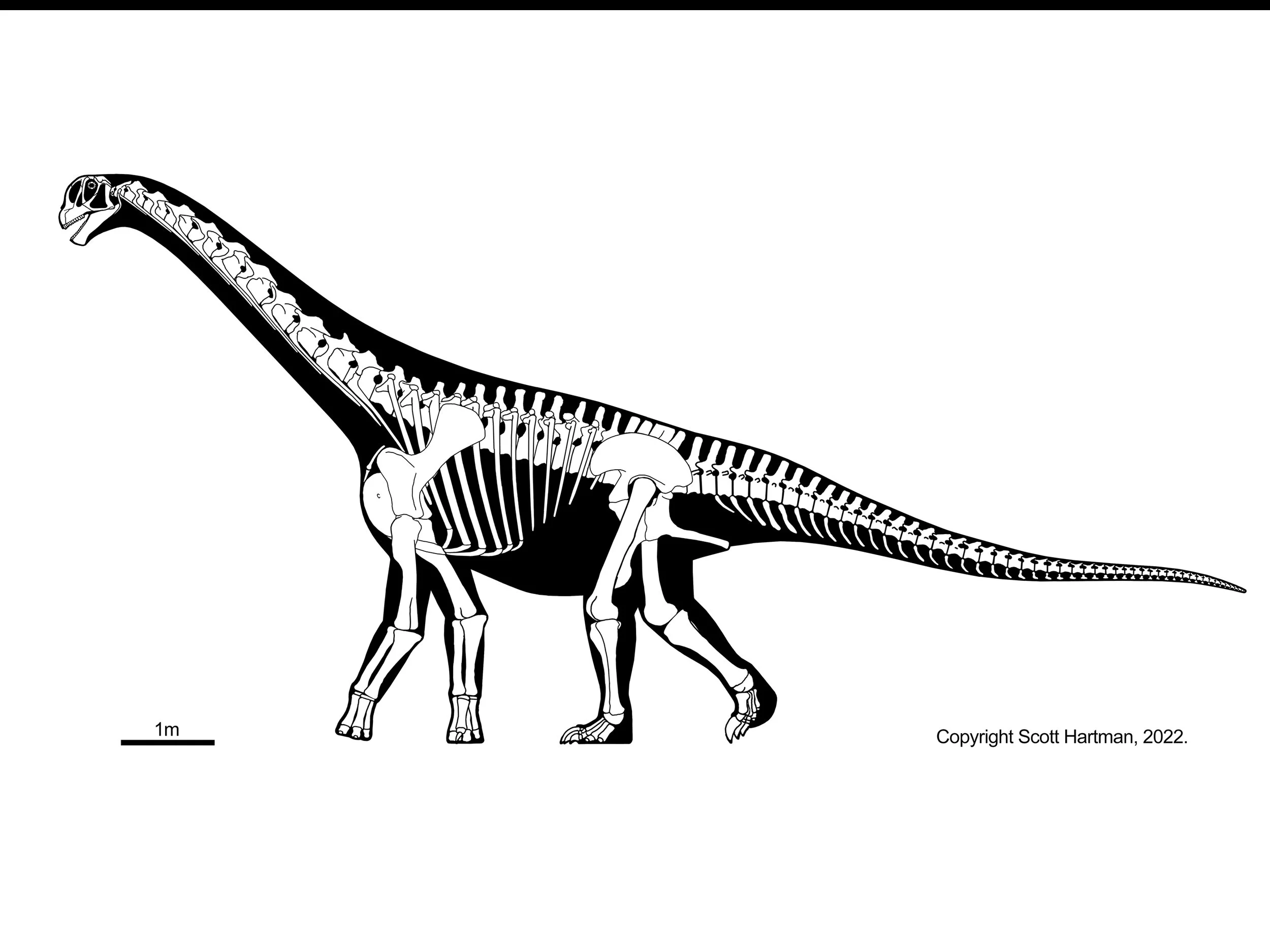
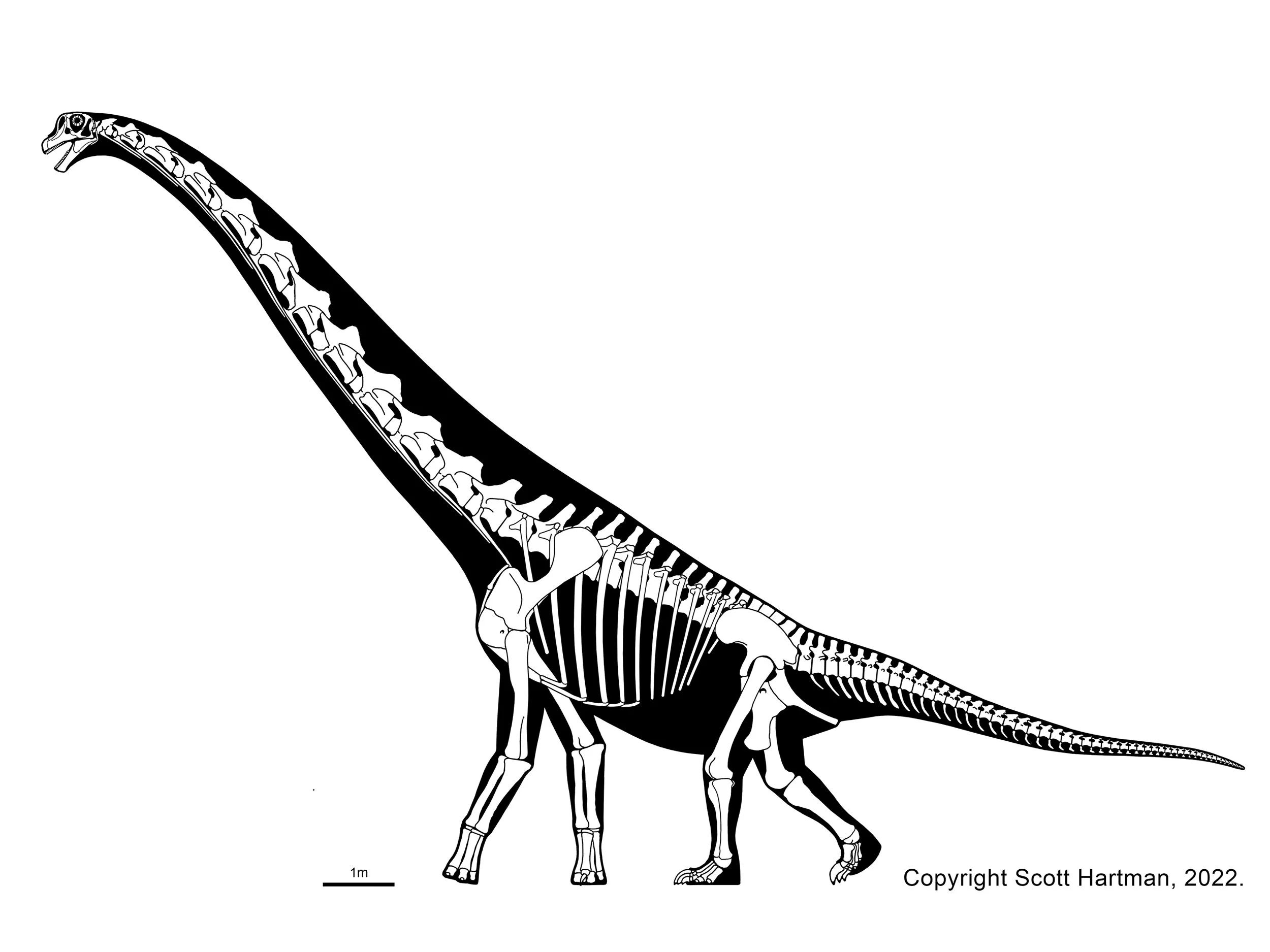
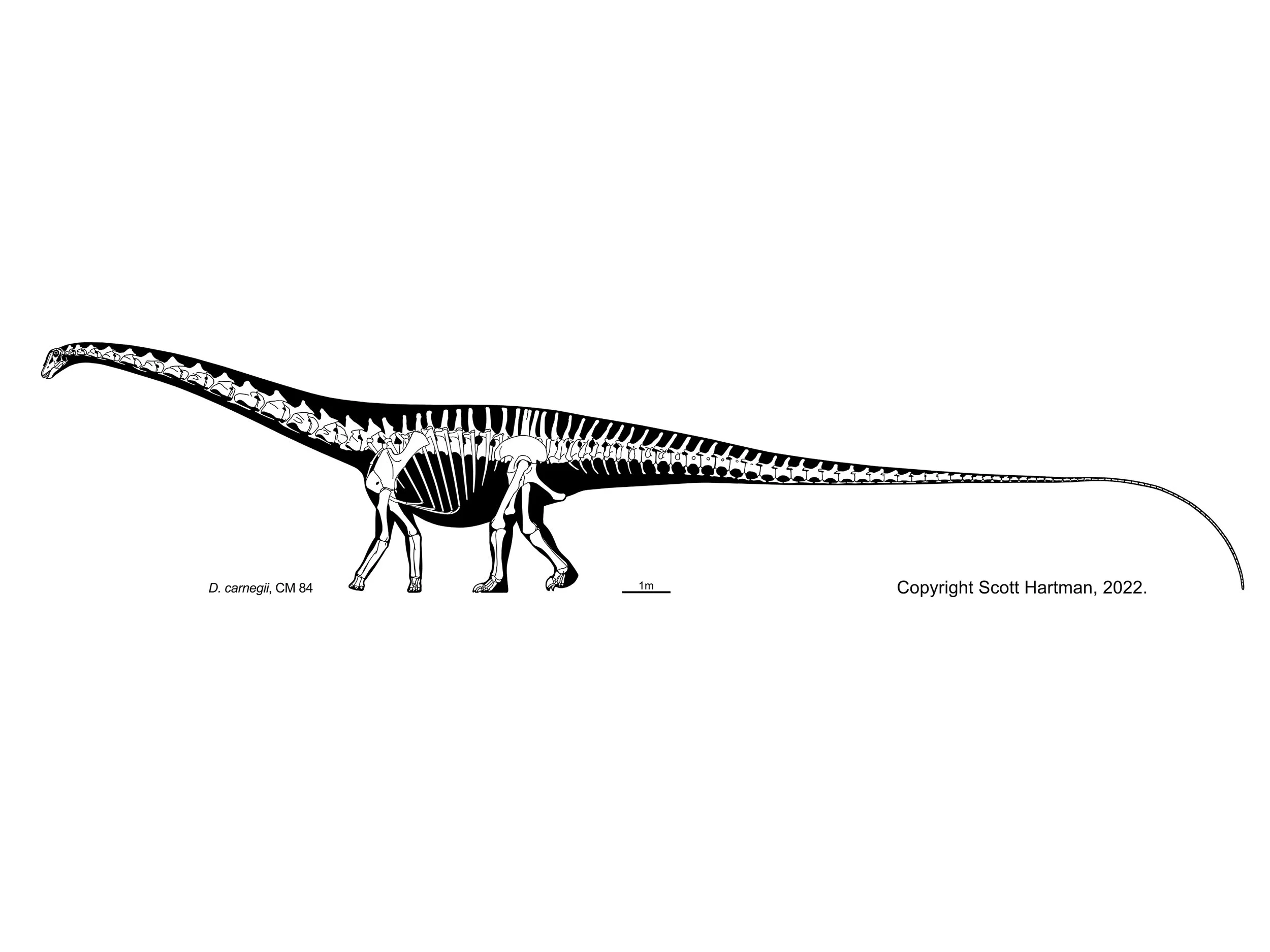
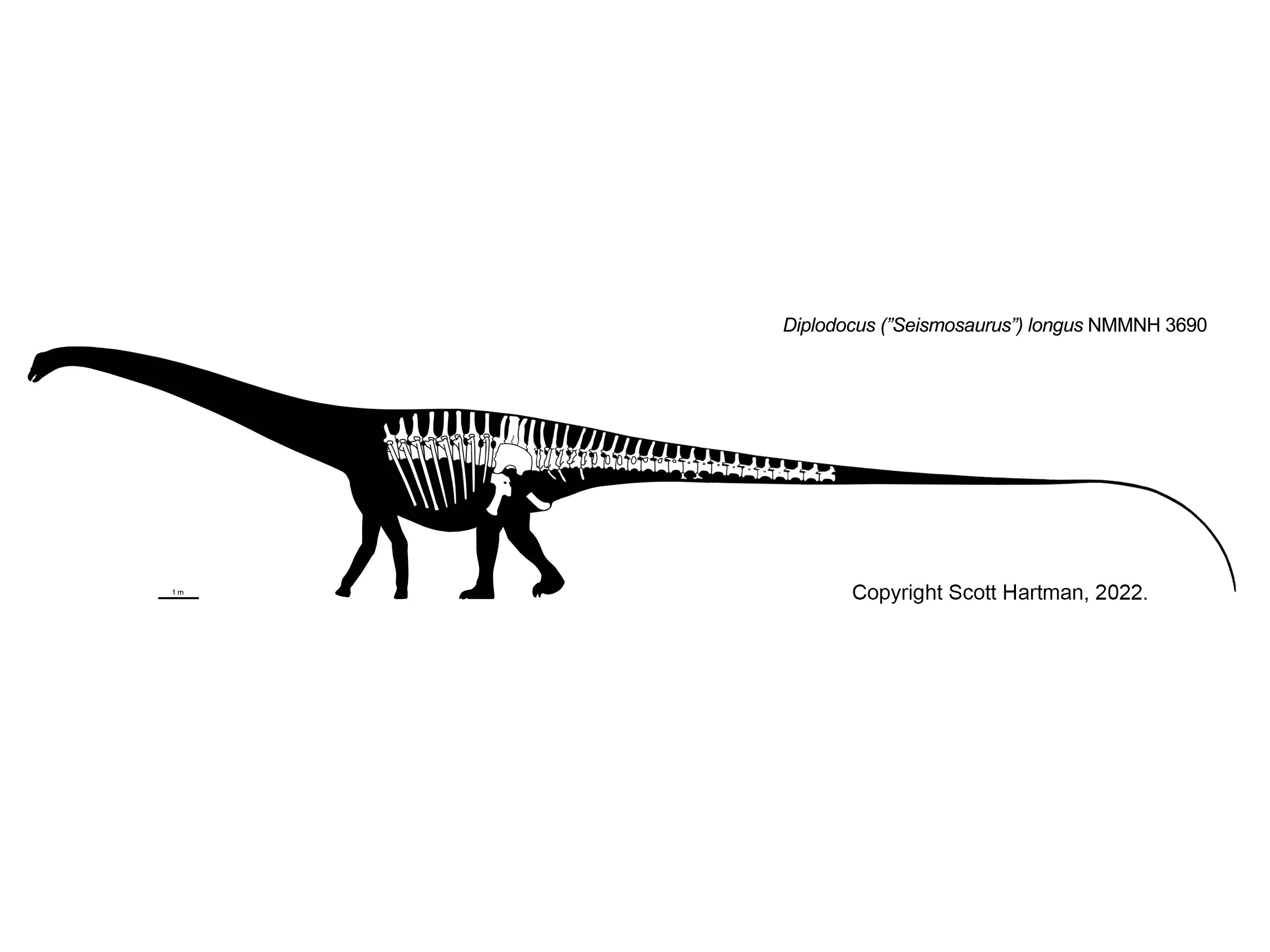
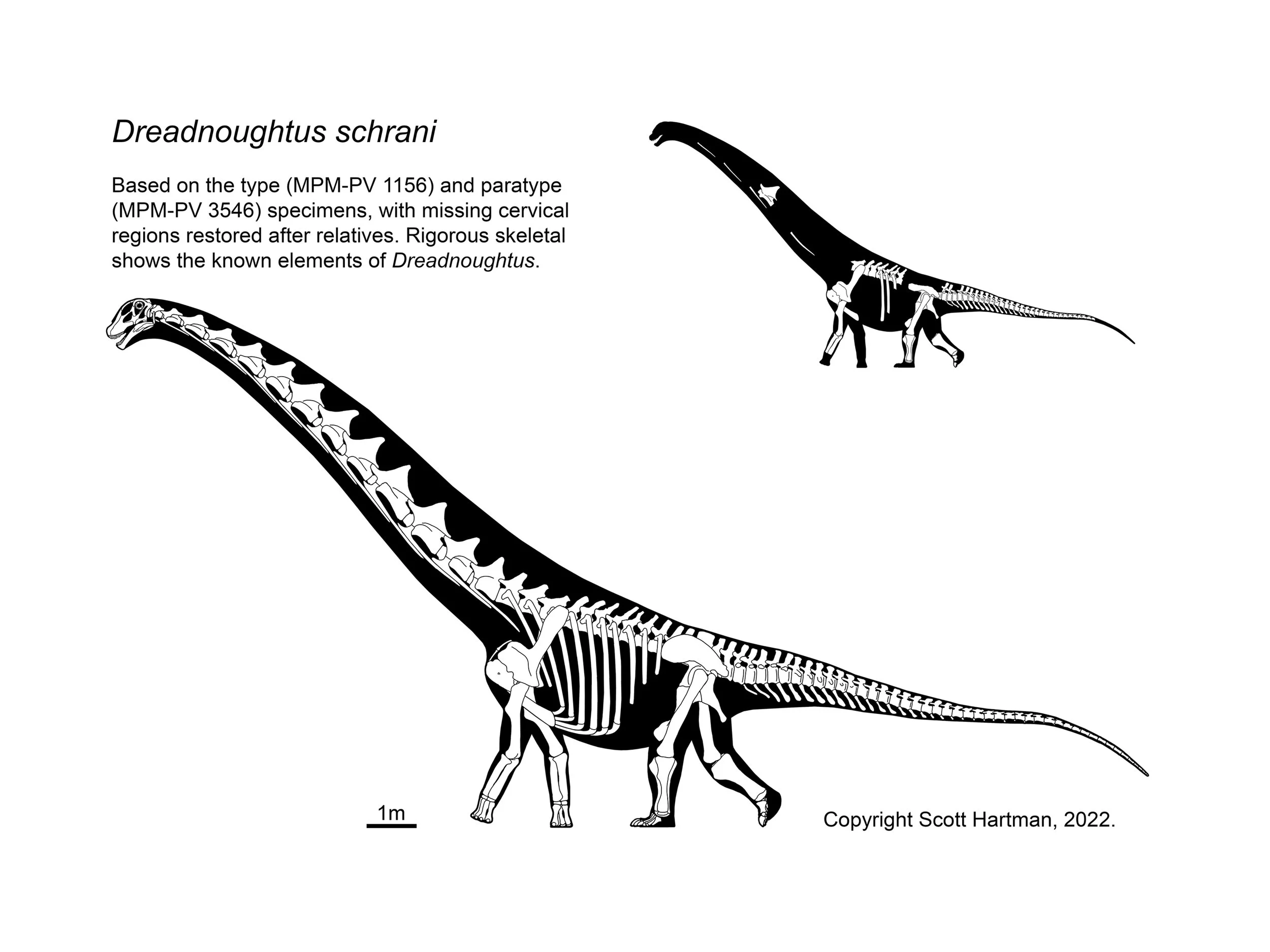
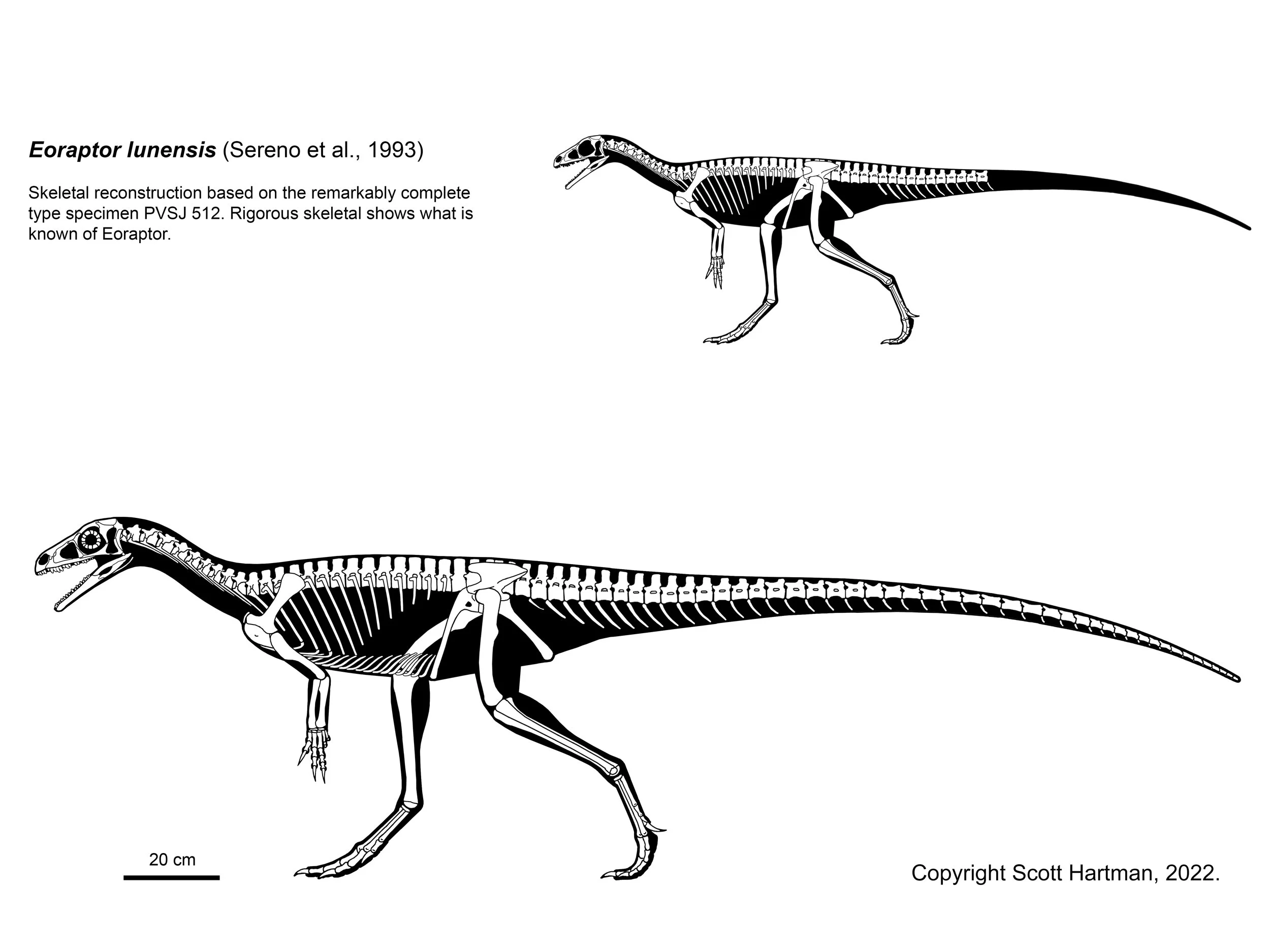
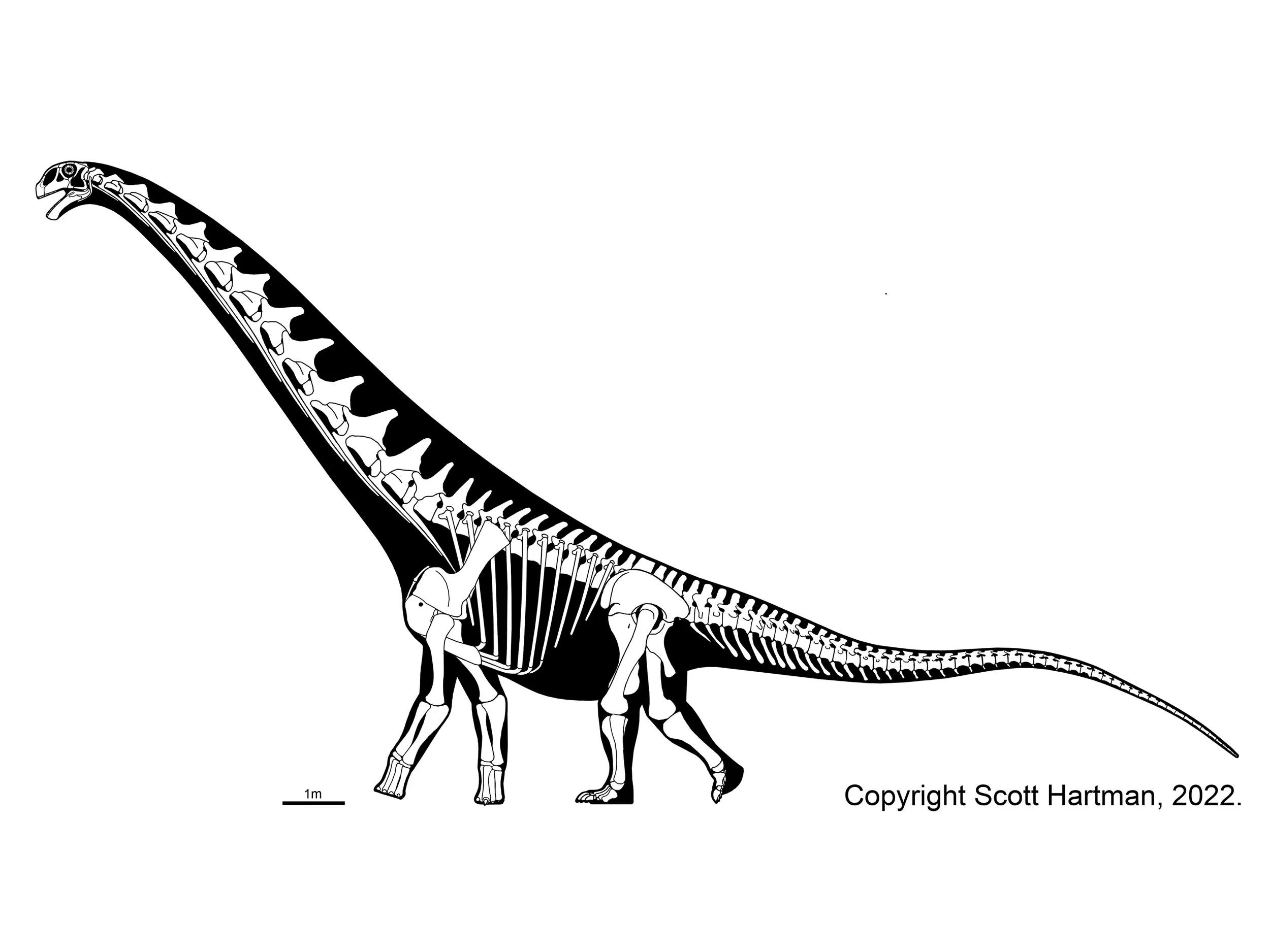
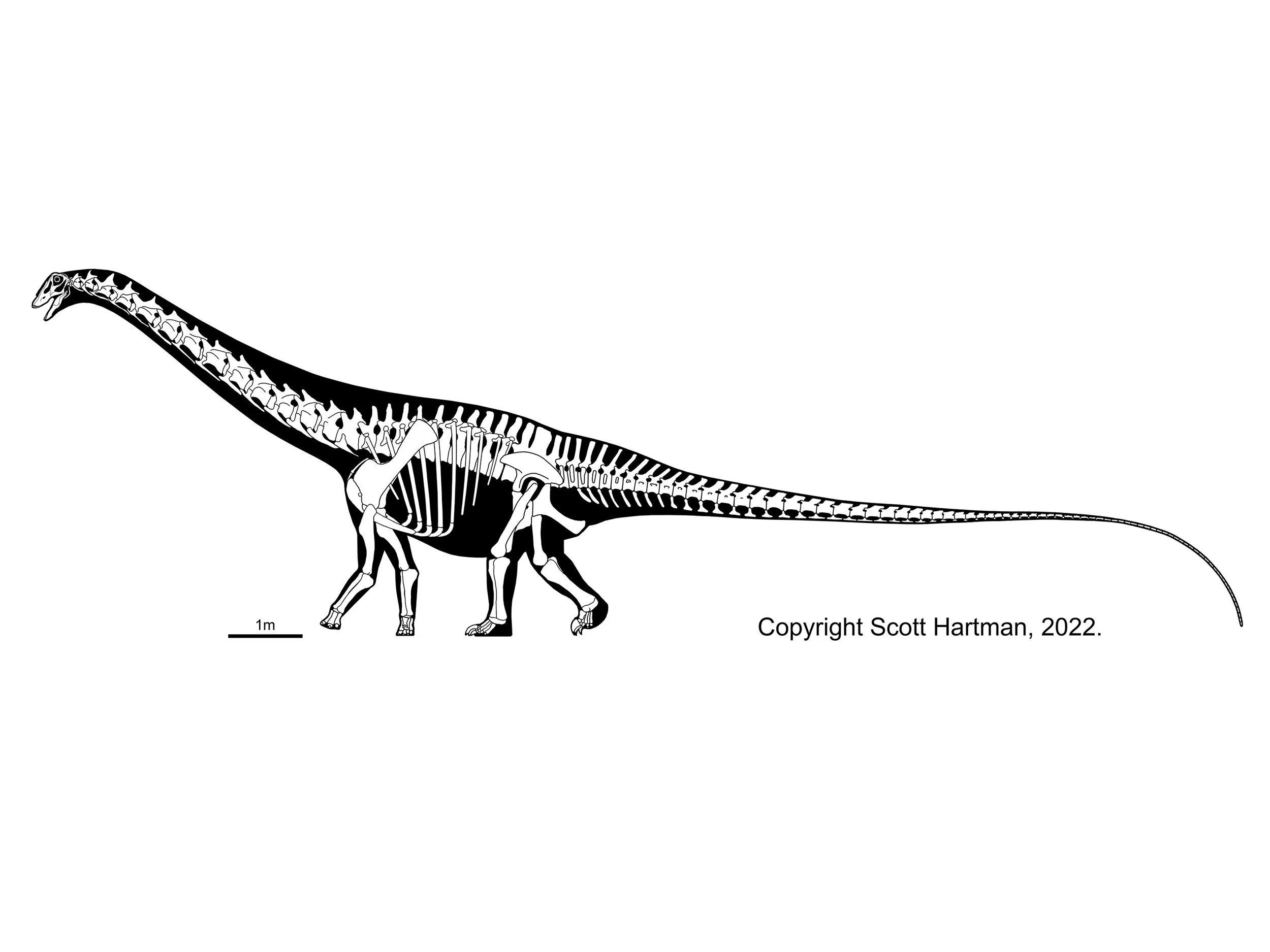
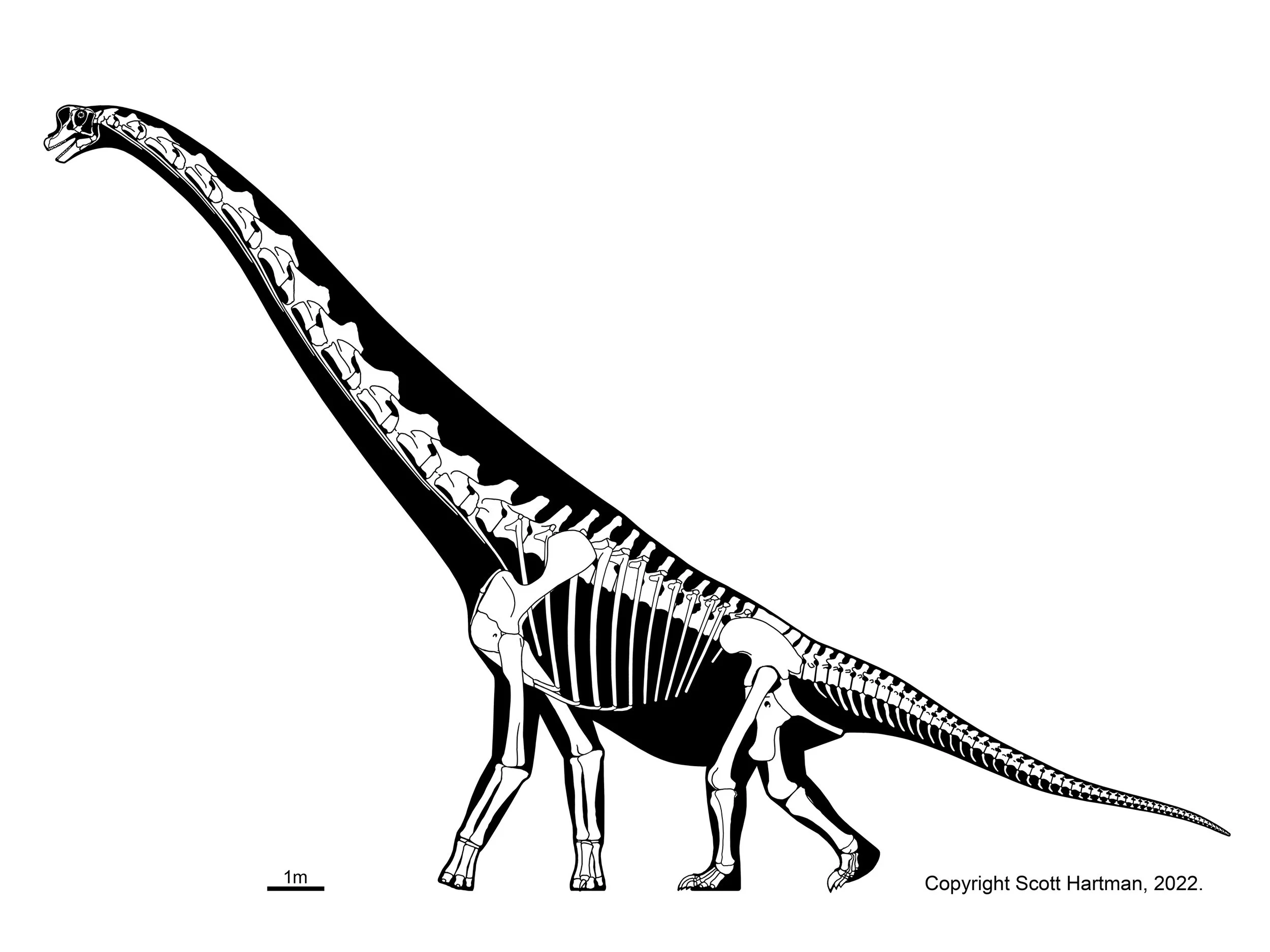
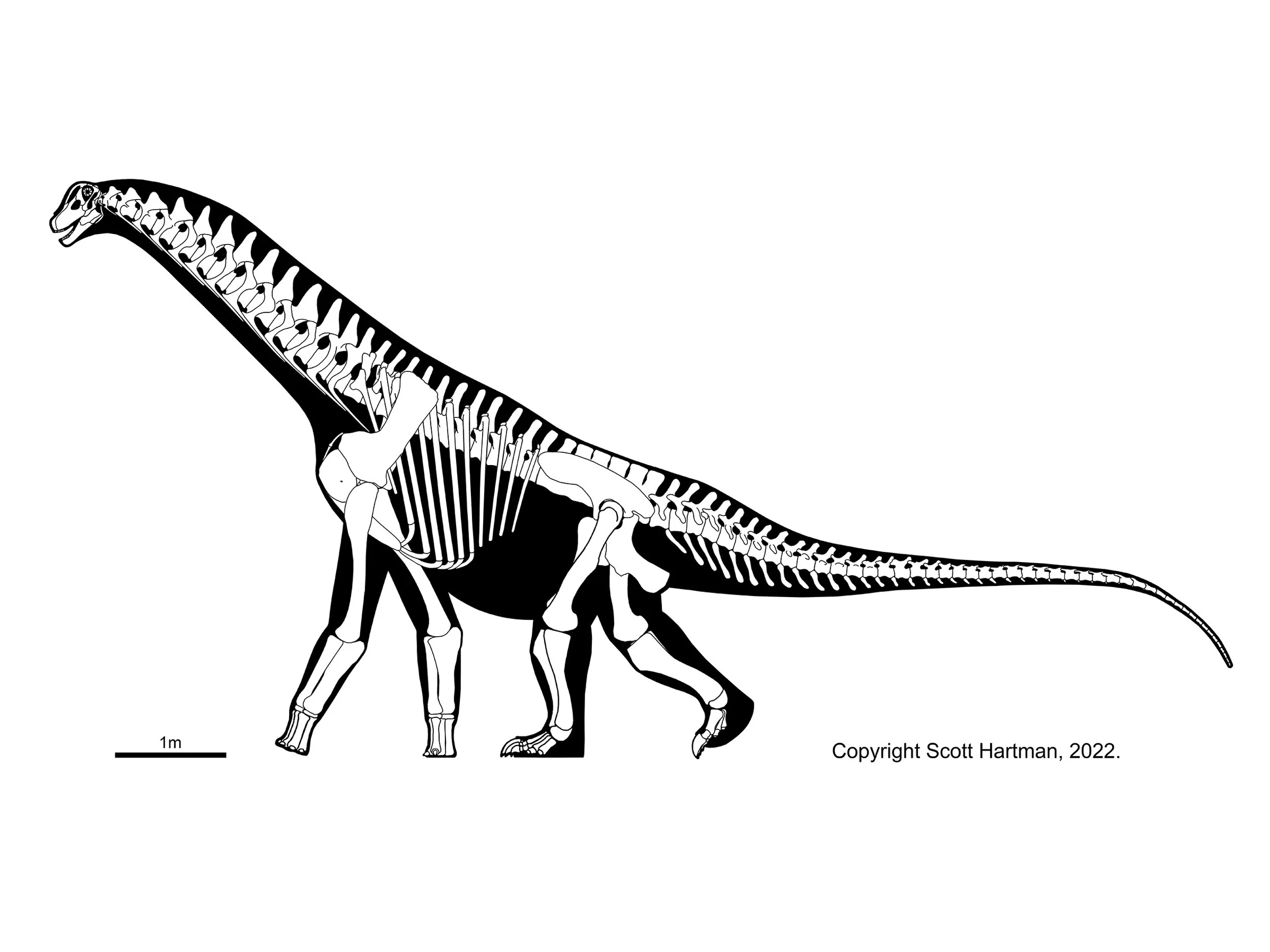
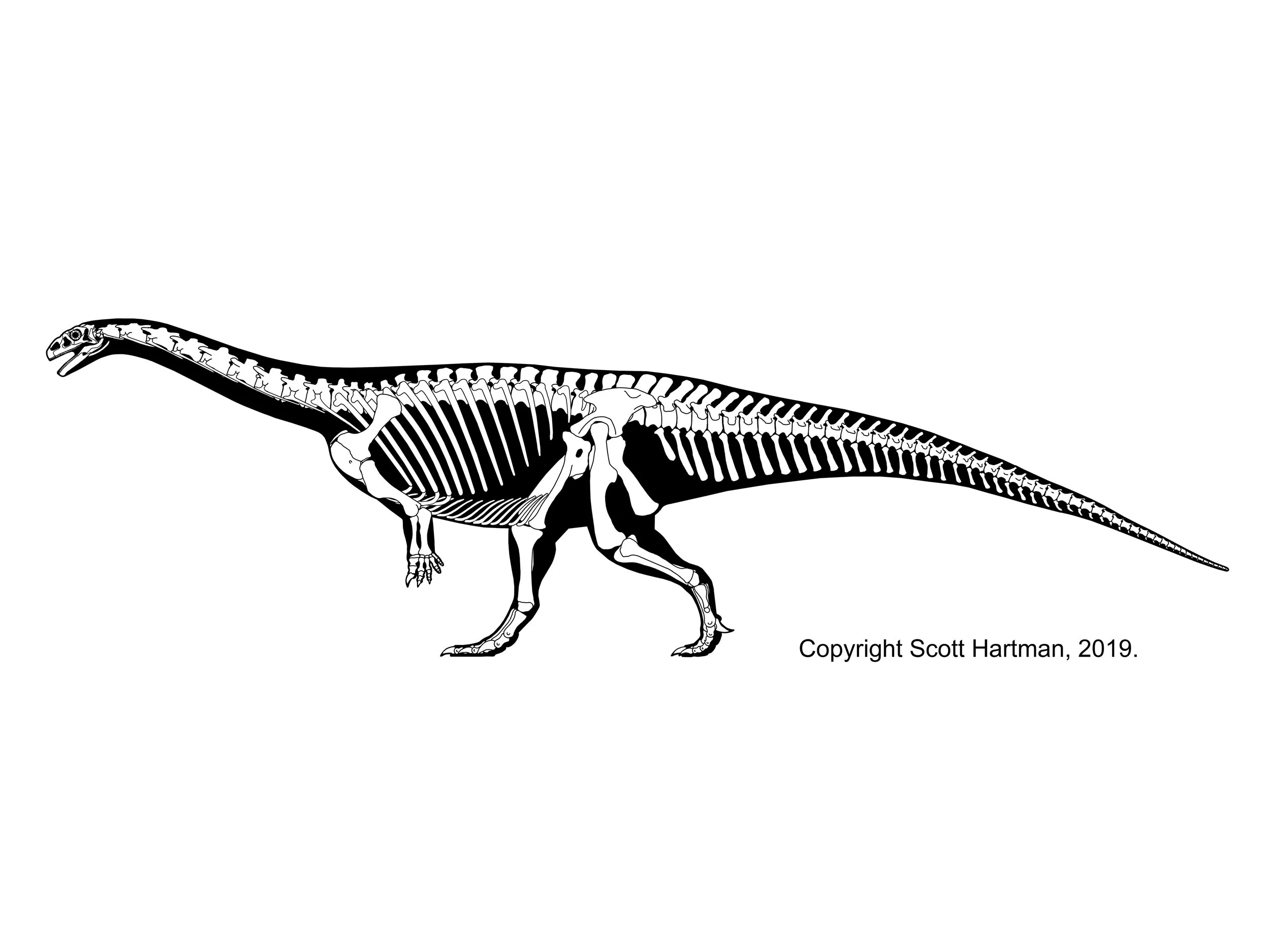
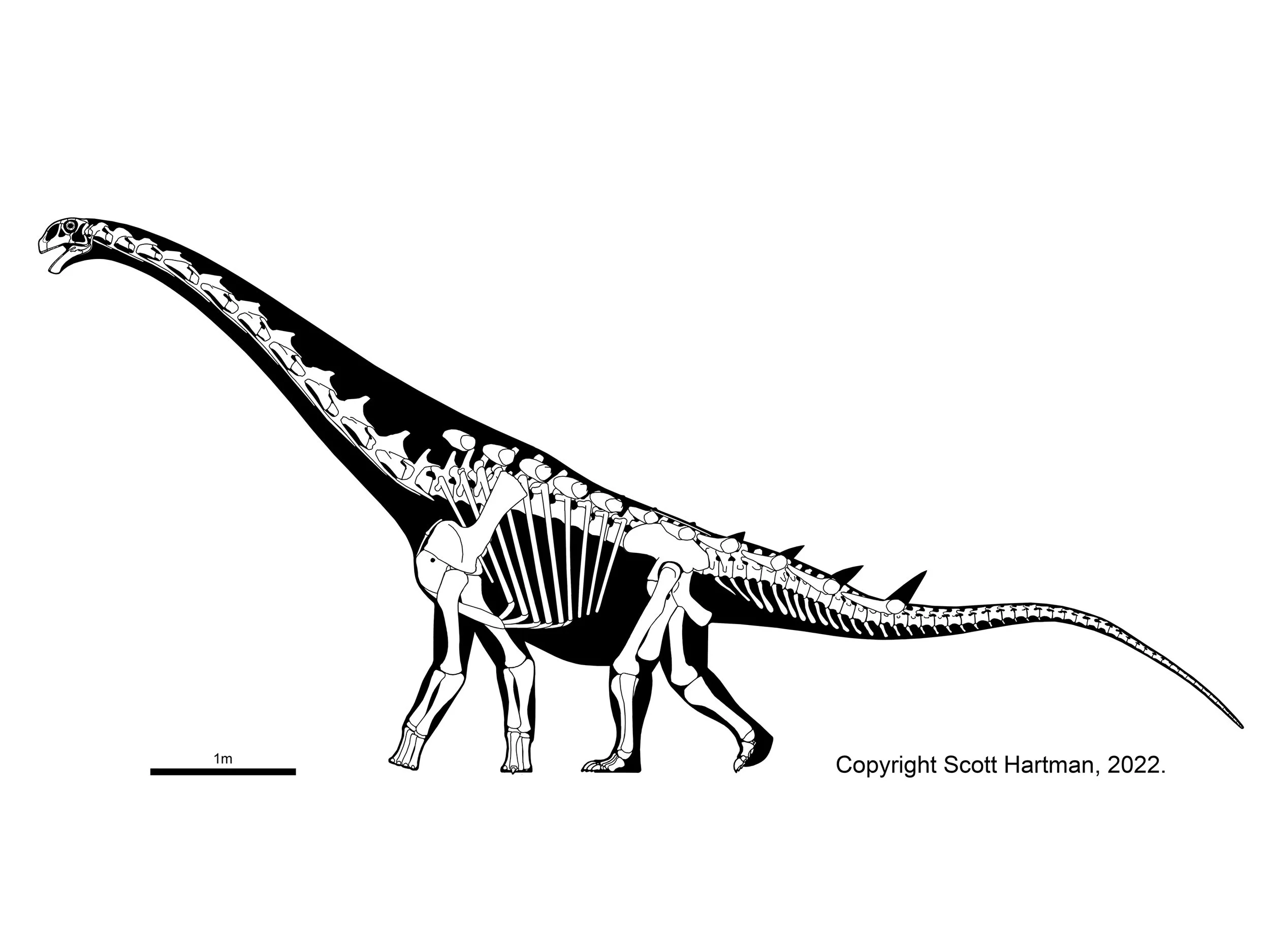
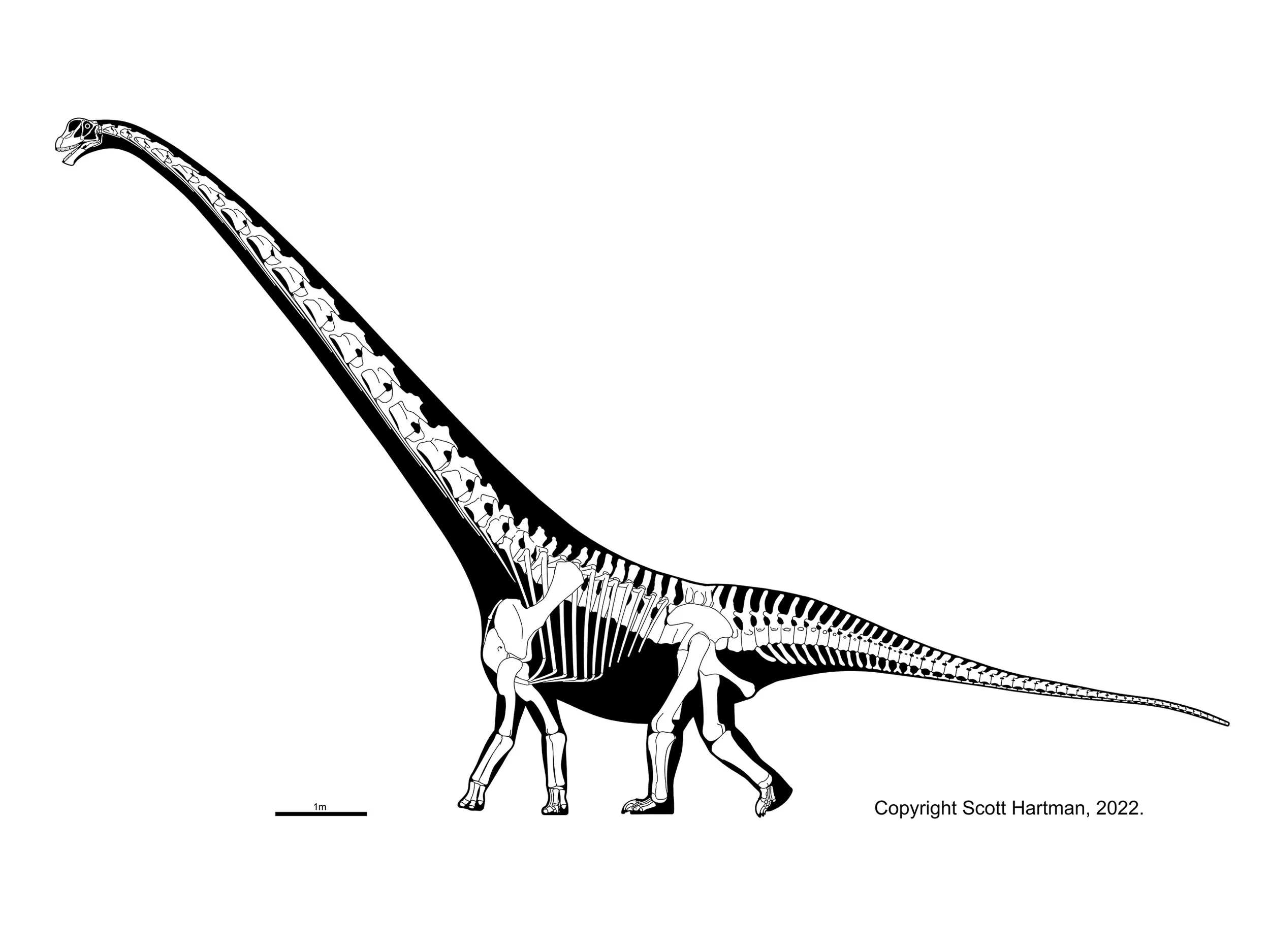
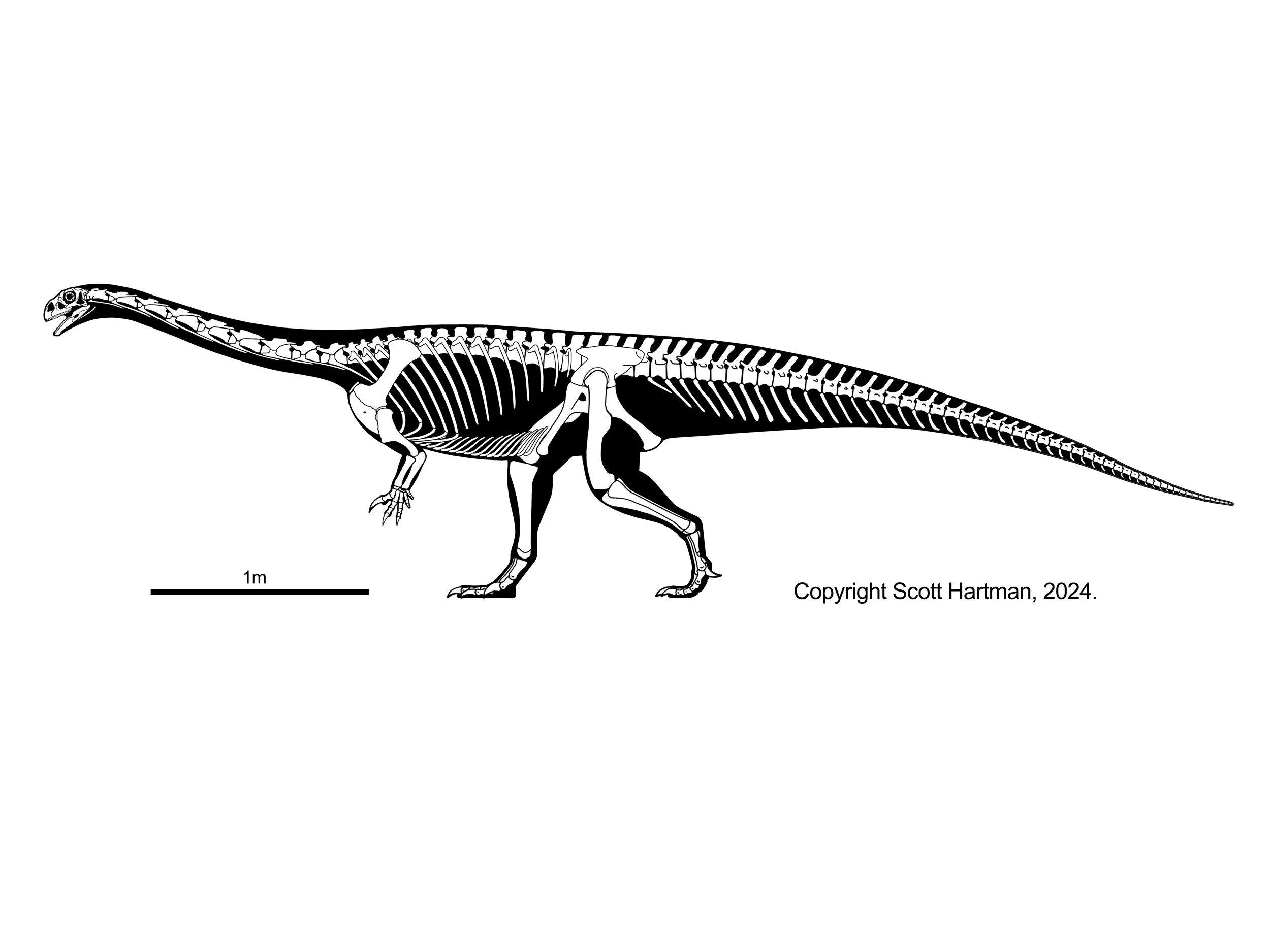
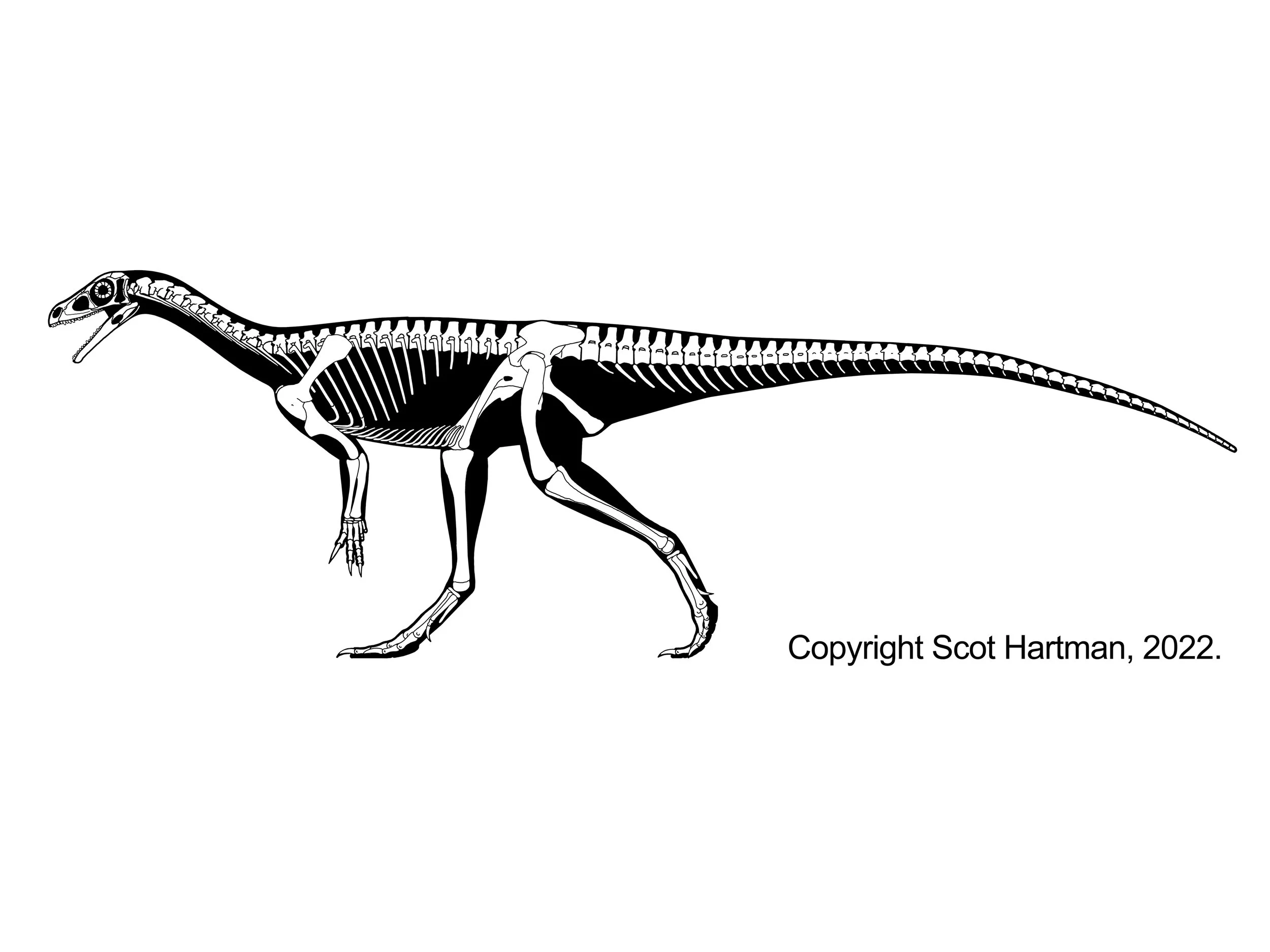
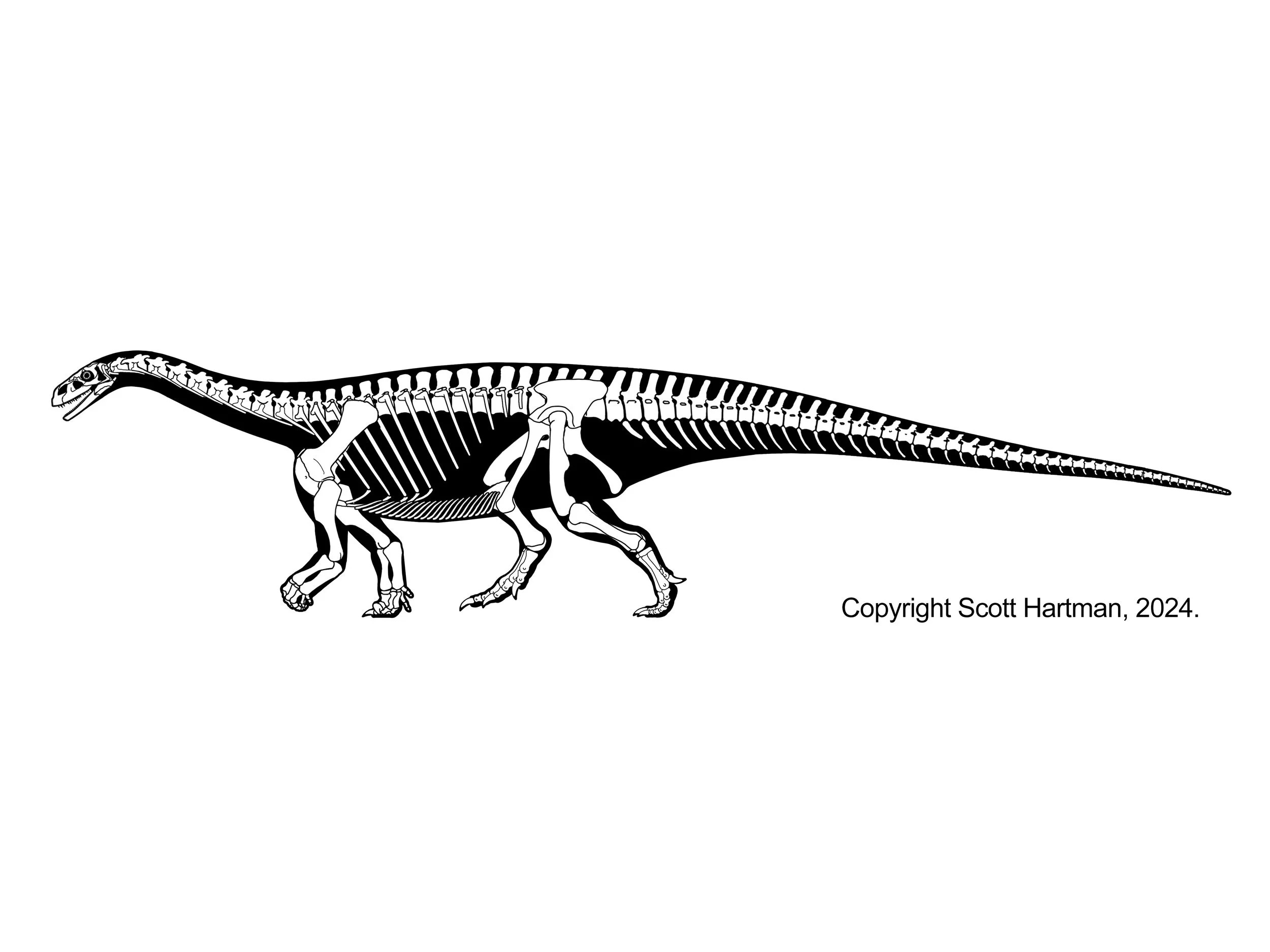
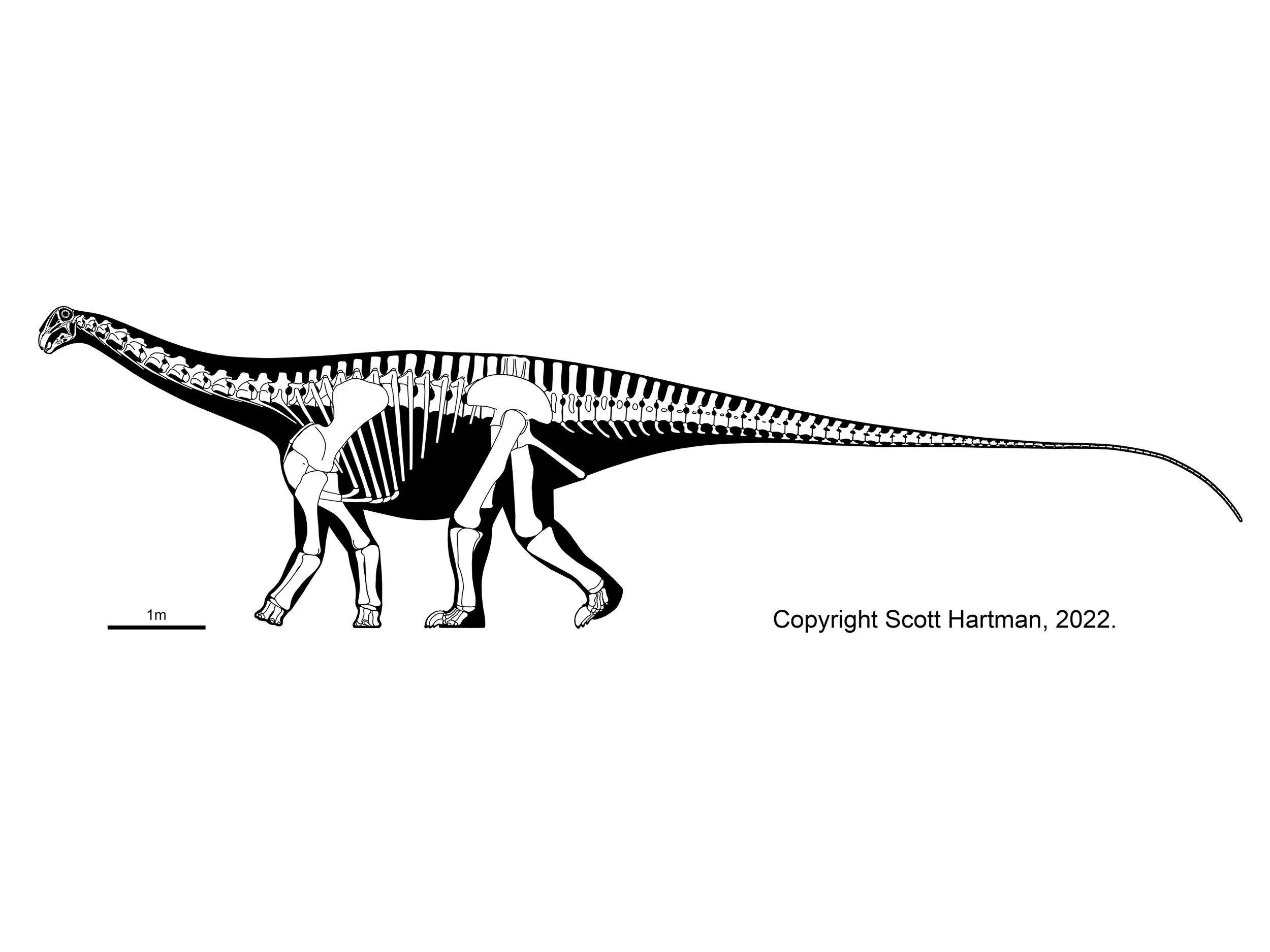
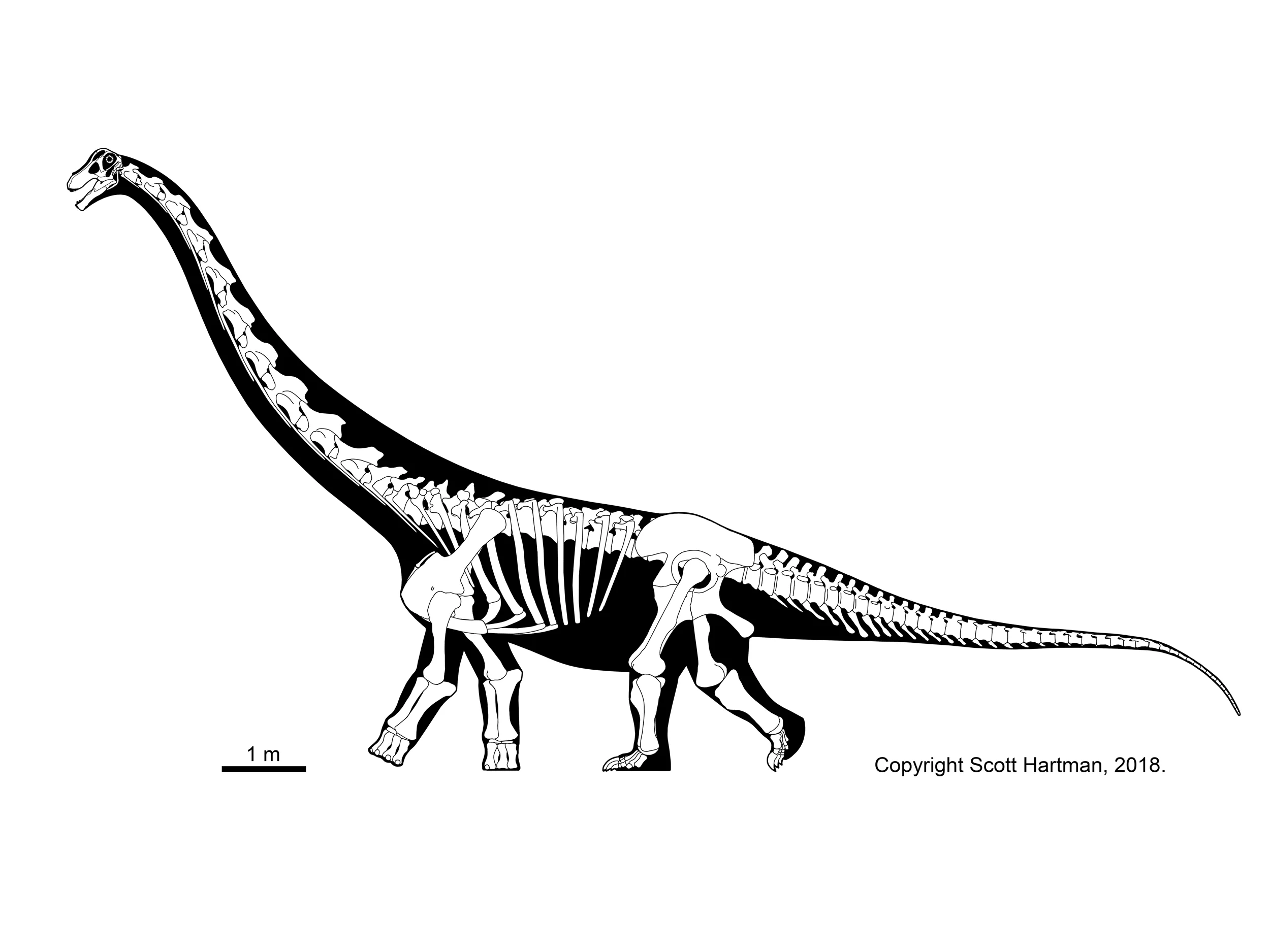
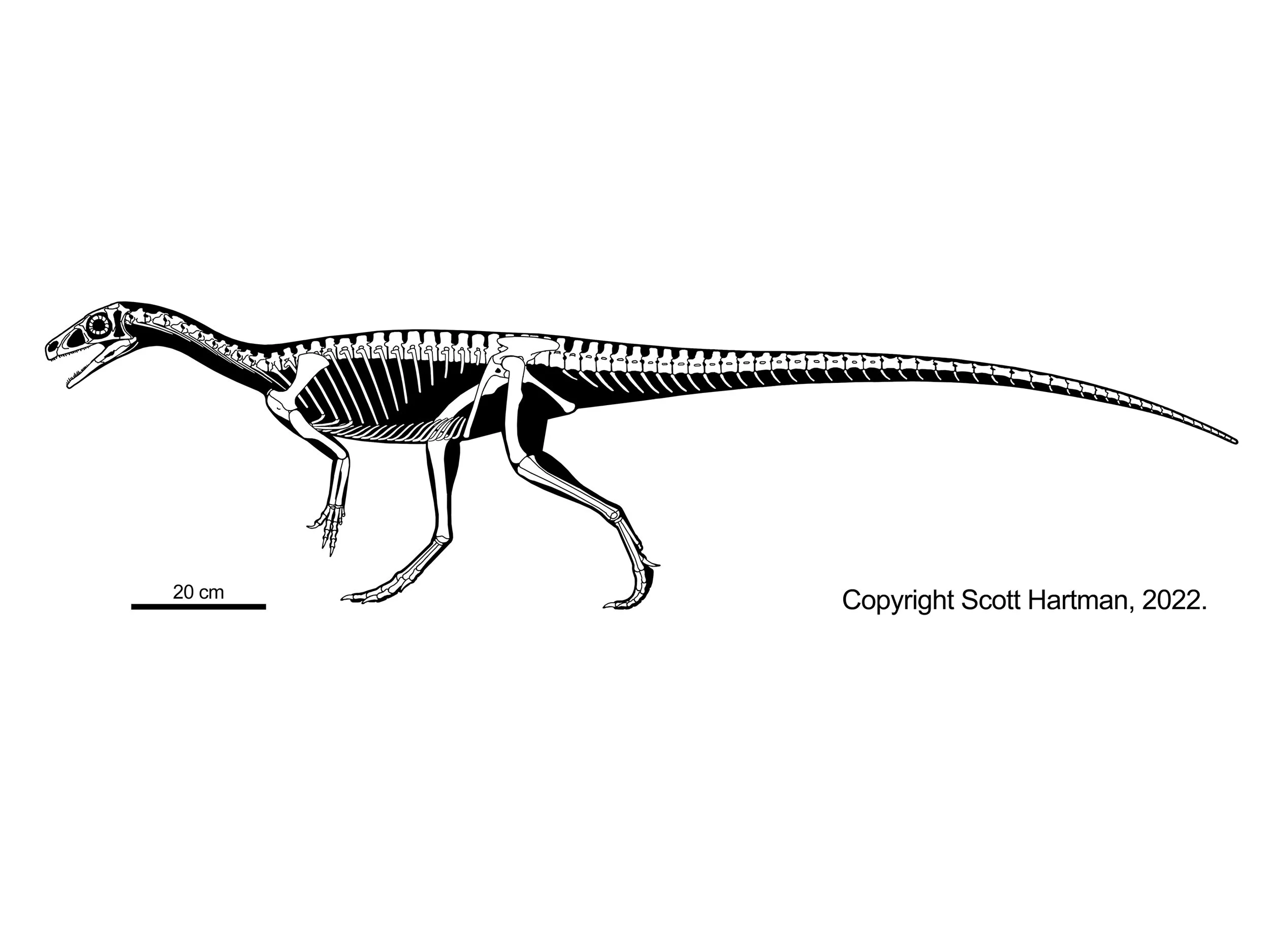
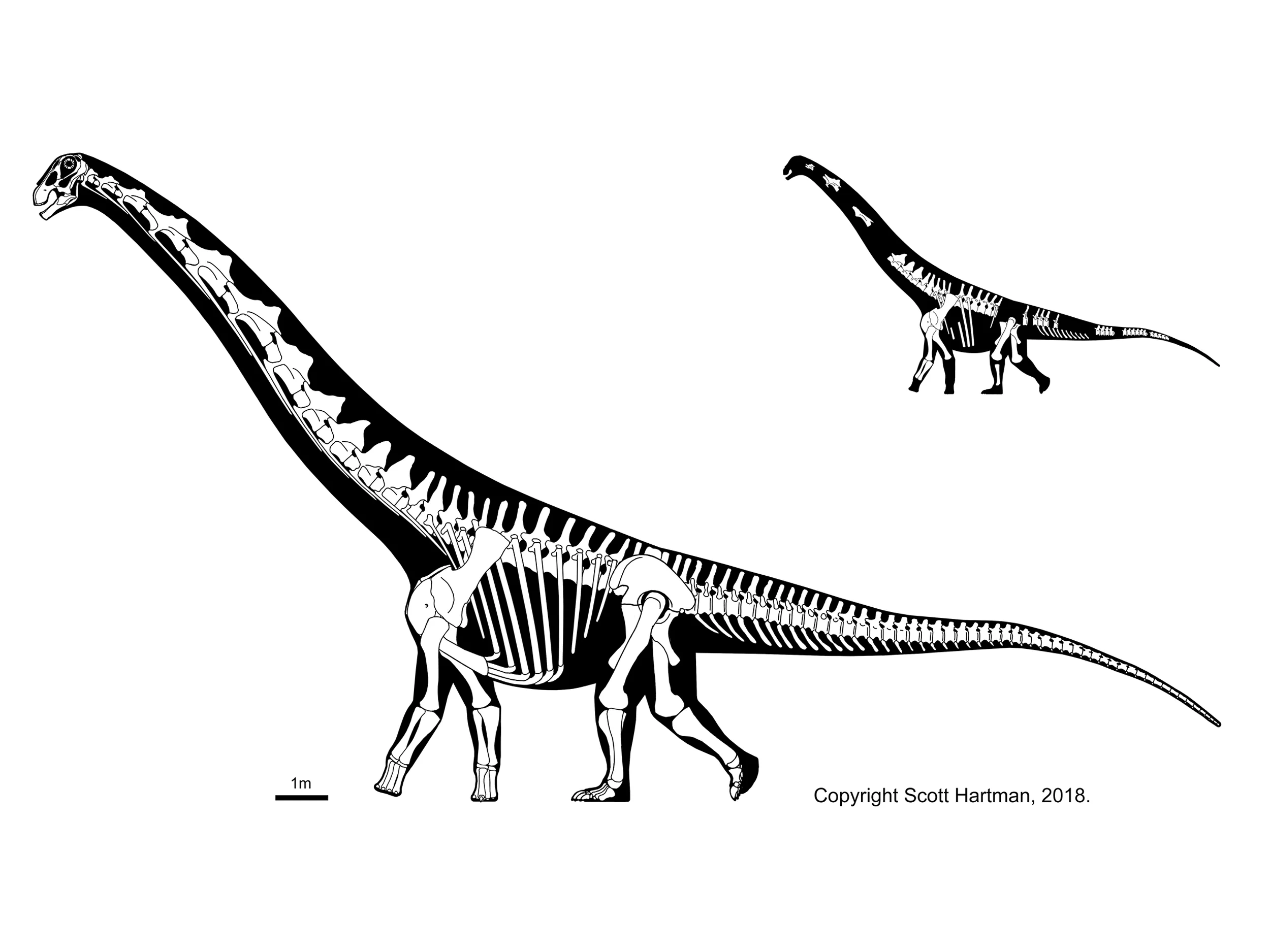
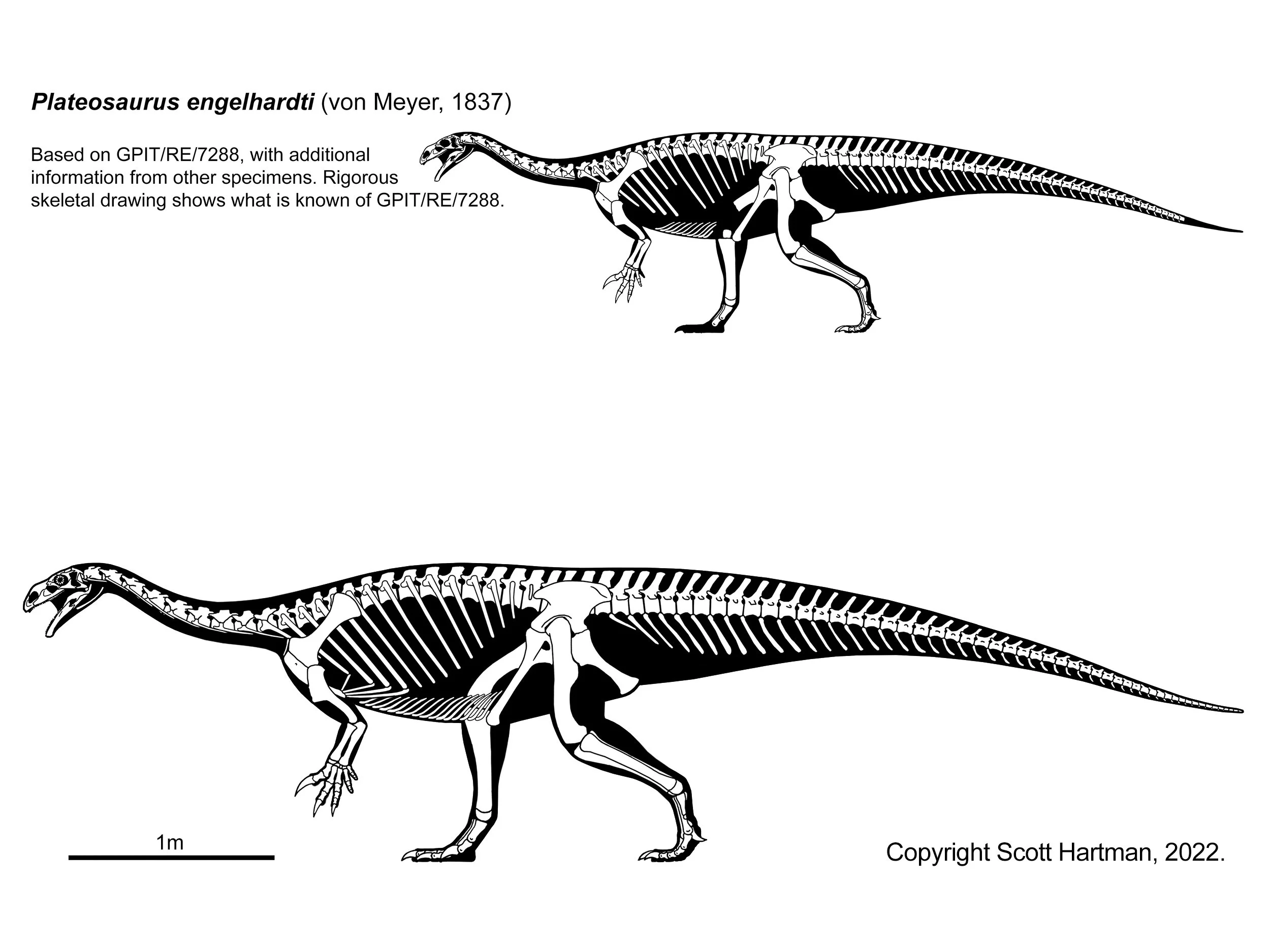
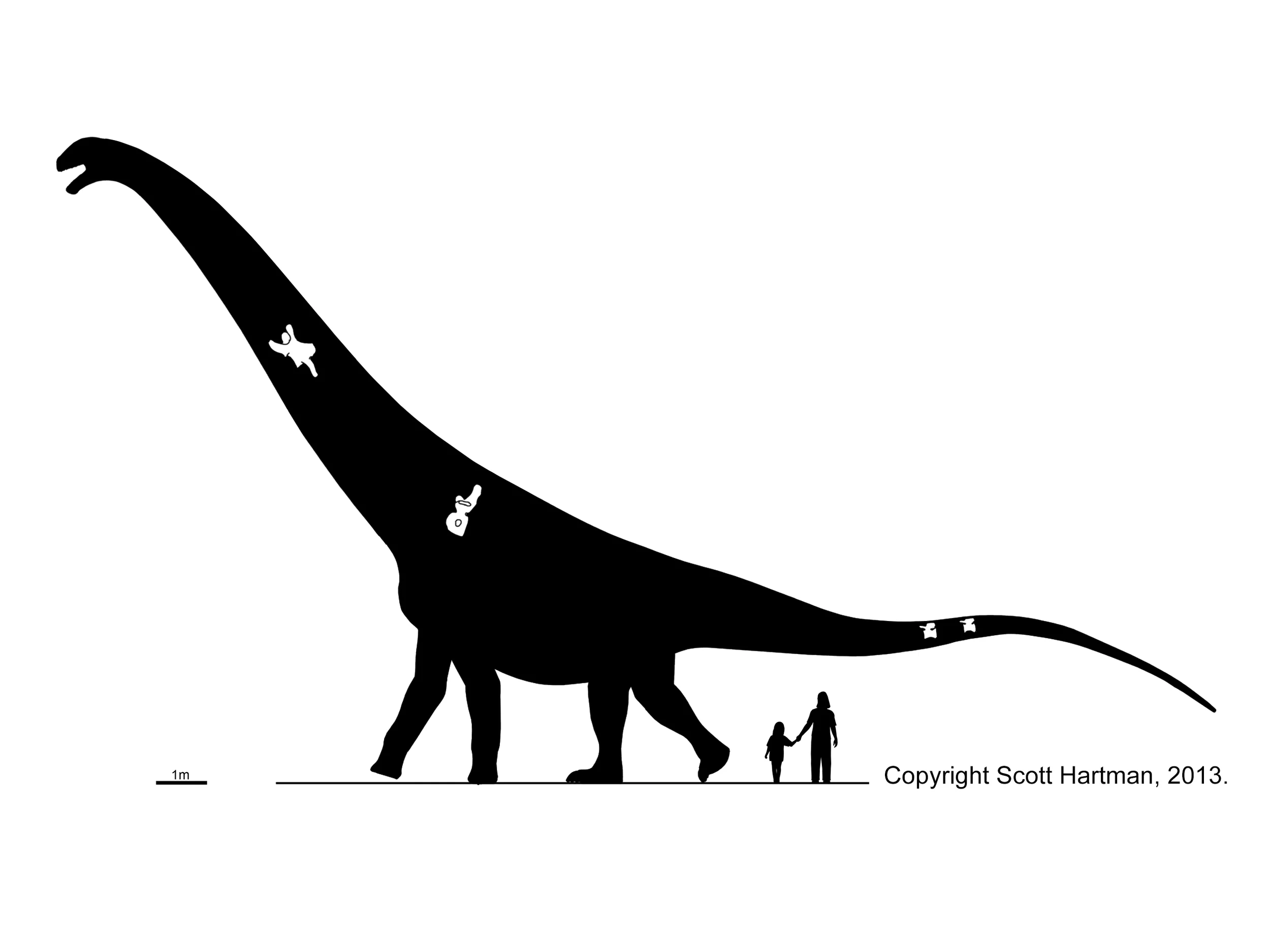
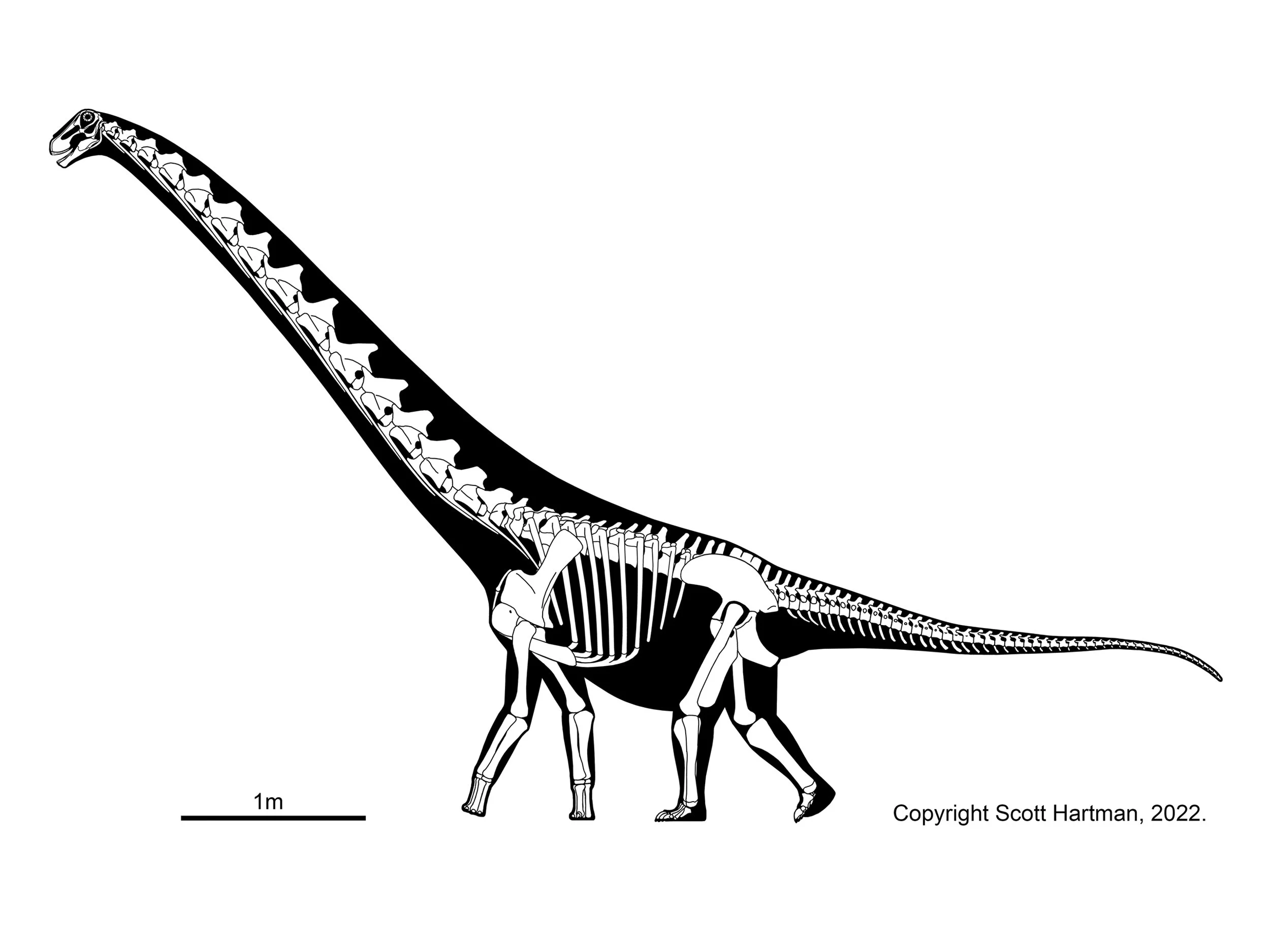
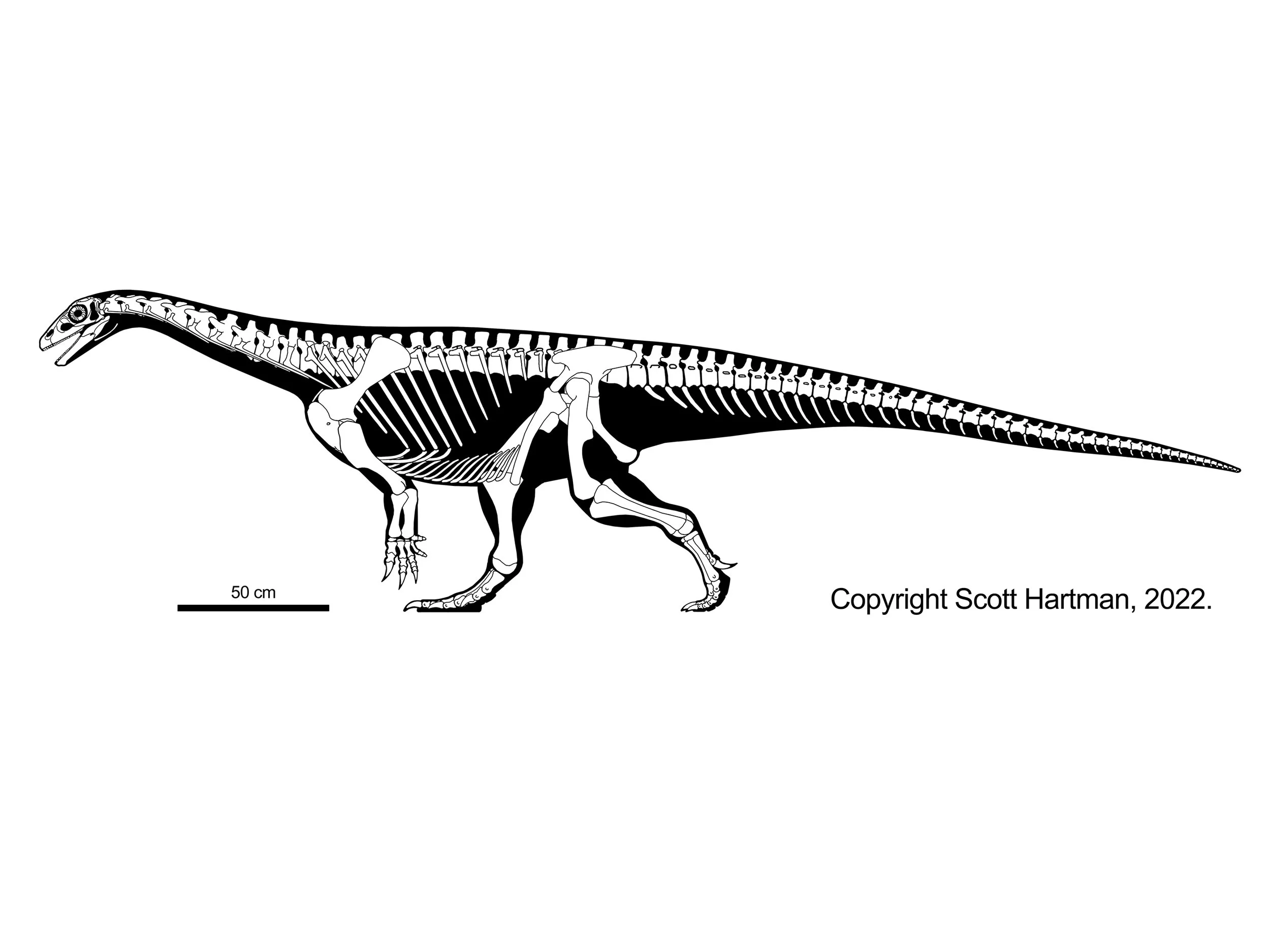
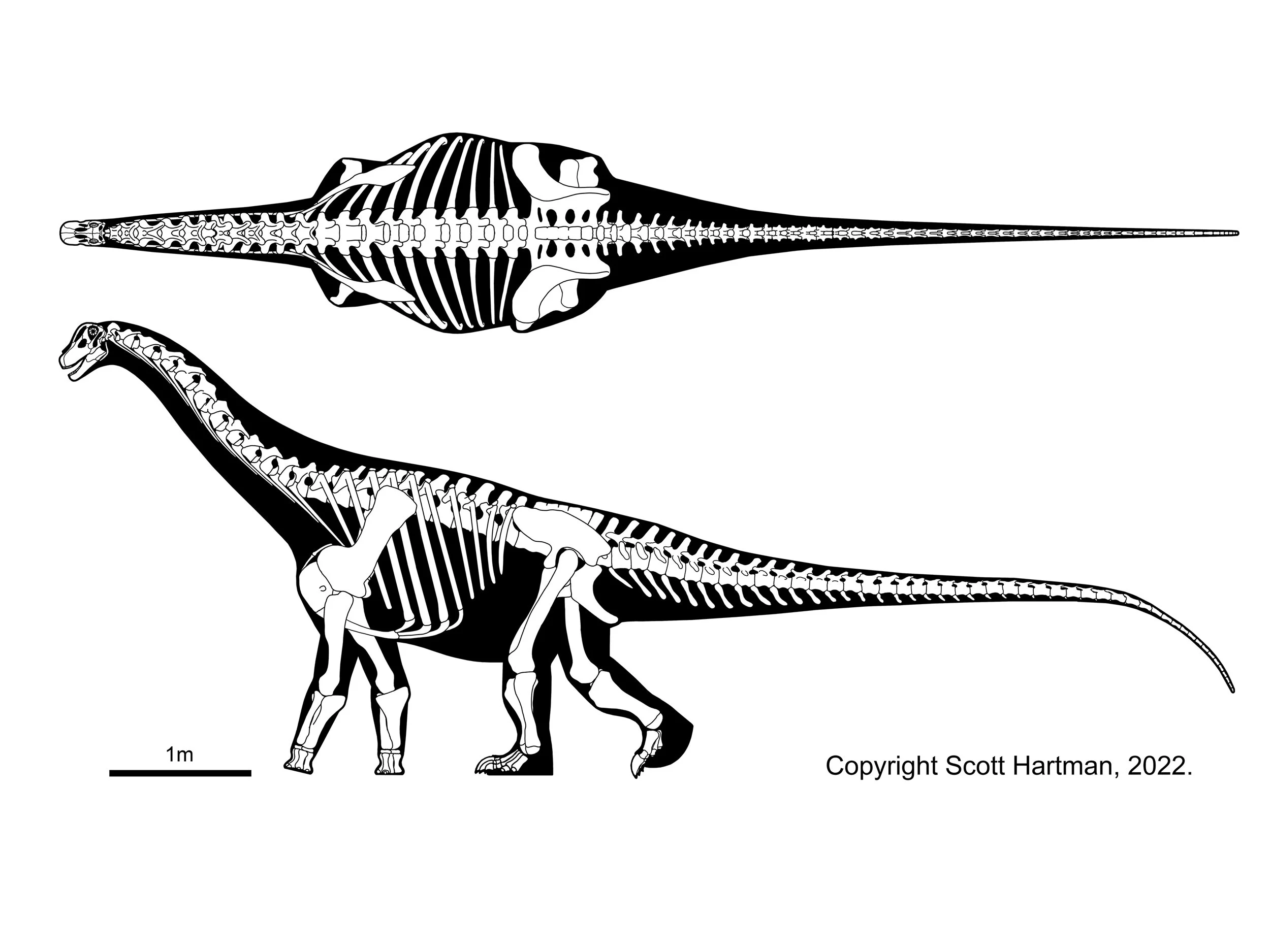
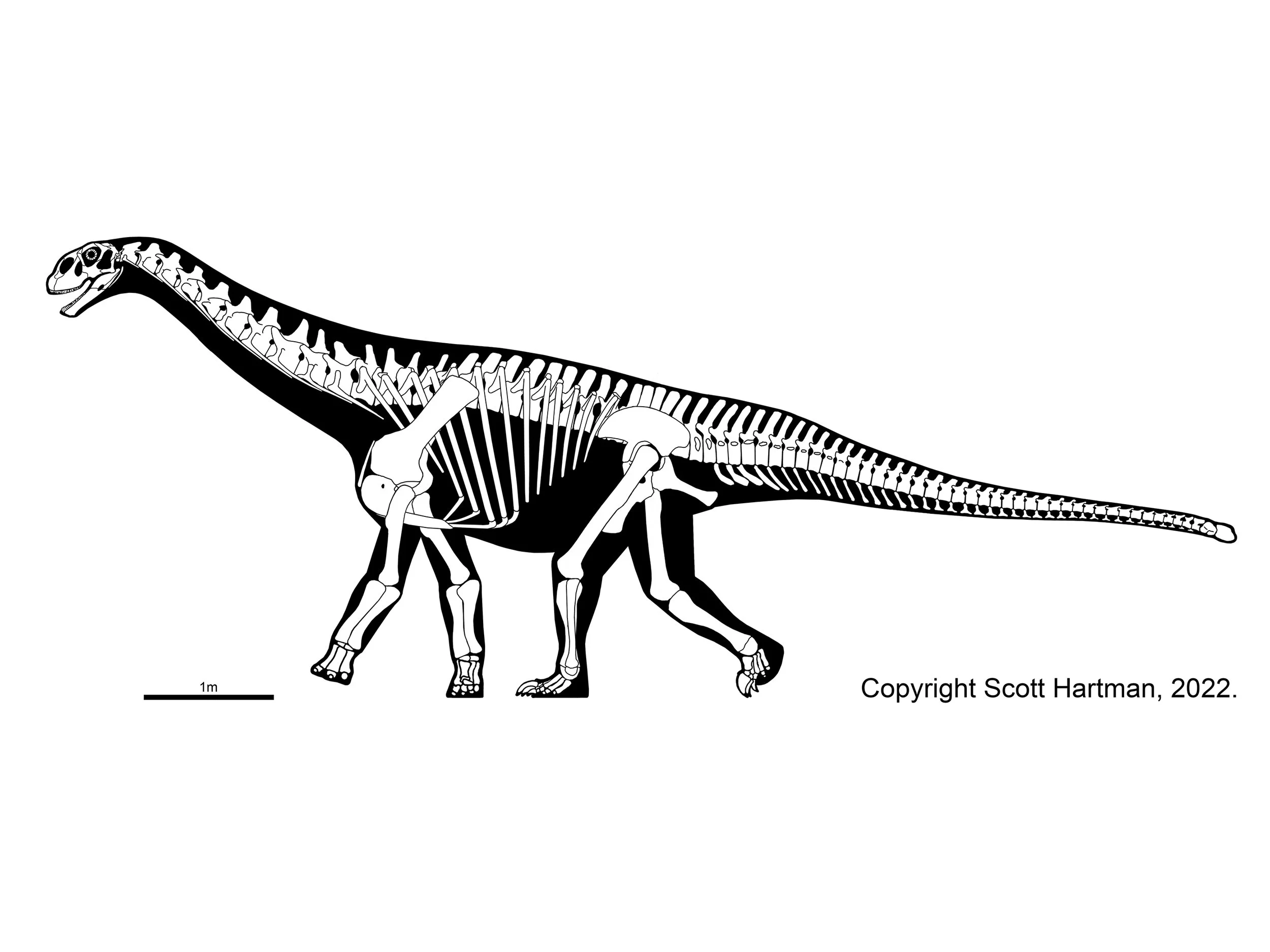
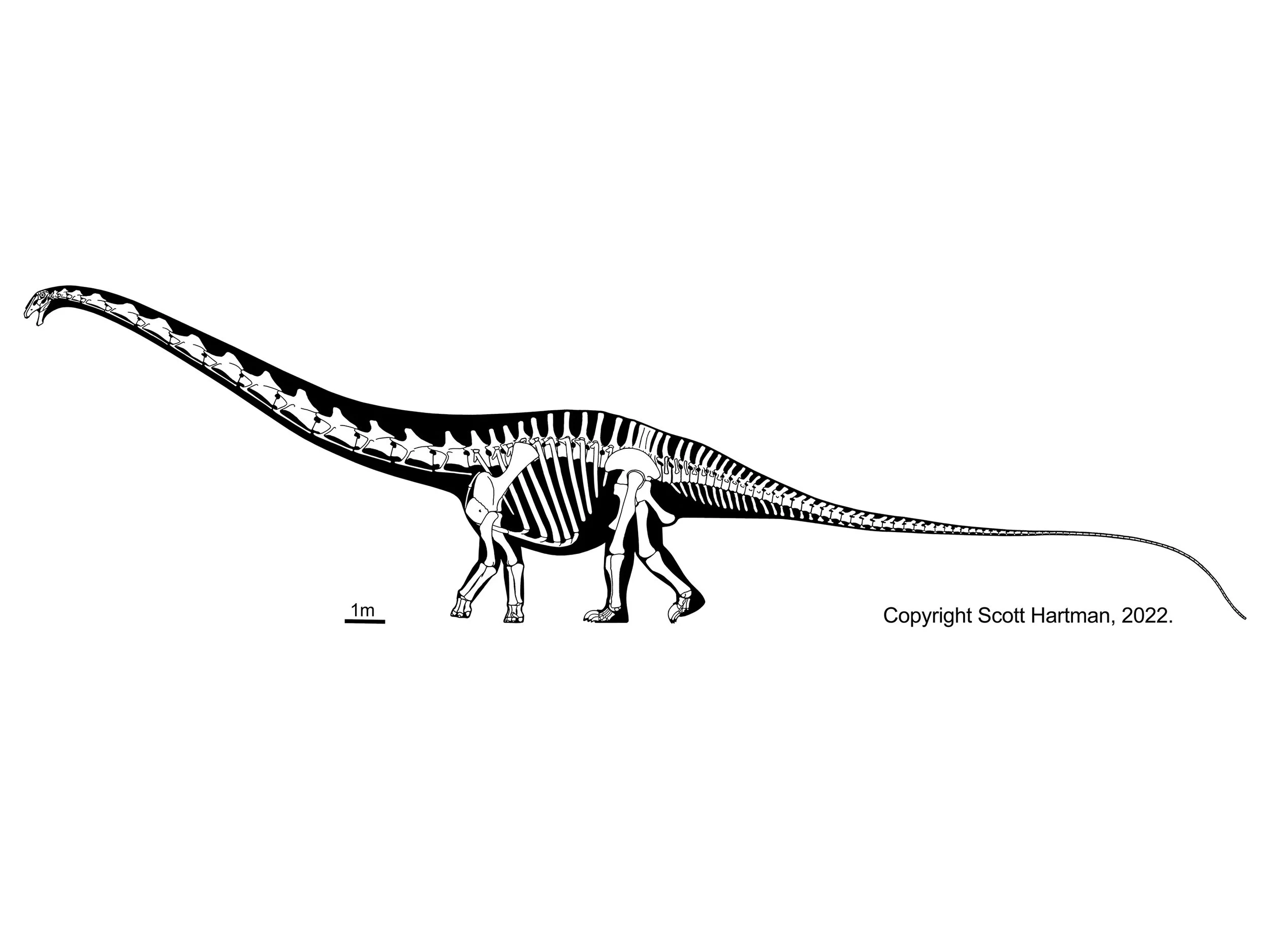
The new pose shows the sauropods in a slow amble (which turns out to be a rather brisk walking speed), but not doing anything so energetic that it should cause controversy.
In addition to the repose, several anatomical updates have now been “rolled out” to every critter. What this means to you, aside from knowing they are as up-to-date as I can make them, is that all of the sauropod skeletals now follow a consistent set of anatomical interpretations. While I hope to get several extra posts (and a publication or two) out of those changes, I will highlight the major items artists may wish to be aware of:
-
Plantigrade feet: Almost all modern work on sauropod biomechanics have found them to have plantigrade hind feet (where the foot bones are held closer to horizontal) with a padded backing, yet most skeletal reconstructions continue to illustrate them walking on their tip toes. Now the feet reflect the modern understanding of sauropod anatomy.
-
Following research I presented at SVP in 2012, having plantigrade hind feet but digitigrade “hands” has a material impact on the orientation of the vertebral column. This has several consequences, including necks that are more upright without needing extreme flexure at the back-neck juncture, and tails that exit the pelvis horizontally rather than arcing up into the sky (this has important functional implications, but more on that some other time).
-
Neck muscles have traditionally been restored as very minimal, often citing birds as the reason. It turns out that bird necks are actually far more muscled than many people assumed, and bifurcated neural spines in particular seem to indicate rather generous neck muscles over the base of the neck. These changes, along with increasing the size of the muscles that run from the coracoids to the neck on the bottom are now reflected in the silhouettes.
-
Finally, I’ve continued to bulk out the base of the tails to accommodate a more realistic mass for the leg-retracting caudofemoralis musculature. In addition to reviewing dissections, this change is based on work by Scott Persons and Phil Currie and conversations with Heinrich Mallison, and is something I’ve discussed previously here.
There are a few additional nips and tucks, but these are the major changes, and will probably see their own expanded posts at some point. For those of you who have contacted me to ask about higher resolution versions of my skeletals, this overhaul will also allow me to start offering them as a high-resolution booklet soon(TM). In the mean time go check out the full-sized gallery.
16 comments
Love the new skeletal and the updates!
Thanks Hatz :)
wow!
just wow!
(and thanks for the shout-out!)
Shout-out well earned my friend.
I'm a huge fan of your reconstruction especially your sauropod skeletal reconstruction, just out of curiosity which of the brachiosaurs is bigger(taller) B. Altithorax or G. Brancai. Why can I not find any Sauroposeidon reconstructions done by you, I would really like to see one. Do you believe Gregory S. Paul's reconstruction of Mamenchiosaurus Sinocanadorum with a vertical neck posture of been possible, just the posture seems to be pushing the bounds a bit with a 17m long neck held nearly vertically. Thank you for time. I'm interested in pursing a career in Paleontology especially focusing on the study of Sauropods, and your is work is very interesting to me.
Thanks Connor. The specimens of Brachiosaurus and Giraffatitan that I restore are actually remarkably close to the same height, though Brachiosaurus does the trick with somewhat different proportions (a shorter neck and longer torso). I simply haven't seen the actual specimen of M. sinocanadorum, so I don't have a strong opinion there just yet (I will say that a 17m long neck held horizontally is almost as hard to believe as one held upright). Good luck in all your paleo endeavours!
Awesome news. And thanks again for all your hard work that allows me to do rigorous paleoart!
You're welcome, and thanks for doing rigorous paleoart!
What a lovely updated!
Compliment!
Mr Scott can I have addizional info on Cedarosaurus ?
Thank you!
The skeletal uses the skull of Abydosaurus. Otherwise the postcrania is based on the specimen described by Tidwell. et al., in 1999. What other information were you looking for?
Well i have found no info on the real fossili remains... Only an abstract.
Anyway in your skeletal it looks amazing!
The paper was in Oryctos. There's also a smallish image of the material floating around the web (e.g. here: http://gigadino.pagesperso-... ).
Thank you mr Scott!
And is this guy in Brachiosaurus size class?
It's not quite as big as Brachiosaurus or the larger Giraffatitan specimens, but it'd be a good-sized sauropod for sure.
There's a particular reason because you use the Abydosaurus's skull for Cedarosaurus, I'm not familiar with Sauropods but there're a close relationships between these two taxon?
It's hard to assess the exact phylogenetic position of Abydosaurus based on the skull and anterior cervicals (i.e. all that's well published) since those elements aren't known in most brachiosaurs (except of course Giraffatitan), and certainly aren't known in Cedarosaurus, but it's pretty close in time and geography, so it seems like the most reasonable proxy skull at this point.
Join the discussion
Thanks — your comment is in the queue!
It'll appear here in about 5–10 minutes, once I've approved it — you'll need to refresh the page to see it. (Comments don't post instantly anymore.)