Dinosaurs didn't twerk, err....Part 2?
April 20, 2020
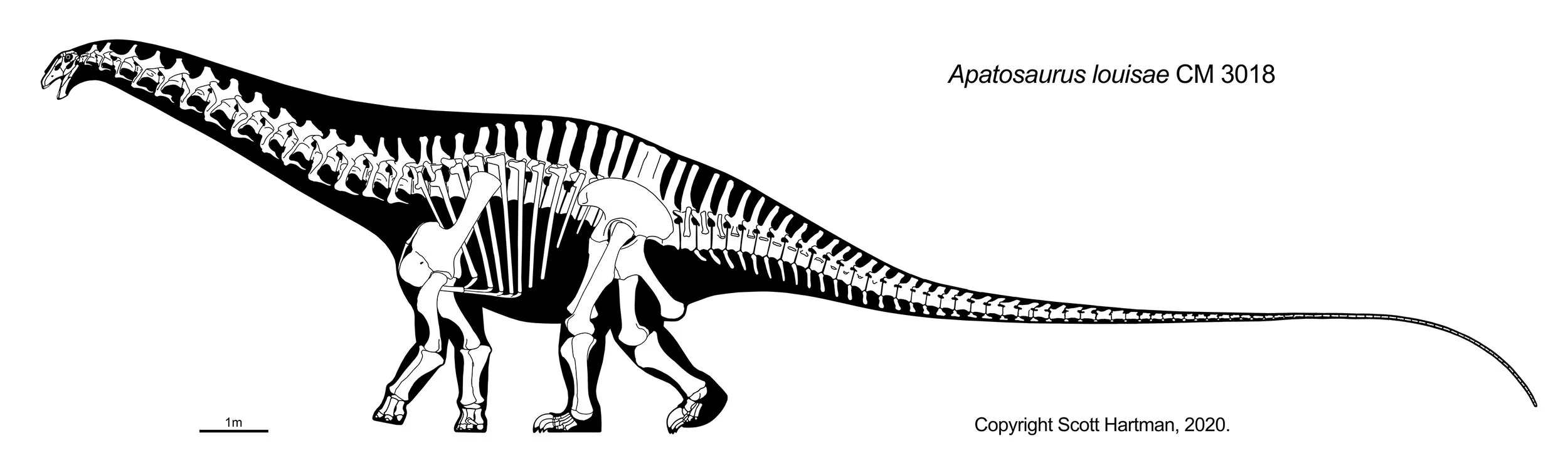
No, you didn’t miss Part 1 of this series (nor did you miss a follow-up to The Lip Post, it’s coming eventually!). Going back to the end of 2018 I had intended to do a two-part post about tails, limb-retractor muscle function, and posture. Part 1 was supposed to be about hadrosaurs (as a follow up to The Hadrosaur Repose from the same time period), and part 2 was going to be about sauropods. Obviously I never quite got there!
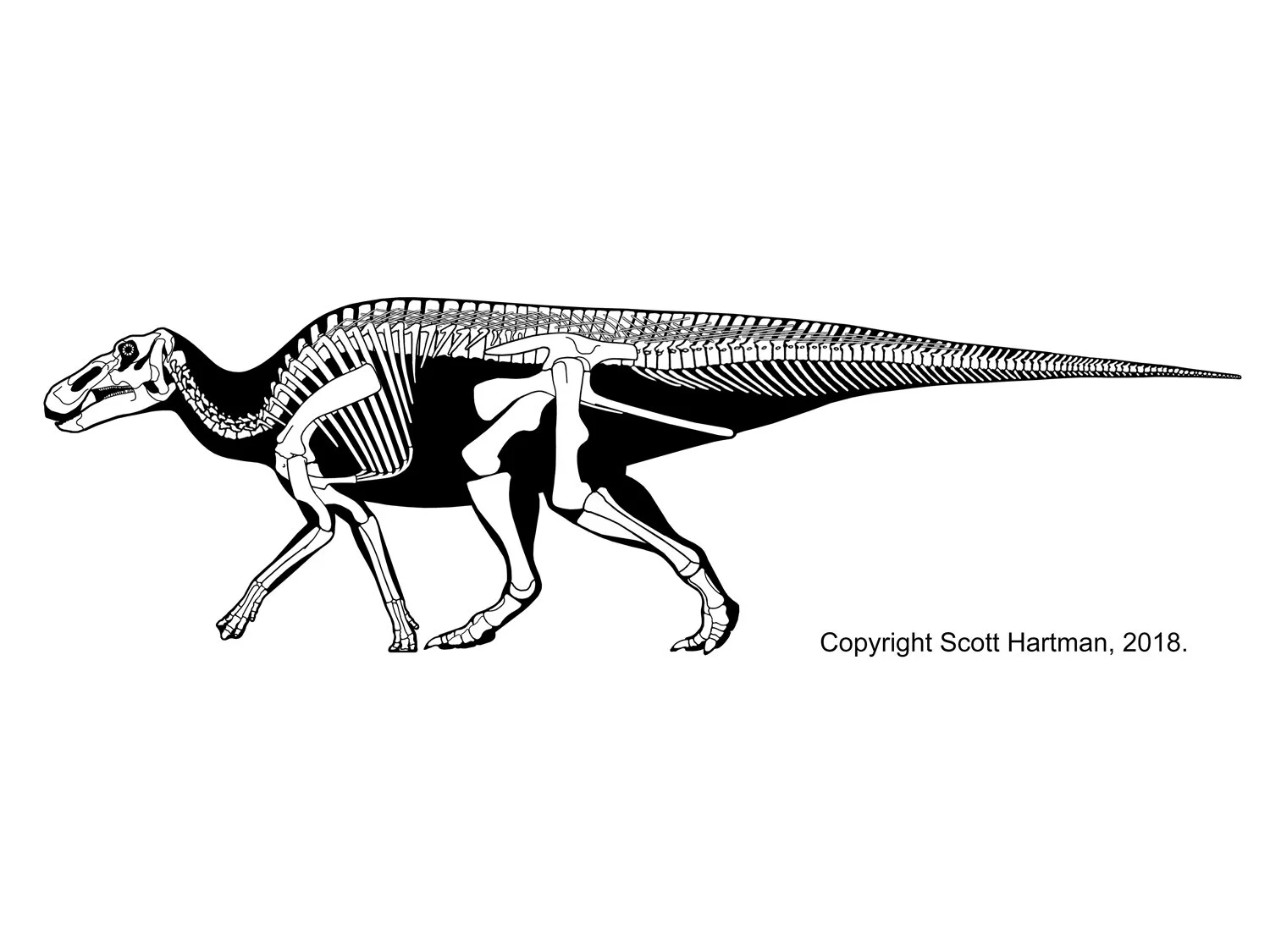
The tl;dr of the series was there is good reason to think no dinosaurs held their tails substantially above horizontal, and that past skeletals of hadrosaurs, sauropods, and/or stegosaurs that showed this (including my own) needed to be updated. Hence, no raised dino-butts. I had already updated my hadrosaurs to reflect this, and have steadily updated my non-diplodocoid sauropod skeletals. The impact of these changes, as I discussed in an SVP poster presentation back in 2012 is for the back to slope upwards, making the neck more vertical even without strong inflection in the vertebrae at the neck/back juncture.
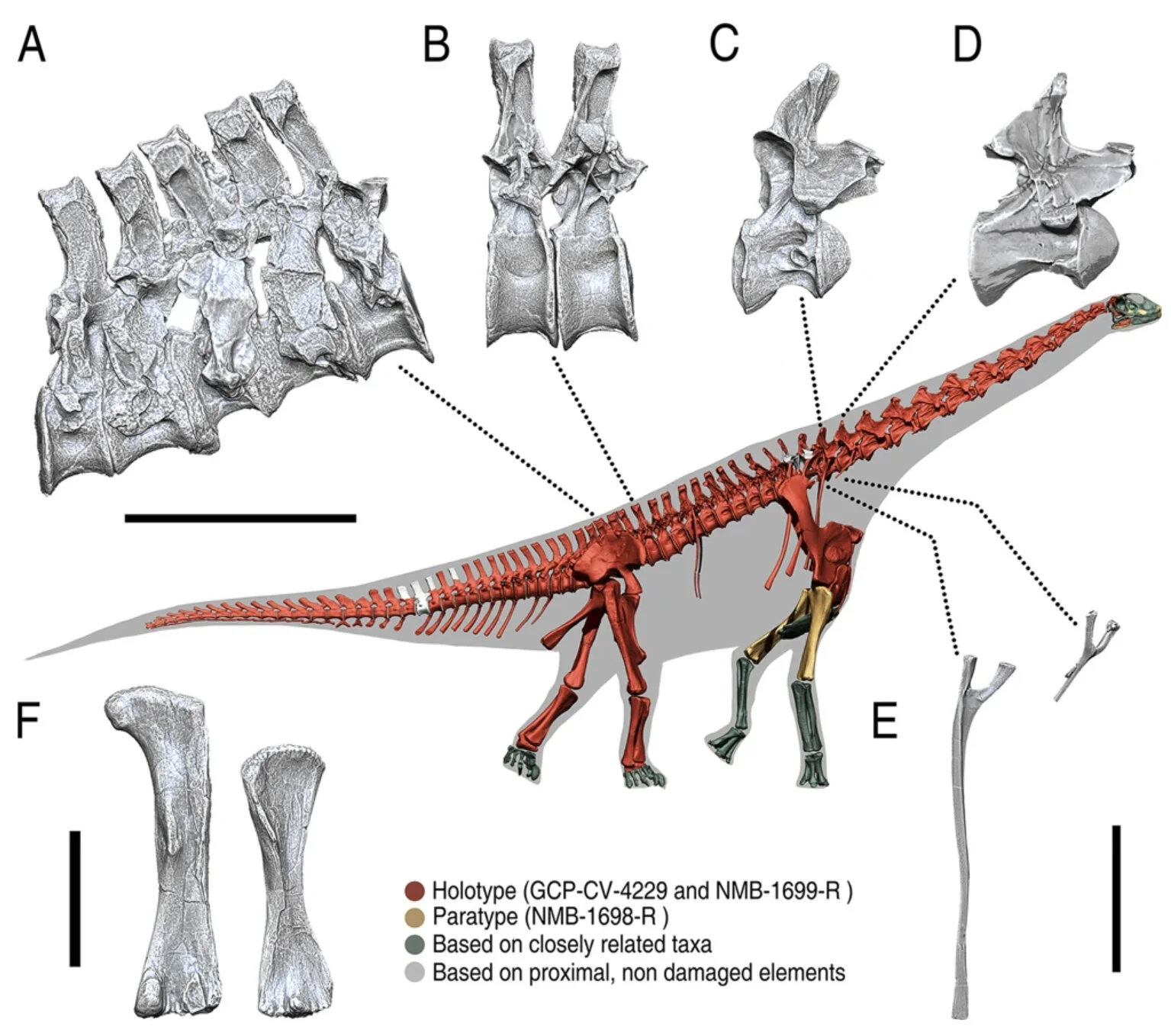
So…why this post now? And why so abbreviated? Because I no longer need to make the case for sauropods with horizontal tails and more upwardly sloping backs/necks, because a new paper by Daniel Vidal and coauthors makes the case directly from scanned bones, and does so far more effectively:
And the paper is open access, so hit up the link if you want to read it yourself! While the paper is mostly concerned with the primitive sauropod Spinophorosaurus (demonstrating in the process that it’s not just macronarians that were high browsers), there is a generous portion of supporting online information that demonstrates that the wedging of the hip vertebrae are found in many other sauropods groups, including diplodocids.
So this quick-hitter of a post serves two purposes. First, to alert you, dear reader, to some really cool new research that was published. Research that directly impacts paleoart, and moreover that does a lot of heavy-lifting (pun absolutely intended) for establishing sauropod posture. Second, it’s also here so I can warn you about the impact to my own skeletals. To one degree or another most of my non-diplodocid skeletals are congruent with Vidal, et al (2020), although a few of them need their backs to be raised a little bit more.
More problematic are my diplodocoid skeletals. I had previously reposed an Apatosaurus louisae skeletal along these lines in preparation for the tail series, but it looked so weird out of context I wasn’t going to post it until the blog post was ready. It’s now headlining this article, and if anything I don’t have the back angled upwards enough. But I will not have a chance to update any skeletals until mid-summer at the earliest, so if you are using one of my other diplodocoid skeletals, be forewarned that they will need varying degrees of adjustment to have more upright backs.
So get used to sauropods with more elevated back posture and (therefore) more upright necks. I’m looking at you, horizontal-necked titanosaur illustrations!
10 comments
If I remember some of other sites posts, am I right in remembering that many sauropod necks seemed to be able to go horizontally and lower easier than upwards? They thought that diplodocids maybe browsed lower vegetation than thought. However, if the necks were angled upwards, wouldn't that mean they browsed level or higher up in the vegetation? I thought the tooth wear on the teeth supported harder foods, with little chewing. Would that mean trees, perhaps, so there would be niche partitioning with any other herbivores? Also, with necks angled slightly up, wouldn't that also be harder for a predator to reach up and bite the neck. Although many predators might not have been tall enough to reach the shoulders anyway.
You are correct that previous papers had suggested that diplodocids had greater ventroflexion (downwards) than dorsiflexion. That actually makes more sense in this configuration, as now they need that downward mobility to get their heads to the ground (before it appeared they would be burying them in deep holes). And certainly it would keep the heads away from the bitier theropods. This does suggest that diplodocids could have more easily accessed higher foods (without rearing up), though their ability to lower their necks a lot might have made them more generalists that could function relatively well in environments with both high (e.g. trees) and low (e.g. ferns) food sources. If the Morrison was a patchwork of different ecosystems this may have come in handy, while e.g. brachiosaurs may have been restricted to areas that had towering trees to support their more specialized high-browsing adaptations.
Thank you for the polite reply. I am trying to read the actual papers these days, but without actual college, it is taking some time. I usually can tell parts of the body, and understand simpler terms like anterior or dorsal. When they combine terms, for example saying something is compressed mediolaterally, or say the skull is wider dorsioventrally, I struggle sometimes. Do they mean flattened horizontally? Do they mean wider at the back then front?. There is no substitute for a real education, but I hope I can at least improve over time. The fastest tooth isotope study was on cretaceous dinosaurs, and I am not sure if any arthropods were included. I guess I have homework this weekend. Have a great day
No problem, everyone had to go through that stage at some point when starting off. Diplodocids, and particularly apatosaurs (for which Stevens & Parrish) did some modeling, have necks that are better at lowering down than raising up (although not all of their assumptions are universally agreed to). There is also quite good sideways motion, especially in the back of the neck. My point was that with the new pose making the neck higher naturally it now makes more sense that they have a lot of downward mobility, as they'd need it just to reach the ground (or perhaps get a drink). Before (when their necks were more horizontal) all that downward flexibility seemed weird, as if they were specialized for eating plants over the edges of cliffs or something.
Amy,Scott has a part of this web site that is a easy way to understand the different nomenclature(technical words) for the various parts of the skeleton. Go check it out!
Are you going to repose all of your Sauropods like this?
To be honest, most of my macronarians are like this (or almost like this) already, for separate functional reasons. But I will be reposing my diplodocoids and any other outliers as I have time (not before late summer at the soonest).
I was wondering if you could offer more different poses on your website. One of the things I find problematic about the standard pose paradigm is that people doing reconstructions can end up endlessly copying only one pose like for example the early 20th century American Museum of Natural History's T rex mount.
It seems the upwardly angled pose now makes more sense insofar as it allows them to feed without having to exert against gravity as much. Their heads are already high up and so don't need to be raised so much and it is easier to let gravity help them lower their heads to low browsing and grazing on the surface.
U explanation is superB,your content stand out among others.
For architectural design click here
Join the discussion
Thanks — your comment is in the queue!
It'll appear here in about 5–10 minutes, once I've approved it — you'll need to refresh the page to see it. (Comments don't post instantly anymore.)